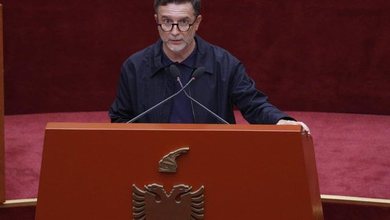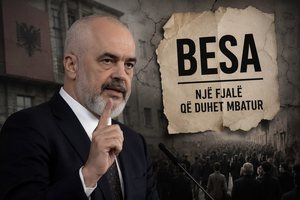


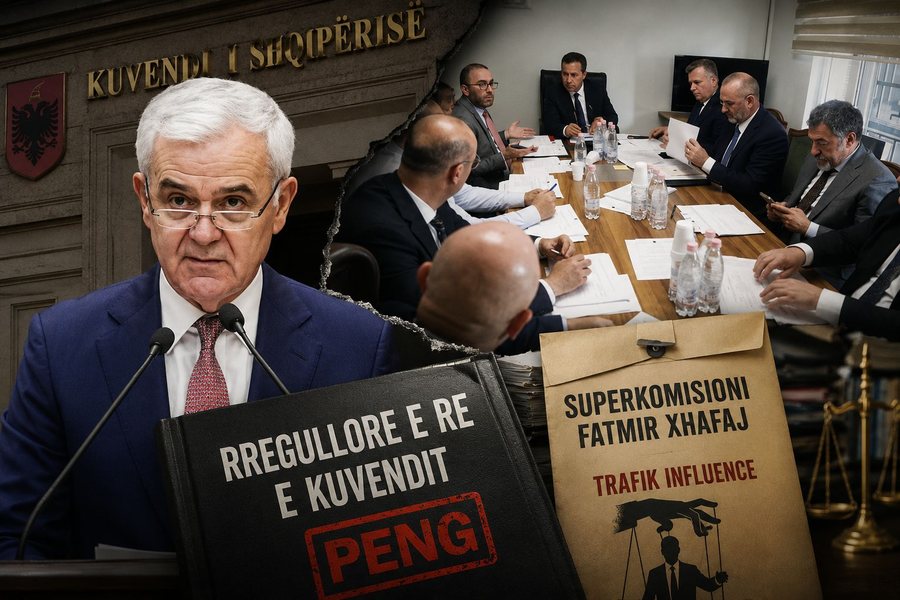
Debates on the new parliamentary rules are no longer being blocked by the opposition. Ironically, the biggest obstacle seems to be within the majority itself. And at the center of this clash is once again Fatmir Xhafaj's commission.
After weeks of negotiations and political bargaining to reform the parliamentary regulations, the point that is generating the strongest opposition is related to the powers of the commission headed by Fatmir Xhafaj and especially to his attempt to turn this structure into a kind of influence traffic pole over independent institutions and justice.
The essence of the conflict is clear: will independent institutions, including those of justice, report to the relevant parliamentary committees as is traditionally the case, or will they pass under the political filter of Xhafaj's commission?
At first glance, the debate seems technical. In fact, it is deeply political.
And no one within the majority has any romantic illusion that this is being done out of some desire of Fatmir Xhafaj to “become a state.” The real fight is not being waged over parliamentary standards or institutional modernization. The fight is being waged over influence peddling.
Because in Albania, formal control over institutions is only half of power. The other half is control over access, filtering, communication, and informal influence over them.
This is not the first time that Fatmir Xhafaj has attempted to expand the role of his committee towards justice institutions. Even in the previous legislature, there were attempts to channel the reporting and oversight of justice institutions, including SPAK, through his committee. But the institutions' resistance was strong. The vast majority refused to enter into a political relationship of dependence with a committee that was increasingly perceived as a center of influence and not simply a parliamentary oversight structure.
It seems that this very failure has produced the new attempt: the institutionalization through regulations of a role that it previously failed to impose politically.
The strongest clash, according to internal discussions, is coming from the chairman of the Laws Committee, Ulsi Manja, who opposes the idea of Xhafaj's committee returning to the address where independent institutions report. According to the variant supported by Manja, the committee on initiatives and oversight should follow the implementation of resolutions approved by the Assembly, but not take over direct reporting to the institutions.
In last night's debates in the Legislative Council, it was openly acknowledged that the committee should not replace the responsible parliamentary committees nor take over powers that traditionally belong to the Assembly as a collegial institution.
And this is where the real conflict is erupting.
Because the battle is not about who will “control” the justice institutions. In Albania, almost no one seriously believes that they are completely outside of political influence. The fight is about who will be the dominant pole of influence over them.
In this sense, the clash over the rules of procedure is not a procedural debate. It is a power conflict within the majority itself over the channels of political influence over independent institutions.
And the paradox is that the committee that was publicly sold as an instrument of parliamentary modernization is gradually becoming the main blocker of the adoption of the regulation itself.