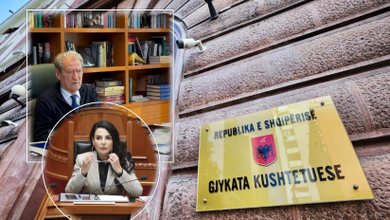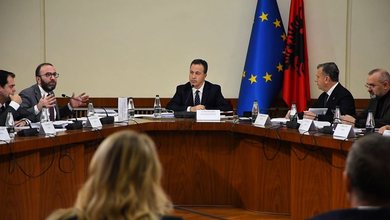



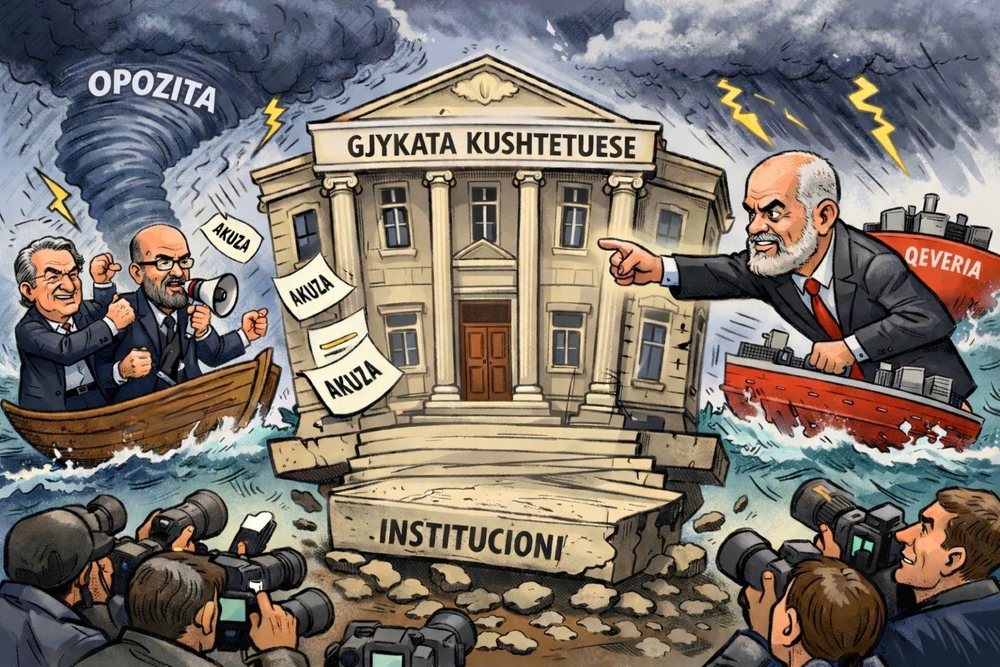
The Constitutional Court, apparently, ended the year 2025 with a public statement, through which it invited “all actors and persons involved in this public discussion to be prudent and careful in their statements, not slandering individual judges or the institution of the Constitutional Court as a whole.” For this Court, as for the entire justice system, the year we are leaving behind has been a year of accumulated tensions, trials and challenges. Among these external challenges to institutional consolidation, some internal destabilizing factors added themselves, related to the public perception of the behavior of some of its members for their mandates. In this social context, the Court has examined issues of high constitutional and political sensitivity, while others, perhaps even more serious in their consequences, await it throughout 2026.
In principle, a justice institution should not speak through press statements, but through reasoned decisions. However, in the face of constant, often unrestrained and irresponsible attacks from political actors, public reaction can be considered justified even in this form. But this choice is not without risk. It exposes the Constitutional Court to involvement in the vortex of daily political debate, violating not only its real neutrality, but also its perception as an institution above the parties, called to resolve political and social conflicts through final and widely acceptable decisions.
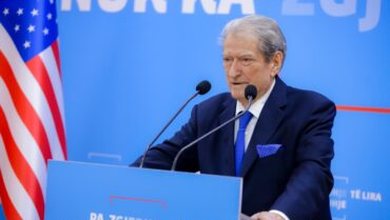
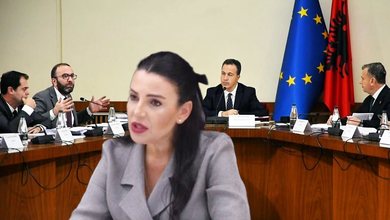
The press release clearly refers to the developments surrounding the Balluku case. It is true that some political figures, such as Berisha and Bardhi, have gone so far as to publicly label, by name and surname, individual members of the Constitutional Court, accusing them of violating the constitutional oath on impartiality and independence. These accusations, formulated outside of any sense of state responsibility, would only make sense if they were accompanied by concrete legal actions. As we have emphasized before, if these actors were serious in their claims, the criminal complaint to SPAK should already be a fait accompli. The silence so far shows that this time too we are dealing more with political rhetoric than with institutional responsibility. Even Gazmend Bardhi’s counter-reaction to the Constitutional Court’s statement, which reiterates that “through the hostage-taking of several members of the Constitutional Court, Edi Rama is attempting to obstruct justice and protect government corruption”, remains in the same political register.
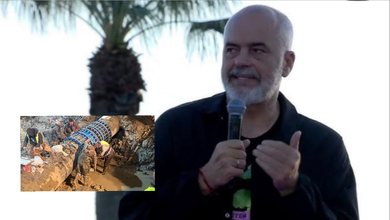
Indeed, if the Constitutional Court intends not to fall into the banal trap of Albanian politics and not be forced to accompany the legal reasoning with press statements after every decision, it would be appropriate for today's statement to address, at least, the direct public attacks that have been directed at it for days by the Prime Minister himself. For many, it was a paradox that even the interim decision to suspend the GJKKO and reinstate Balluk was read in public as being in line with the suggestions made earlier by Rama. It must be said clearly: interested parties, especially in matters of high political importance, will always try to artificially polarize public opinion, create unfounded expectations and fabricated conflicts, without worrying about the damage that this brings to the constitutional order and the authority of the institutions. But if there was a moment that required an institutional reaction, it was precisely the verbal attack coming not from a peripheral political actor, but from the head of the executive branch.
Of course, as the Constitutional Court itself emphasizes, “it is a matter of an ongoing constitutional judicial procedure and that, on 22.01.2026, it will be considered in a public plenary session”. The last word, therefore, has not yet been said. But it is equally clear that political pressures, both from the majority and the opposition, will intensify. This is happening in a context where both parties are under increased anxiety about the SPAK investigations that are addressed to them. In this context, the attacks on the Constitutional Court are not accidental: they can only find temporary solutions to their anxieties from it by drawing it into this institutional conflict. The past has shown that in some cases they have succeeded.
Precisely for this reason, the Constitutional Court must examine the case in such a way that the public clearly understands the positions of the parties, the applicable constitutional standards, the articles of the Constitution that are allegedly violated, as well as the concrete consequences of each decision-making scenario. It is not simply a question of the continuation of a ministry or prime minister in office, the blocking or continuation of a government project, or another victory of one institution over another. At stake is the stability and institutional orientation of the country for decades to come. Rarely does a constitutional court have the burden of making decisions that are simultaneously loaded with legal, political, and historical weight.
In this context, the Constitutional Court and its members must be fully aware that every act, every decision, every reasoning and every expression will be analyzed, filtered and often misinterpreted by a media environment that is not always friendly and often clientelist towards politics. Any deviation from the constitutional axis, from institutional ethics and from the public interest as a fundamental value, will be quickly unmasked, made public and perhaps even presented as built on narratives about “captured members”, “unexpected swings” or “invisible connections with power”. If these narratives did not exist, they would be invented. One thing is certain: the Constitutional Court is under surveillance, in the full sense of the word.
In such circumstances, there is only one way out: uncompromising service to the Constitution and to the sense of justice. This feeling, perhaps the only one that the Albanian public has truly sharpened, functions even without the knowledge and technical reading of the articles of the Constitution. This is precisely the real challenge of the Constitutional Court, as it itself admits when it “calls on all actors to respect its integrity and authority, in order to ensure public trust and guarantee the independence of judicial decision-making, which under no circumstances should be influenced by any misinformation about the public, from whatever subject it may come from”.
Thus, the year ends with this declaration: a necessary act, but at the same time incomplete and perhaps belated. However, it can serve as a sign of a new approach of the Court in the face of the challenges that await it. The year 2026 will put it to the test very soon. On January 22. That day is what everyone is waiting for. Then it will have to oppose dishonest politics, withstand pressures and defend its authority. Then it will have to speak, not to the political present, but to the future of Albania.