

While emphasizing the need to amend the unified decision of the Supreme Court on the justification of security measures, the representative of the prosecution raised concerns about the mechanism that guarantees the participation of the investigated in the process in the case of more lenient measures.
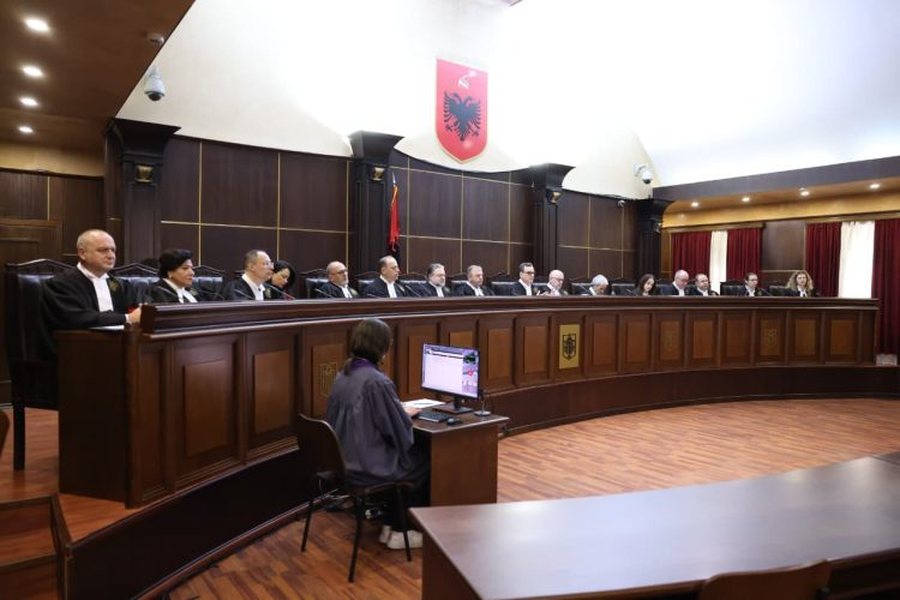
The Joint Panels of the Supreme Court met on Thursday, April 9, at the initiative of the president of this court, Sokol Sadushi, to partially change the unified practice of 2011 regarding personal security measures.
With an interim decision of March 9, Sadushi initiated this procedure with the argument that the previous decision needed to be revised to adapt to the legal changes of the following years, to international conventions, as well as to the jurisprudence of the European Court of Human Rights.
To change the unifying practice, Sadushi chose to treat as a case the recourse exercised by the prosecution against a decision of the Court of Appeal of General Jurisdiction, which brought about the replacement of the measure of arrest with prison with house arrest against Bektash Zeneli, a person investigated for possession of cannabis.
The Joint Panels of the Supreme Court will examine the way in which the Criminal Procedure Code is implemented in relation to point 1 of Article 230, which stipulates that "prison arrest may be imposed only when any other measure is inappropriate due to the particular dangerousness of the offense and the defendant."
According to the head of the Supreme Court, according to the unifying decision of 2011, courts are not obliged to analyze why other types of security measures are not appropriate, being content with justifying the measure they deem appropriate.
It is also assessed that even in the case where "prison arrest" is imposed, the court is not obliged to analyze in detail why other types of measures are not appropriate.
Sadushi presented these orientations of the 2011 unifying decision to the United Colleges, seeking answers on whether they are in accordance with current legislation, the European Convention on Human Rights and the jurisprudence of the Strasbourg Court.
Positions in the session
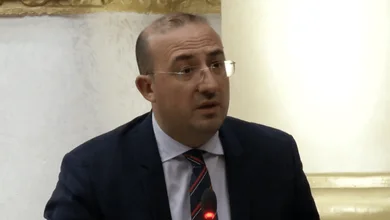
Prosecutor Arqile Koça represented the prosecution in this case, while Judge Ilir Panda, acting as rapporteur, presented the circumstances of the cases offered for review, based on Sadushi's interim decision.
Lawyer Luan Hasneziri represented the person under investigation, Bektash Zeneli, in this process.
Prosecutor Koça stated that it is in the best interest of practice for jurisprudence to adapt to criminal legislation. “It is an obligation,” he said, adding that the dangerousness of the perpetrator cannot be inferred solely from the dangerousness of the criminal offense.
Koça argued that dangerousness requires individualized analysis of the role of the perpetrator and the type of criminal offense, as well as other circumstances that indicate what the person under investigation represents.
Referring to the interim decision, Koça assessed that the positive evidence presented by the investigated party should be assessed in harmony with the evidence of the prosecution, which also necessitates the imposition of a personal security measure.
On the other hand, Koça requested that the United Colleges justify how other, more lenient personal security measures would guarantee the author's participation in the criminal process.
Supreme Court member Sokol Binaj brought to the attention of prosecutor Koça that the legislation provides that when there is danger, the only measure that should be imposed is “arrest in prison.” He asked him whether he considered that the legislator had intervened and if, in this case, the presumption of the provision is that the suspect should be in prison.
Koça said that, referring to the jurisprudence of the ECHR and conventions that are in a higher position than Albanian legislation, the determination of the security measure "prison arrest" should not be based solely on the envisaged punishment for the criminal offense.
Binaj requested that they first review the Criminal Procedure Code and later go to the hierarchy, but after Koça gave a similar answer, Chairman Sokol Sadushi intervened and concluded that this was the answer.
Judge Enton Dhimitri addressed Koça, noting that he had found some contradictory opinions in his position and asked why the previous unifying decision should be changed. “Why should the judge justify the inappropriateness of other measures, when he should justify the request for the measure?”, asked Judge Dhimitri.
Prosecutor Koça stated that if the court were disciplined for justifying all the elements, then the prosecution would also be disciplined.
Koça said that, although they believe that justification should be provided, they also have another concern regarding the implementation of the measures in Albanian reality.
"How will it be guaranteed that the suspect will come to trial," Koça reiterated his concern.
Judge Arbena Ahmeti asked Koça if he considered that the burden of proof for the prosecutor to justify the request for a security measure should be exercised only in the first instance, or also in other higher courts if new circumstances arise.
According to Koça, the Appeal has the opportunity to evaluate new facts. In the interest of the other member of the Supreme Court, Sokol Ngresi, prosecutor Koça stated that the court should reason more broadly and not state that there is still reasonable doubt. According to him, when there is relative invalidity, the decision-making of the first instance should be regulated.
Lawyer Luan Hasneziri pointed out that during his 20-year career as a judge, he had reviewed thousands of requests for personal security measures. According to Hasneziri, the court should also analyze the reasons for the inadequacy of other measures.
"The dangerousness of the criminal offense and that of the person under investigation are insufficient to determine 'prison arrest'. Prison should be imposed when any other personal security measure is inappropriate," he underlined.
After the parties presented their positions on the personal security measure against the suspect Bektash Zenenli behind closed doors, the Joint Panels withdrew for a decision that is expected to be announced in the coming days. /BIRN/