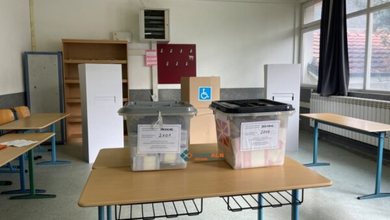




In Tepelena, Celibashi's Artificial Intelligence counts, but the process remains just as human - with cameras, commissioners and endless waiting.
In a country where technology is usually slow to catch on, the CEC decided that Tepelena would be the first laboratory for “artificial intelligence voting.” Chief Commissioner Ilirjan Celibashi explained it enthusiastically: each table will have a camera that films the ballots, then an AI system will automatically read them and send the result to the CEC – without the need for manual tabulations.
In theory, it sounds revolutionary. But in practice, one question remains: where does artificial intelligence really fit in a voting center where there are still several commissioners sitting around supervising, signing, checking each ballot, and waiting for the final result?
If every ballot is filmed, then an AI system automatically reads and sends the result, then why do we need so many people around? Why not at least reduce the procedures, the commissioners, or the delays that often accompany these processes? After all, the idea of AI is to facilitate, not embellish, manual labor.
In the case of Tepelena, Artificial Intelligence looks more like a smart camera than an independent system that replaces human counting. Filming, reading, and sending data are technical elements, but the interpretation and verification still remain human. AI is not making decisions, not checking for errors, nor is it helping with real-time transparency — it is simply helping with the speed of reading a sheet that still needs to be approved by a human eye.