


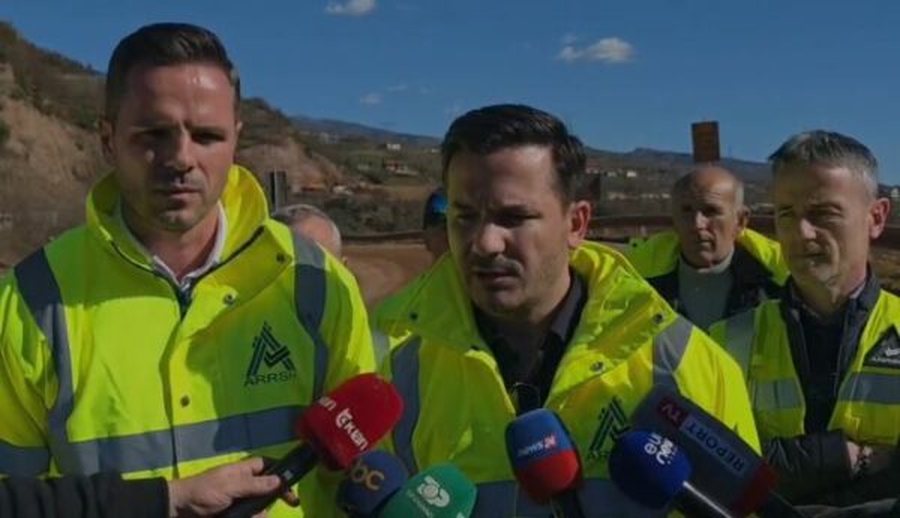
Several men gathered again today in front of the cameras. They spoke at length. In technical terms. With “surveys,” “significant volumes,” and “natural balances.” Solution? Not yet. Deadline? Not yet. Responsibility? Nature.
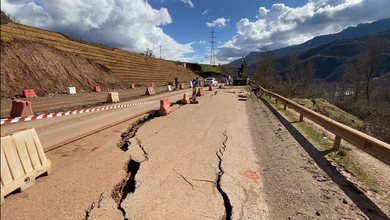
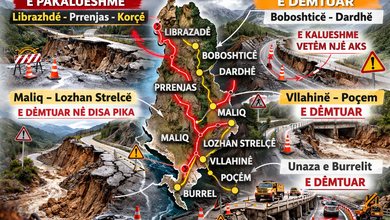
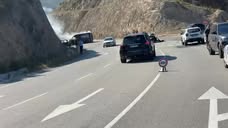
The Librazhd-Përrenjas axis remains blocked after the collapse in the “Arrat e Gurres” area, isolating the southeast of the country since Saturday. Albanians are waiting to know what will happen to the road. But the official answer for the moment is: “we are studying”.
The Director of Strategic Planning and Operations at the ARRSH, Indrit Koleci, said that an exact deadline cannot be given for the complete stabilization of the landslide. Surveys have been made on the riverbed. Reviews will be made for the new road structure. Studies on the extent of the landslide will continue. Deadlines? Maybe within 3-4 days we will have an estimate of how long the works will last.
So, there is no deadline today. There is only a promise that in a few days there may be a deadline.
Meanwhile, the head of the ARRSH, Ami Kozeli, announced that the alternative Spathari road, 15.1 kilometers, does not offer road safety and will not be considered for investment. In other words, the alternative is not an alternative.
What is being done specifically? According to the ARRSH, the contractor has begun implementing the decisions of the Technical Council: covering the riverbed, demolishing the bridge, and easing the landslide mass to bring the escarpment towards a "natural equilibrium."
In the meantime, citizens remain in a much less technical reality: blocked. Without a date. Without a guarantee. With a road that does not meet safety standards and with an alternative that is not being considered.
Nature is always a convenient explanation. But when infrastructure collapses, citizens need stronger answers than “we are studying.” Because the road is not a theoretical concept. It is a vital connection. And today that connection is broken.