


In the final years of the communist dictatorship in Albania, authorities killed dozens of citizens trying to leave the country - and most efforts to bring the killers to justice have encountered obstacles and a lack of professionalism.
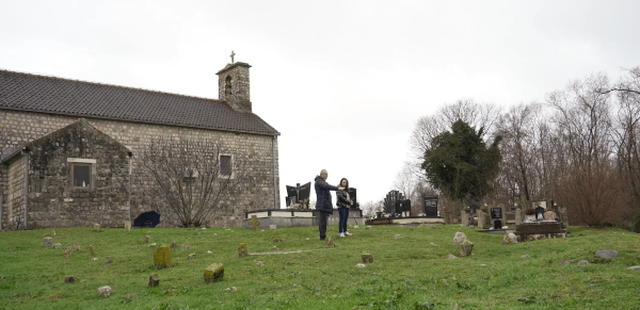
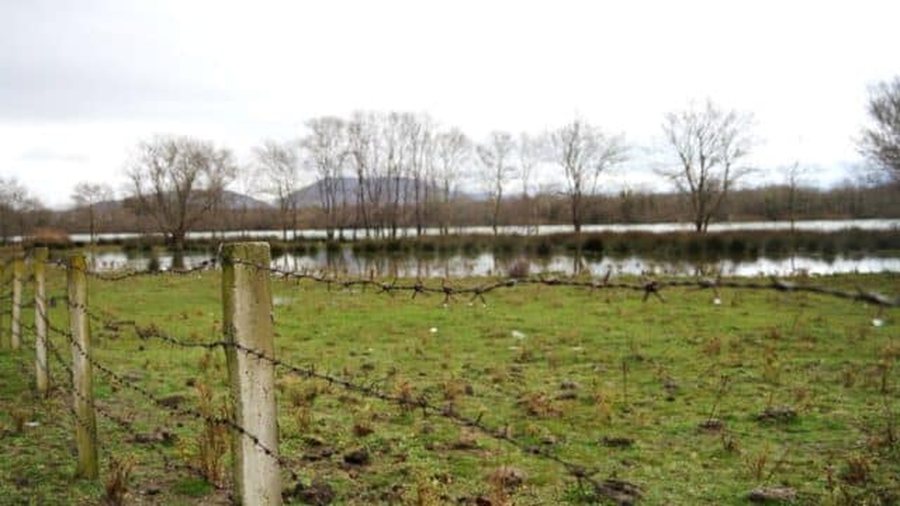
The Buna River flows calmly behind willow groves, a few meters from the Catholic cemetery in Shenkoll, a border village, about 15 kilometers from the center of Ulcinj.
On December 19, 1990, this place became the scene of a state crime.
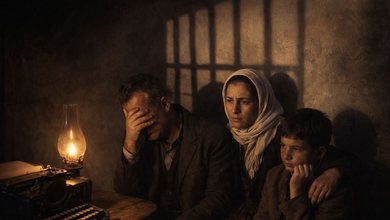
Albanian border guards killed 5 people in the dark, Pal Palna, Zade Palna, Ernest Daragjati, Olsi Lorja and Liljana Palna, an 11-year-old girl, who fell from the boat and disappeared into the waters of the Buna River.
They were among a group, most of them with family ties, who were trying to escape communist Albania.
The Palna family's relative, Gjergj Ashta, reconstructs the scene of that night from the memories of those who survived.
According to him, there were 8 or 10 people on the boat. 4 were killed, Pali, Zadja (Pali's mother), Pali's daughter Liljana and his brother-in-law Ernest Daragjati. Olsi Lorja was killed in another boat that they were on with them.
"They all came from the Daragjat area of Shkodra, entered Buna by boat and after a few minutes they were confronted by Albanian police forces and killed. Some were killed and some were captured by the Montenegrin army and taken to the camp," says Ashta.
The event not only shocked Shkodra, but also the small village of Shën Kolli across the border in Montenegro.
Anton Hoti, a resident of Shën Koll, still has it fresh in his memory.
"They killed them somewhere in the forest. They killed them and massacred them. They even said that they had cut off half of one of their heads with the blades of a motorboat," he said.
The crimes of the communist regime led by Enver Hoxha and, after his death, by Ramiz Alia, still remain unpunished today.
A report dated November 20, 1990, signed by the former Minister of Interior at the time, Hekuran Isai, reveals the extent of the killings on Albania's borders, which had been transformed into the walls of a large prison.
"From 1944 to 1990, 9,220 people and 4,472 of their relatives, women and children, fled across the Albanian border, of whom 988 died," the archival document states, among other things.
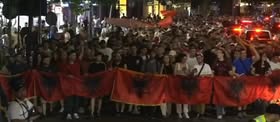
The fall of the communist regime in Albania was set in motion in December 1990, when student demonstrations erupted in major cities. But the ruling communist party, the Labor Party, remained in power until March 1992.
In the absence of accurate official statistics, data processed by the Institute for Political Studies shows that the highest number of murders at the border was recorded at a time when the communist regime was in its final stages.
"The highest number of murders occurred in December 1990 with 12 cases, followed by June '90 with 9 cases, May with 8 cases, August and November with 5 cases each, etc.", states a study by this organization.
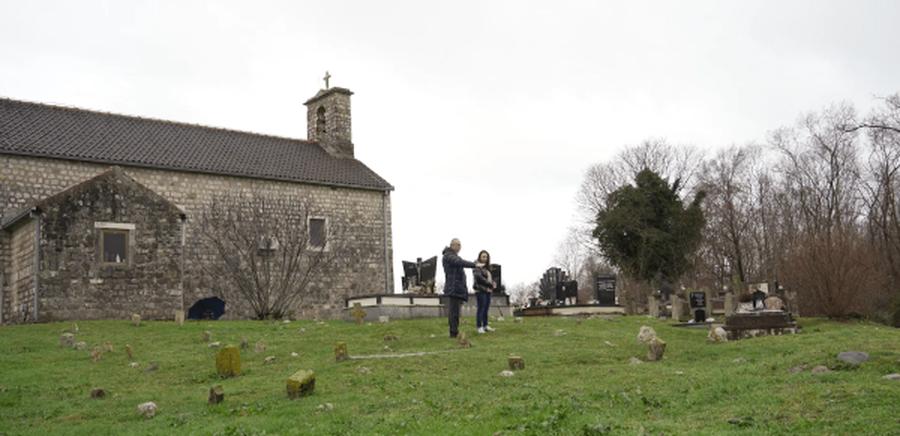
Living proof of these crimes is the plot of graves in the Shën Kolli cemetery used to bury Albanians who were killed on the border with Montenegro.
"We will kill you when you reach the shore"
A few kilometers from the Shën Kolli cemetery, at a point on the Velipoja beach in Shkodër, on May 18, 1990, the two brothers Gjekë and Vatë Beqi set out to swim across the border between Albania and Montenegro, aiming for the island of Ada at the mouth of the Buna River.
A public speech by communist president Ramiz Alia on May 7 of that year, in which he announced that crossing the border would no longer be considered “high treason against the Fatherland” and would not be punishable by murder, had encouraged them, as had thousands of others who attempted to flee in anticipation of the fall of the communist regime.
After being spotted in the darkness by the border guard's searchlights, a volley of automatic fire was fired at the two brothers. Gjekë Beqi, one of the two brothers, recounts the events of that night, where he himself was seriously wounded by a bullet that grazed his jaw, while his brother was killed.
"The commander, a cruel, sadistic man, killed us in vain," he said.
"As soon as he approached with the boat, he shot. I was wounded. I sank in the water. My brother pulled me out. My brother told them 'we are locals here' and tried to talk to them. 'Hold him, hold him', they told him not to drown because 'we will kill you as soon as you reach the shore'. And he really killed his brother on the shore", added Gjekë Beqi.
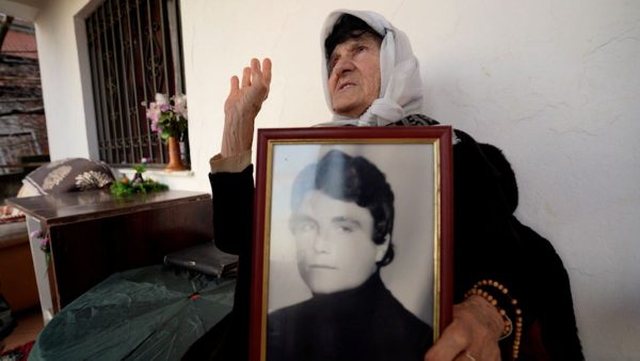
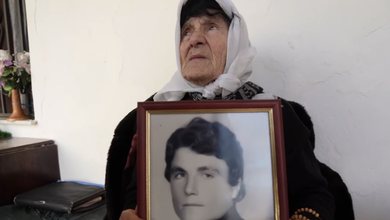
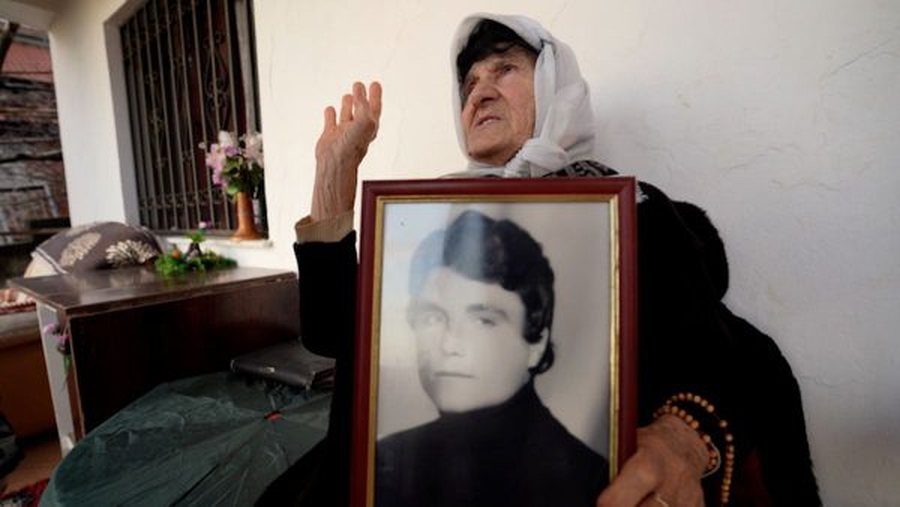
Their mother, now 92 years old, who lives a few kilometers from where her sons were shot, is still waiting for justice for the murder of Vata, who was only 25 years old at the time, but as a Christian believer, she says she has left justice to God.
"He shouldn't have killed him, he killed him...he shouldn't have killed him because on May 7, Ramiz Alia said the border is free," she said.
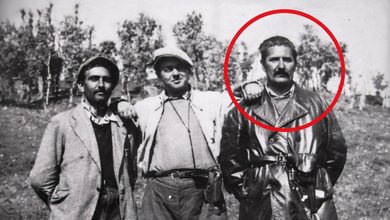
The person who cold-bloodedly shot his son was named Bino Binaj, who served as Commander of the Velipoja Border Post.
In the mid-1990s, Gjekë Beqi began his legal battle, marking one of the few cases when Albanian courts issued a verdict for the crimes of the nearly half-century-old totalitarian regime.
"When I got out of prison, I was traumatized and maybe I even thought about self-justification. But my father said no. The state killed you, you followed the state's path. And I sued him within the rules," he says.
In the trial before the Shkodra District Court, Judge Admir Thanxa sentenced Binaj to life imprisonment for crimes against humanity.
The Tirana District Court of Appeal upheld the first-instance conviction, rejecting an appeal filed by Binaj's lawyers.
Meanwhile, Binaj, in an attempt to escape punishment, had changed his name in the civil registry of Vlora.
An order for the execution of his sentence, issued in 2009 by the Shkodra Prosecutor's Office, specifies that Bino Binaj was the same person with the new name Besnik Ali Zykaj. But this order was never implemented by the Albanian police, as Zykaj (alias Binaj) had fled the country.
Internationally wanted under a new name, he was arrested in 2012 in Florence, Italy, but the responsible Albanian institutions failed to extradite him to Albania to serve his sentence.
The reasons why the Italian authorities were not convinced by Albanian institutions that this individual should be sent to Albania to serve his sentence still remain unclear, as neither the Shkodra Prosecutor's Office nor the Ministry of Justice made the complete documentation available.
The State Police say that Zykaj/Binaj is still internationally wanted.
Outraged, Beqi blames the Albanian state. "So, the state had the opportunity to find him, but the state itself helped him avoid being extradited," he says.
Afrim Krasniqi, director of the Institute for Political Studies, says that after the fall of the communist regime, there was never any attempt to punish these crimes or the people who committed them.
"When we attempted to establish investigative processes, it was extremely delayed and the individuals were no longer in Albania, or there was no longer documentation to support the judicial investigations," Krasniqi said,
He links the influx of murders in the '90s precisely to the legal changes of the time, which, unlike what was promised by Ramiz Alia, were not implemented by the border posts.
Despite public promises, the last communist leader, Ramiz Alia, encouraged these killings, as shown in the minutes of the Politburo meeting of December 4, 1990, where he justified as normal the shooting of those who attempted to escape from border soldiers.
Alia remained in office as president of the country for several months after the formal change of system, a time he used to grant political immunity to all those who had served the totalitarian state in its final moments.
Thus, on January 5, '91, high presidential decorations were awarded to all the officers responsible for the killings at the border, including the murderer of Vate Beqi, Besnik Zykaj (alias Bino Binaj).
According to Afrim Krasniqi, "this was a message to the border security forces that they have high protection from the president, parliament and high political structures of the country."
Families abandoned by the state
The relatives of the victims, who were killed on the borders of Albania in an attempt to escape the dictatorship, faced the closed doors of the Albanian state to learn the truth and find their bodies.
While the communist state had killed them, the new democratic state abandoned them in their efforts for justice.
This also happened with Gjergj Ashta, who dedicated many years of his life to uncovering the event and especially to finding and returning the remains of the killed who remained in Montenegro.
He says that he has made all his efforts privately and the only state aid he received was from the Montenegrin authorities of the municipality of Ulcinj.
Initially, he was helped by a local resident, Nikola Elezovic, from the village of Shën Koll, Montenegro.
Elezov[i recalled: "A friend of mine told me that some Catholics came and were interested in some dead people who were killed at the border and brought them to your church and buried them."
Then it was the local authorities of Ulcinj who assisted him in retrieving the bodies of his relatives.
"I met the former mayor of Ulcinj, Mehmet Bardhi, who was very helpful and helped me find the place where they were buried. It took 5 years of procedures to retrieve the remains, exhume them and take them to Albania," he says.
Thanks to Ashta's efforts, the Palna family has buried some of their dead. But justice for them is still far away.
The Files Authority, AIDSSH, an institution established in 2015 with the aim of opening the files of the former State Security, is ready to help.
In its archive, AIDSSH has abundant information about border killings that can shed light on the scale of the crimes, but also assist family members in searching for the remains of their loved ones.
The head of this institution, Gentiana Sula, said that files related to the killings that occurred on the southeastern and northern borders have been opened and that the files for the border with Kosovo and the southern border will continue to be opened. Sala explained that the files contain documents from various sources that could be useful: “A source could be border registers, a source could be daily communiqués, a source could be personal files,” she said.
As for the deaths on the Buna River that night in December 1990, no one has yet been brought to justice. The body of 11-year-old Liljana, the youngest daughter of the Palna family, is still missing./Kujto.al./