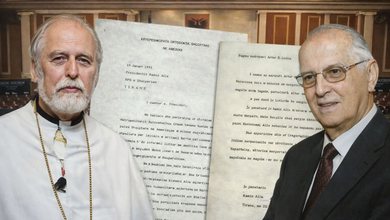




This time, in the "Forgotten Histories" section, VNA brings a rare document from January 1991, which sheds light on a little-talked-about reality of the early days of Albanian democracy.
Today we talk about “systemic corruption,” “state capture,” “new justice,” and “deep reforms.” It seems like they are products of the last few decades.
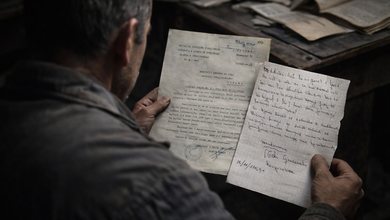
But a handwritten statement, dated January 22, 1991, reminds us that bargaining with the law did not arise yesterday.
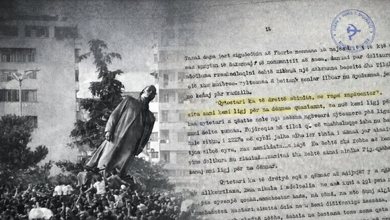
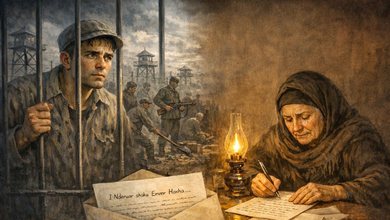
Democracy had just begun. In the squares, there was talk of pluralism. Monuments were being torn down. Speeches about freedom filled the screens. Meanwhile, in the corridors of a prison, according to this archival statement, freedom had a price: 2,000 new lekë.
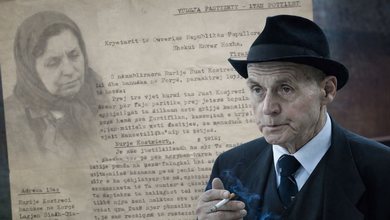
The document was signed by Albert Hajdar Pashollari. He writes that, after serving half of his sentence, he filed a request for early release. Initially, according to him, the chief of police of the department told him that the case would be submitted to the commission and that he would be released “as it was done.”
But then, an operative calls him again and speaks to him openly:
"Albert, you have a long sentence, so you must pay at least 2,000 (two thousand) new lek, otherwise the prosecutor will not approve your release."
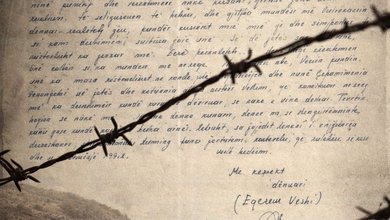
At the end of the statement, he notes that he was not released on the day of the trial and that he is forced to write this document "to present his defense until a trial and some law."
January 1991 was a symbolic moment: the communist system was disintegrating, pluralism had emerged, but the old power structures continued to function. In theory, the country was entering the era of the rule of law. In practice, the mentality of the office remained the same.
2000 lek for a decision that was supposed to be legal.
This document is not just the story of an individual. It is evidence that corruption was not a late aberration of Albanian democracy, but a culture of power that was recycled from the old system into the new one.
The flags changed. The parties changed.
But the relationship between the citizen and the office — not always.
If today we ask when institutional decay began, perhaps the answer is found in these yellowed archive pages. Because Albanian democracy began with great hopes.
But in some offices, it started with a fee.