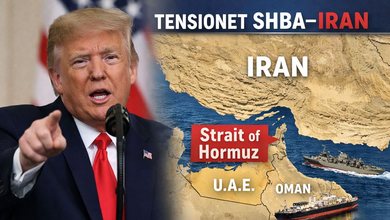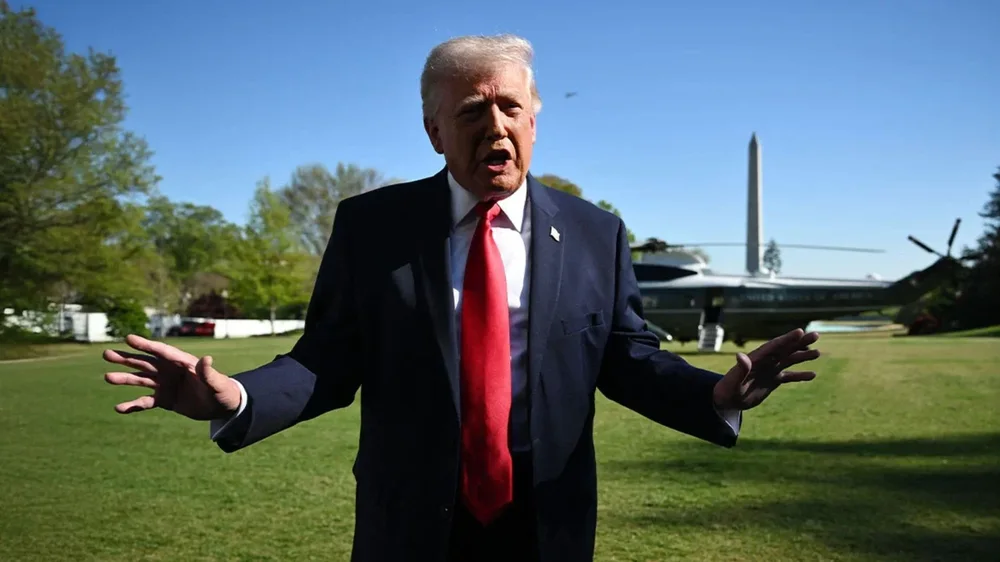
While the future of negotiations between the US and Iran remains unclear and the timing of when representatives from both sides will travel to Islamabad is uncertain, Donald Trump says he will not rush to reach a "bad deal" and leaves open the possibility of resuming hostilities. Speaking by phone to Bloomberg, the US president said it is "highly unlikely" that he will extend the ceasefire, which expires at dawn on Thursday, unless an agreement is reached between the two sides.
The US president stressed that he has no intention of rushing into a deal under pressure, noting: "I'm not going to rush into a bad deal. We have plenty of time ahead of us."
Asked about the possibility of an immediate resumption of hostilities in the event of no deal, Trump appeared clear: "If there is no deal, I would absolutely expect it."
However, it is worth remembering that Trump has repeatedly changed his position on the possibility of extending the ceasefire. Last week, during a conversation with reporters, he took five different questions on the same issue and gave three different answers.
In his new post on Truth Social, the US president claimed that the agreement his government is negotiating with Iran will be "much better" than the nuclear deal "JCPOA", which he described as one of the worst agreements ever reached regarding US security.
More specifically, Trump sharply criticized the agreement signed during the presidency of Barack Obama with the participation of Joe Biden, claiming that it was a “sure way to get a nuclear weapon” from Tehran. He emphasized that this “will not happen” in the new agreement that, as he said, is in the formulation phase.
The US president also repeated his claims regarding the financial dimension of the previous agreement, noting that $1.7 billion in cash was delivered under the JCPOA, which was transported by Boeing 757 aircraft to Iran. According to him, this was money that was allocated to the Iranian leadership, with no restrictions on its use.
Trump also said that the previous agreement provided for the payment of hundreds of billions of dollars to Iran, estimating that if he had not withdrawn from it, Tehran could have acquired nuclear weapons, which he said could be used against Israel, as well as throughout the Middle East, including US military bases.
At the same time, he attacked media outlets that support the JCPOA agreement, citing Washington Post journalist David Ignatius, claiming that this framework was a “dangerous embarrassment” for the United States.
According to him, a new agreement concluded under his leadership could provide "peace, security and stability" not only for Israel and the Middle East, but also for Europe and the United States.
As he noted, the goal is an outcome that "the whole world will be able to consider a success," in contrast to previous years, which he characterized as a period of "humiliation" due to "poor leadership."