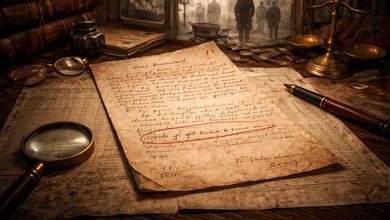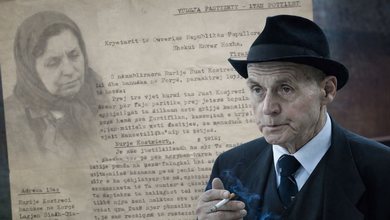



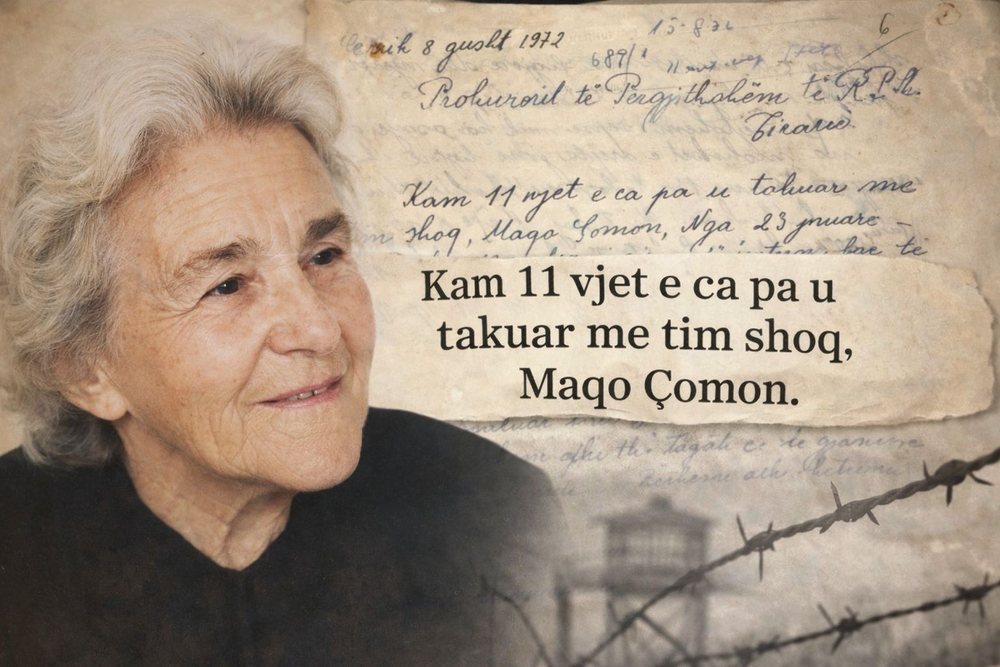
In August 1972, from exile, Liri Belishova once again addressed the Prosecutor General of Albania. It was not the first letter. It was just another attempt after many previous requests that had gone unanswered.
The letter is dated August 8, 1972 and begins with a sentence that sums up her entire personal drama:
"I haven't met my husband, Mako Çomo, for 11 or so years."
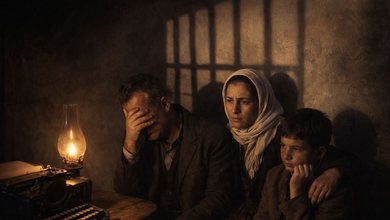
Belishova recalls in the letter that from January 23 to June 26, 1961, she and her husband were interned together. After this period, the family was separated. Years passed and in 1967, Maqo Çomo was arrested and sentenced to 10 years in prison. Since then, despite constant requests, she writes that she was never allowed to see him.
But the drama doesn't end there.
In the same letter she also mentions her brother, Bardhyl Belishovë. She had been separated from him for about 12 years. She had only been able to see him once, for a few minutes, many years ago. After that, he was arrested and sentenced to 25 years in prison, and she had not seen him since.
In her lines, Belishova explains that she had made many requests to be allowed such a meeting, but the response had always been the same: refusal or silence.
"The internal affairs bodies have rejected our requests or have not responded to us at all," she writes.
However, she continues to seek state intervention. She addresses the Attorney General, arguing that the denial of this meeting constitutes a violation of a basic human right.
Belishova writes that there cannot be a law that prohibits a woman from meeting her husband or a sister with her brother, regardless of whether they are interned or imprisoned.
In one of the strongest lines of the letter, she writes that such a ban cannot be just either legally or humanly. She recalls that other prisoners who have interned wives are also allowed to meet with their families, and that this is a fair and understandable thing.
In the end, her request remains simple.
She only asks to be allowed to see her husband and brother, the closest people she has not seen in more than a decade.
"I beg you to answer me," she writes at the end of the letter.
Below the lines remains her signature:
Liri Belishova
Today, these letters remain a strong testimony to the human drama that many families experienced during the dictatorship. They are not long documents or political statements. They are just a few handwritten pages from a woman who asked the state for something very simple: the right to see her loved ones.
The irony of history is that after 1991, Liri Belishova remained the only former Politburo member to publicly apologize for the crimes of the communist regime. But in 1972 she was just an exiled woman waiting for a response from the state — a response to a request that in any normal society would have been self-evident.