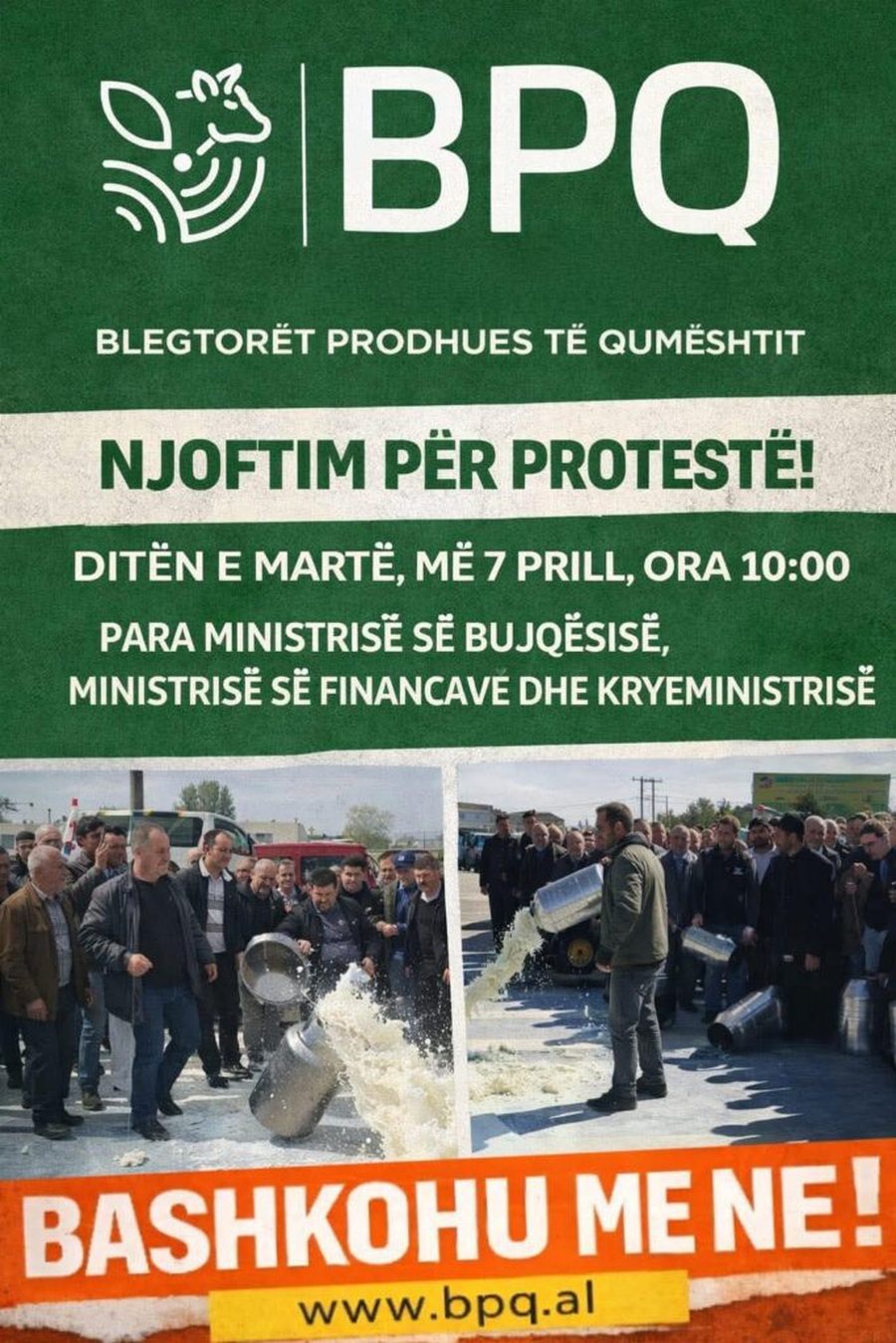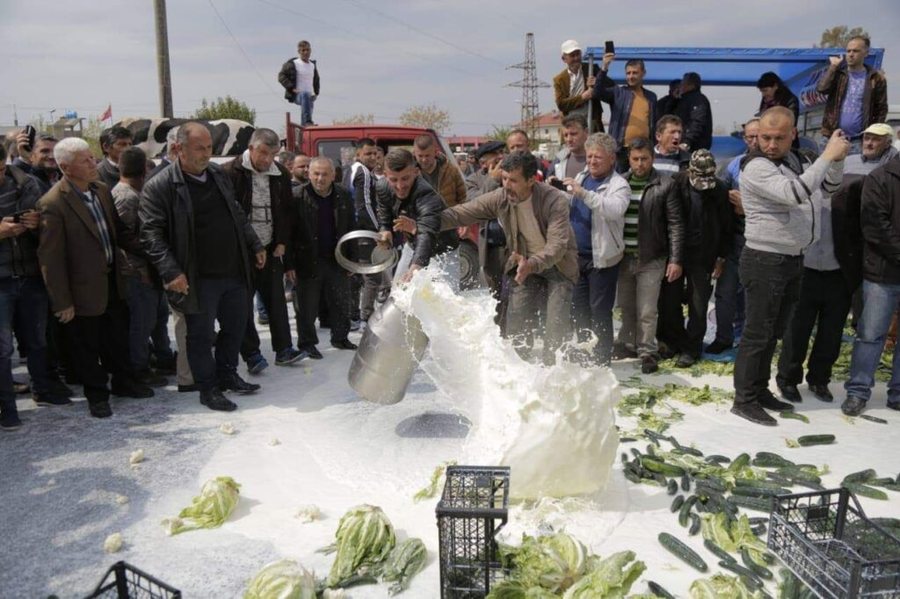
From the removal of free oil, to the objections to changing the national agricultural scheme that does not reflect the needs of agriculture and livestock to mitigate costs, are the reasons why livestock farmers in the country are returning to protests. The Dairy Farmers Association (BPQ) has announced the holding of a protest on Tuesday in front of the Ministry of Agriculture and Rural Development.
The protest was announced just a few days after the approval of the National Scheme 2026 in Agriculture, which decided to abolish the measure of free distribution of oil to farmers and increased the measure of direct subsidies for farmers. The payment per cow from 10 thousand lek for a farm with less than 10 cows was increased to 12 thousand lek for a farm with less than 5 cows.
But agricultural expert Ervin Resuli emphasizes that with the changes to the National Scheme, livestock farming does not benefit from more subsidies, but rather they are reduced after the removal of the measure for providing free diesel.
Resuli also says that if the government was determined to review the scheme, it should have introduced measures that reduce the cost of production, taking into account the effects of the price crisis from the war, which increased not only oil but also the prices of chemical fertilizers by up to 50%.
According to him, this scheme does not support farmers in reducing costs.
"The entire agriculture and livestock sector continues to face:
-Lack of development policies
-Non-functional scheme for 2026, does not reflect the needs of livestock farmers whose costs have increased due to the price increase crisis
-Abolition of the free oil scheme
-Increasing direct payments does not mitigate the increase in costs, taking into account the increase in prices from the war crisis
How much have farmers lost from the abolition of the oil scheme?
The national support scheme should reduce the cost of production for livestock farmers.
For example, if a farm with 100 cows, after the changes in payments, will benefit on average 150 thousand lek more, on the other hand it will lose 500 thousand lek that it received from free oil. And this loss comes during a planting period. According to one calculation, a farmer with 100 cows from the national scheme loses 350 thousand lek in value,” Resuli underlines.
Before the changes to the National Scheme, the Dairy Farmers Association requested support from the Ministry of Agriculture and Rural Development of 20 thousand lek per cow without a ceiling. So, regardless of the total number of heads at their disposal, a farmer would benefit from 20 thousand lek in payments per head. It is learned that during the meetings between the parties, an agreement was reached to establish a direct payment of 15 thousand lek per cow without a ceiling. But this was not reflected in the decision.
Farmers who are members of the Dairy Farmers Association claim that they not only feel disappointed by the failure to keep promises and negotiations, but were also faced with a measure that further harms them in terms of costs, such as the removal of free diesel.
Agricultural experts emphasize that even the law on the 10% VAT compensation does not support production and costs, but only forces the farmer equipped with a receipt to take the products to the collection points. Outside the scheme, individual farmers and limited liability companies remain. /Monitor.al/