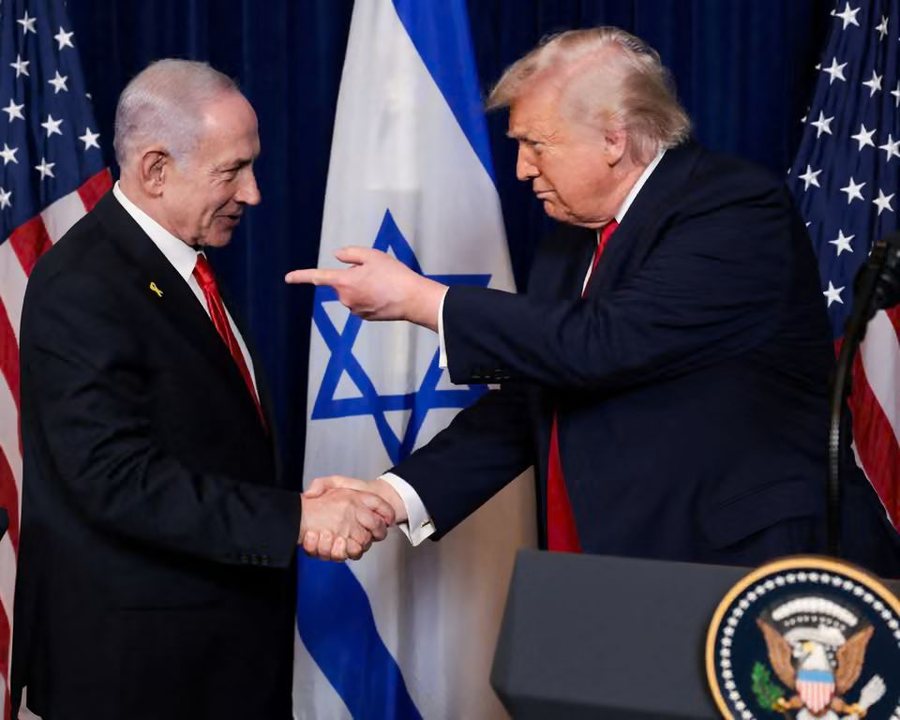
When Benjamin Netanyahu arrived at Donald Trump's Mar-a-Lago mansion on December 29 of last year, the Israeli prime minister had with him a request – and a not-so-secret incentive.
After months of bolstering air defenses and missile supplies following the 12-day June conflict, in which the US joined Israel in bombing Tehran's nuclear facilities, Israel was ready to act again, this time with bigger targets.
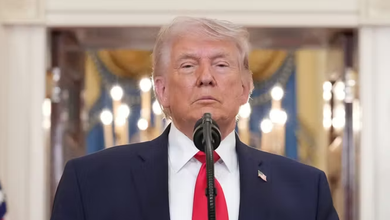
At the two leaders' press conference, Trump seemed to echo Netanyahu's familiar arguments.
"Now I'm hearing that Iran is trying to rebuild its capabilities," Trump said. "Then we're going to have to hit them again. We're going to completely destroy them. But I hope that doesn't happen."
Netanyahu, like many other leaders before him, had come to Trump with an appeal to his ego: awarding him Israel's highest honor, the Israel Prize, an accolade rarely given to non-Israelis, for "extraordinary contribution to Israel and the Jewish people."
According to The Atlantic magazine, Netanyahu had suggested another benefit to the American president: if Iran were defeated, Israel would be able to reduce its heavy dependence on American military aid.
This meeting was just one of many contacts between the two leaders in the weeks that followed, as Netanyahu sought to secure US participation in a broader conflict against Tehran, with ambitions far greater than previous clashes.
According to an assessment prepared by Mossad, the Israeli secret service, the Iranian regime was seen as fragile and weakened by internal protests. To some in Israel, this seemed like a historic opportunity for a short campaign that could lead to regime change.
Another argument reportedly used was the idea that Trump could be taking revenge for alleged Iranian plots against his life.
However, subsequent developments show that Netanyahu and the Israeli military establishment had invested heavily in the idea of a quick and easy war.
On February 28, the first day of the war, Israeli officials told the Haaretz newspaper that the Iranian threat would disappear within days, once the last missile launchers were eliminated. Another article in the same newspaper reported that the Israeli military had stockpiled defensive missiles for a war expected to last a maximum of three weeks.
In reality, the conflict is part of a broader regional war that Israel has been waging since the Hamas attack on October 7, 2023. Since then, clashes have spread from Gaza to Lebanon, to Yemen, and now to Iran.
In Gaza, despite a devastating campaign, Hamas continues to exist amidst the rubble.
In Lebanon, despite Israel declaring victory over Hezbollah, the organization continues to have the ability to launch rockets into Israel.
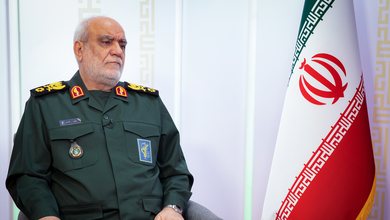
Even in Iran, despite the assassination of Supreme Leader Ali Khamenei and other top officials, the “regime beheading” strategy has not brought about the rapid regime change that Netanyahu had promised. On the contrary, for the moment, power appears to have been consolidated around the Islamic Revolutionary Guard Corps.
There is also a perception within the Trump administration that Netanyahu may have overpromised.
According to Axios, a U.S. source said:
“Before the war, Bibi sold the president the idea that everything would be easy and that regime change was much more likely than it actually turned out to be.”
However, some analysts are more cautious. Former US ambassador to Israel Daniel Kurtzer and analyst Aaron David Miller write that Trump was a full and willing partner in this conflict.
According to them, although Netanyahu may have influenced the timing of the outbreak of war, Trump was already inclined towards a clash with Iran.
Meanwhile, the war has entered its second month with no end in sight. The closure of the Strait of Hormuz has hit the global economy hard, and the consequences of the conflict are spreading far beyond the region.
Security experts Richard K. Betts and Stephen Biddle write in Foreign Affairs that in the first few weeks alone the war has cost billions of dollars, reduced support for Ukraine, put pressure on America's most advanced weapons stockpiles, and shaken the global economy.
The conflict has also weakened NATO and could embolden actors like China, Russia, and North Korea.
On the diplomatic front, the war also jeopardizes Israel's relations with the Gulf states and the Abraham Accords, brokered by Trump.
Meanwhile, French President Emmanuel Macron warned that military attacks on Iran cannot solve the issue of the Iranian nuclear program in the long term.
"There is no sustainable solution through military action alone," Macron said, calling the idea of a military operation to open the Strait of Hormuz "unrealistic."
At the same time, support for Israel in international public opinion is falling. In the US, polls show a significant decline in sympathy for Israel, especially among Democrats and young voters.
A Gallup poll showed that for the first time since 2001, Americans are more sympathetic to the Palestinians than to the Israelis.
There is also criticism within the American Jewish community. A poll by the organization J Street found that 60% of American Jewish voters oppose military action against Iran.
According to Rahm Emanuel, Barack Obama's former chief of staff, this could have long-term consequences for US-Israeli relations.
“In the future, Israel may no longer be the sole beneficiary of American military aid,” he said.
“It will be treated like any other country that buys weapons from the US. The game has changed.”