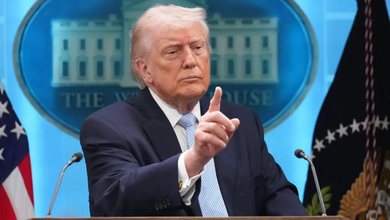
Following Donald Trump's demand that Iran reopen the Strait of Hormuz, the Iranian embassy in Zimbabwe responded with an ironic comment on the X network: "We have lost the keys."
Since the United States and Israel's attacks on Iran in February, the official accounts of several Iranian embassies and consulates around the world have gone viral with posts that often rival, if not surpass, Trump's provocative style on social media.
Iranian embassies in Africa appear to have taken the lead in this digital offensive, especially in South Africa. In a post on X on the day the ceasefire between the US, Israel and Iran came into effect, the Iranian embassy in Pretoria wrote: “Say hello to the new world superpower.” The message was a jab at Washington, implying that despite military superiority, the US had failed to overthrow the theocratic Iranian regime.
Another post from the same embassy played on Trump's claims to be a peacemaker, placing a cartoon-like peace dove in front of the shadow of a fighter jet.
While several Iranian diplomatic missions have shared posts mocking Trump, the embassy account in South Africa stands out for the frequency of posts, virality, and warm relations between Pretoria and Tehran.
According to Na'eem Jeenah, executive director of the Afro-Middle East Center in Johannesburg, Iran appears to be carefully selecting the countries where it uses this aggressive communications strategy. "They operate in countries where it will not bring negative consequences from the host government and where they can find support from the public. South Africa is probably one of the best examples," he said.
The Trump administration has often accused South Africa of being too close to Iran. In turn, the government in Pretoria has responded by emphasizing the historical ties between the two countries and the importance of non-alignment in its foreign policy.
Not all of the posts have been ironic. The Iranian embassy in South Africa also used artificial intelligence to “resurrect” in videos several children who were allegedly killed by a US bomb that hit their school in the southern Iranian city of Minab at the start of the war. In these videos, the children talk about their dreams for the future.
Analysts say Iran is using the language and style of social media culture for a new form of information warfare. The goal, they say, is to soften the country's image and influence a new generation of users who are more sensitive to online narratives than to its history of domestic repression and long-standing geopolitical tensions with the West.
Meanwhile, other Iranian embassies in Africa have used their accounts to praise their host countries and create the impression that they support Iran in its confrontation with the US and Israel. In one post, the Iranian embassy in Tunisia also started a chain of messages with other diplomatic missions claiming to have the support of the countries where they are located.