



By Muriel
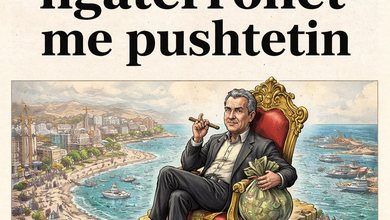
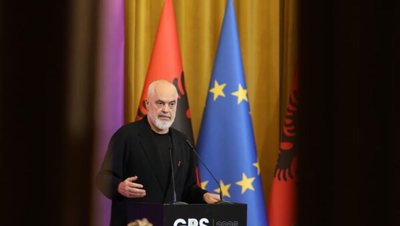
In his last public appearance, Prime Minister Edi Rama once again chose the path of rhetorical aggression to address the biggest international concern weighing on Albania: the transformation of the construction sector into a giant “laundry machine” for criminal capital. By labeling critics as “scoundrels” and reports as “barking,” the Prime Minister did not attempt to defend himself with facts, but with a verbal armor that attempts to hide a dangerous economic reality. This stance clearly shows that the asymmetry between the words of power and the truths on the ground has reached a breaking point, where propaganda can no longer cover the heavy scent of financial crime.
This paradox of the so-called construction “boom” is revealed where economic logic capitulates to dark interests. In any market economy, the increase in construction supply is dictated by population growth and purchasing power, but the Albania of 2026 represents a global anomaly. While the resident population shrinks due to mass emigration, construction permits increase at double-digit rates, completely disconnected from the banking system. An overwhelming part of the transactions are carried out outside official channels, which proves that Tirana’s towers are not serving the need for housing, but are being transformed into deposits of value for dirty money that cannot circulate freely in the regulated markets of the European Union.
In this scene of financial crime, the legitimate question arises as to why the Special Structure (SPAK) continues to avoid the “elephant in the room”. The silence of the justice institutions is not simply an operational failure, but a systemic paralysis that testifies to the bitter truth of what Frédéric Bastiat has described as the height of social corruption: “When theft becomes a way of life for a group of people in society, they create for themselves over time a legal system that authorizes it and a moral code that glorifies it.”
This “legal authorization” appears today through the laws on “Strategic Investments”, which grant entities with dubious capital a prior immunity, making it extremely difficult for the prosecution to intervene. Meanwhile, the “moral code” that praises this theft is precisely the rhetoric of the Prime Minister, who packages money laundering as a “national success” and critics as enemies of development. Through this defense, Edi Rama is proclaiming himself as the guarantor of a system where organized crime no longer fights the state, but is integrated within it, using construction permits as certificates of innocence.
This risk of a “moral default” places Albania at a fatal crossroads. The country cannot aspire to European integration by offering drug cartels a construction paradise, while the arrogance of power is fueled by the belief that dirty money can buy everyone’s silence. When the concrete bubble bursts, the consequences will not be suffered by the “architects” of this system, but by the honest citizens who are today being driven out of their cities by inflated prices, silent evidence of a moral decay that no glass facade can cover.