



The Albanian government has been attempting for several years to adopt a law for the creation, maintenance and management of minimum security reserves of crude oil and its by-products.
The safety reserve, according to standards, is calculated at 90 days of imports or 61 days of consumption, depending on which figure is higher, and is activated in exceptional situations, such as product shortages or geopolitical crises.
The first draft, proposed in February 2019, envisaged a co-management formula between the state and the private sector, unlike the current model, where reserves are held entirely by private companies and refineries. Under this model, 60 days of average consumption would be held by a public entity, while the remaining 30 days would belong to private companies.
The public entity, which would be established by law, was envisaged to be called the State Agency for Oil Security Reserves, under the Ministry of Infrastructure and Energy (MIE).
The law provided for the agency to operate on a self-financing basis, through a fixed fee on each liter of fuel purchased from refineries and wholesale companies. This mechanism would automatically increase the price of fuel for the final consumer, including a new fiscal obligation.
Since 2019, the project has been discussed within the government from time to time, but it was only released for public consultation in October 2025. The new draft essentially maintains the previous structure: a non-profit public authority, called the Safety Reserve Authority, under the Ministry of Energy, and again sets a fee for the creation and maintenance of the reserve.
According to Article 10 of the draft, the fees for the payers will be collected by the Customs Authority, during the collection of the customs duty on excise goods. Article 11 adds that payers are obliged to submit payment data within 30 days after the end of the calendar month.
Although the project has not yet been approved, market operators foresee additional costs in the hundreds of millions of euros, including the purchase, maintenance and logistics of the safety reserve. This figure would be reflected in the current market, increasing operating costs for companies and potentially the price for the final consumer.
War with Iran increases the risk of a new global energy crisis
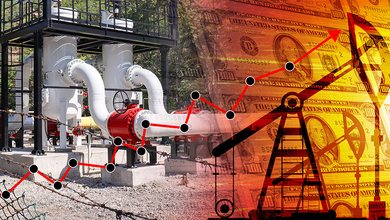
The escalation of the conflict in the Middle East and the involvement of Iran is creating strong shocks in global energy and financial markets. Analyses by international economic media warn that a prolonged war could cause disruptions in energy supplies, increase oil prices and new inflationary pressures in the global economy.
One of the main concerns is the risk that the conflict will affect the region's energy infrastructure or the transportation of oil through the Strait of Hormuz, one of the most important corridors of global energy trade.
According to an analysis published by “Bloomberg” entitled “War with Iran is a nightmare for oil and gas markets”, it is emphasized, among other things, that a wide-ranging conflict in the region has long been considered the most dangerous scenario for the energy market. The analysis emphasizes that “a wide-ranging war in the Middle East is the worst-case scenario for the global oil and gas market.”
The article highlights that the Persian Gulf region remains one of the main centers of global energy supply and any disruption in this area could cause an immediate reaction in oil and gas prices.
The Economist magazine also warns of a major impact on global markets. In the article “War in Iran could cause the biggest blow to the oil market in years,” the magazine notes that energy markets are particularly sensitive to tensions in this region, as a large part of the global oil supply passes through the Strait of Hormuz.
Any disruption to tanker traffic could significantly reduce global supply and significantly increase energy prices.
In another analysis published by "Bloomberg", titled "Oil Marks Increase as Conflict Raises Fears of Supply Disruption", it is emphasized that geopolitical tensions have brought an immediate reaction to energy markets.
According to the article, “oil markets react immediately to any risk to global supply, especially when tensions involve the Middle East.”
This situation has also significantly increased uncertainty in financial markets. Investors have begun to orient themselves towards safe assets such as gold and bonds, while stock markets have shown fluctuations due to increased geopolitical risk.
Analysts warn that the impact of a prolonged conflict could go beyond the energy market. Rising oil prices typically spill over into the economy through rising transportation, manufacturing and food costs.
According to another analysis by “The Economist” in the article “Iran’s energy nightmare is becoming reality” it is emphasized that global markets are facing a real risk of a new energy shock. The article emphasizes that “a prolonged conflict could create an energy crisis that would affect inflation and economic growth in many countries.”
Experts emphasize that countries that depend on energy imports are most at risk from this situation. European and Asian economies could face rising production costs and new inflationary pressures if energy prices continue to rise./Monitor.al/