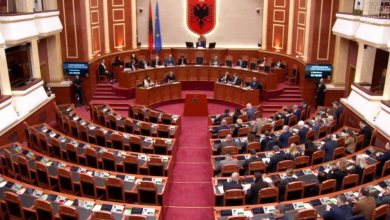



Two years after the legal change that was criticized by the opposition as "ordered", the Socialist Party, through MP Antoneta Dhima, proposes the reinstatement of the old provision for the election of the commander of the Republican Guard, acknowledging the mistake of two years ago.
Two years after changing the criteria for electing the general director of the Guard of the Republic, the socialists 'repent' and demand a return to the old formulation, which conditions the election on being a career employee within the institution.
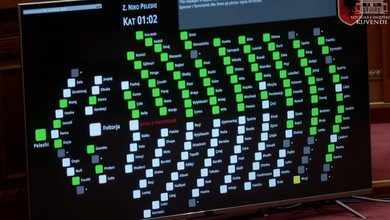
The new changes to the law on the "Guard of the Republic" are part of a draft law proposed by socialist MP Antoneta Dhima, introduced for consideration in the Parliament's work calendar.
The Initiative of Dhima proposes amending Article 17 with the wording; "The General Director of the Guard of the Republic is appointed by the Prime Minister upon the proposal of the minister and is given the rank of "Senior Director". He is selected from among the Guard employees who hold the rank of "First Director/Senior Director".
Just two years ago, the socialist majority, of which Dhima was a member, insisted on changing this article, opening the way for candidacies from outside the ranks of the Republican Guard. The change was strongly contested by the opposition at the time as a "custom law" to pave the way for the election of Ermal Onuz.
The provision was approved when the institution was without a leader and just a few months before the vote in the Assembly, the announced name, Onuzi, was declared the winner after a so-called 'open competition' procedure.
Onuzi resigned in June 2005 and currently, the Republican Guard is looking for a new leader.
Asked by BIRN what was the impetus for proposing these legal changes, initiator Antoneta Dhima referred to the arguments in the report submitted to the Assembly, acknowledging that the 2024 changes were in conflict with other legal norms, where ranks for management positions require a minimum of 11 years of work.
The initiative, she said, "aims to improve legal norms which, from the practice to date, have encountered difficulties in implementation, have lacked harmonization or have conflicted with other norms of the law, as well as with the general spirit that the legislator has taken into account in its drafting."
In its initiative, Dhima also includes other provisions related to careers within this institution and the criteria for employment there, opening the doors to individuals who have worked in other security institutions such as the Armed Forces, the State Police or SHISH.
According to the MP, a significant portion of these changes were driven by recommendations made by the Ministry of Internal Affairs' audit group in December 2025.
"Regarding the above, the purpose of this draft law is to improve, clarify and avoid creating ambiguities in the implementation of norms, which are unclear, thus leading to the formation of precedents that lead to misinterpretation or incorrect application of the law," the report states. /BIRN/