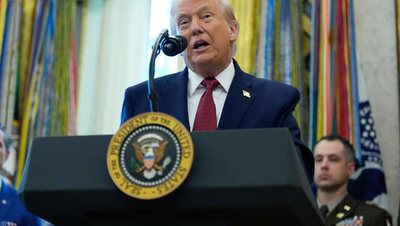


A Washington Post article states that the administration of US President Donald Trump has launched a diplomatic campaign to push governments around the world to further isolate key structures of the Iranian regime.
According to the American newspaper, in a diplomatic cable sent on Monday to all American diplomatic missions, the State Department has asked US embassies and consulates to call on host governments to declare Iran's Islamic Revolutionary Guard Corps (IRGC) and Hezbollah in Lebanon as terrorist organizations.
The cable, reviewed by the Washington Post, instructs US diplomats to convey this message by Friday “to the highest appropriate level” of the governments to which they are accredited. The document also states that US diplomatic missions should coordinate, as appropriate, with Israeli diplomats to push this initiative forward.
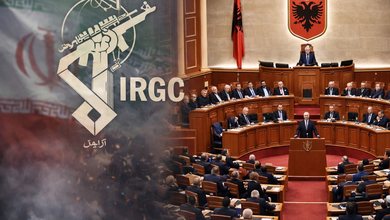
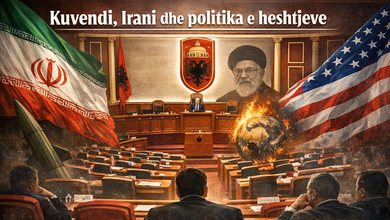
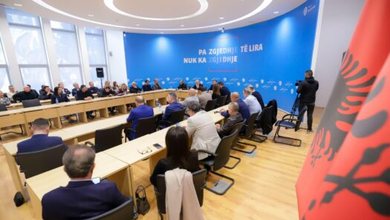
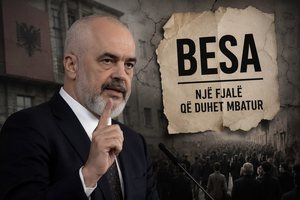
It seems that today's session in the Albanian Parliament is taking place in this context, where a resolution condemning the Iranian regime and calling for the declaration of the IRGC as a terrorist organization is expected to be adopted.
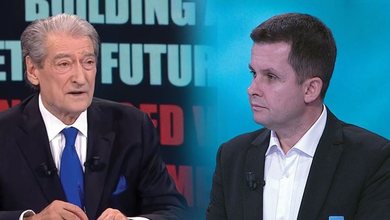
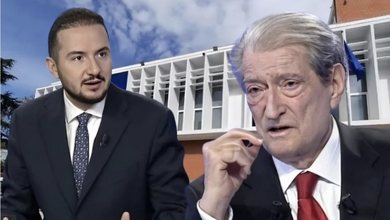
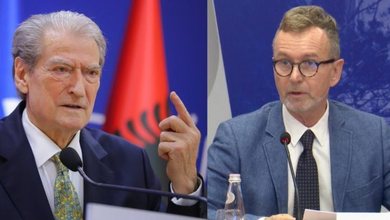
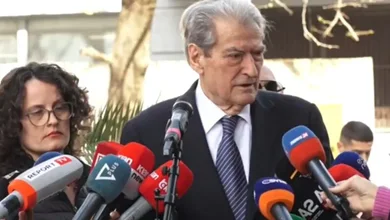
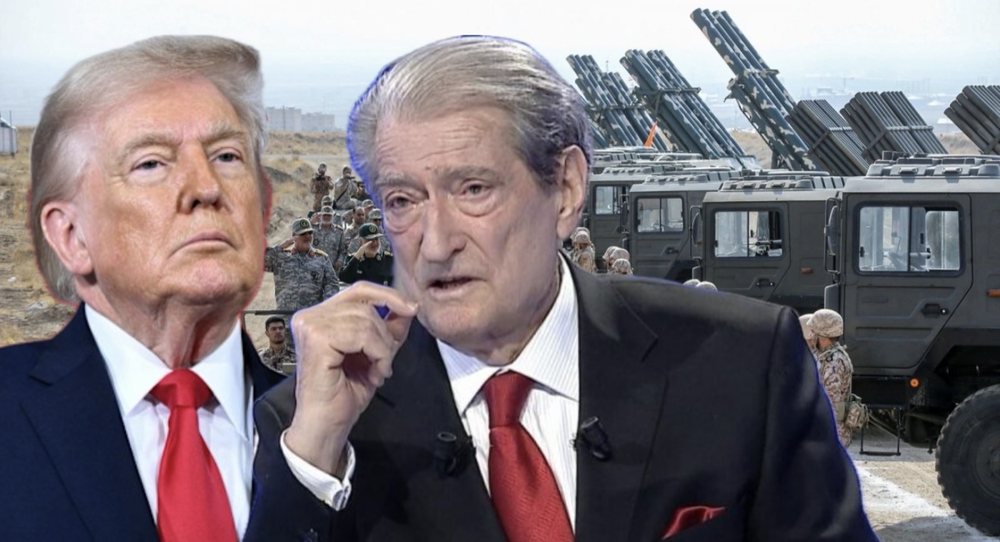
If Edi Rama is known for such servile moves – especially at a time when his internal situation has become increasingly difficult in relation to SPAK – Sali Berisha's behavior is much more strange.
For months, he has been trumpeting loudly that with the arrival of Donald Trump in the White House, the Democratic Party's relations with the US would enter a new phase, at the highest level of political cooperation. Berisha even paid a very high price – over 6 million dollars – to engage Chris LaCivita, one of Donald Trump's main campaign strategists, as an advisor to the May 11 campaign.
This move was used by Berisha as evidence of a close rapprochement with the Trump administration, after the frosty period with the Biden administration, which culminated in his declaration as "persona non grata".
Logically, in this context, the flag of American support in Albania should be carried by the Democratic Party and Sali Berisha. But recent developments show the opposite.
At a delicate moment for the US, in the midst of an open confrontation with Iran, when the alignment of allies becomes even more visible and necessary, Sali Berisha is choosing not to align.
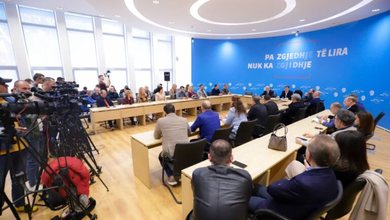
The boycott of today's parliamentary session – and especially the justifications used for it – sound weak and strained. Arguments like "illegal session because it was called on Tuesday and not Thursday" or "session for Edi Rama's private agenda" fail to explain the political essence of the decision.
Because, essentially, it is a development that is directly related to an initiative by the Trump administration to push allies towards a clear stance towards the Iranian regime.
In this sense, Edi Rama has rushed to seize the moment and position himself in line with the American demand. While Sali Berisha, with today's boycott, gives a political meaning to his non-participation in this vote.
Because when it is clear that this is not a personal initiative of Edi Rama, but a development related to the diplomatic pressure of the Trump administration, the absence from the vote is automatically read as a distancing from this line.
One could go even further and interpret this behavior as an indirect “pro” Iran alignment. Such a perception would place Berisha and the Democratic Party in a difficult position, both in domestic politics and in the international arena, especially in relations with the US.
In the eyes of the Albanian public – and especially his supporters – Berisha would appear as a negligible political figure for the Trump administration. A strong blow to the narrative he has built over the past year, according to which Trump's return to power would very quickly bring the DP back to power in Albania.
At the same time, the Democratic Party's position in relations with the US would risk deteriorating significantly. A party and a political leader that remain outside this alignment would be perceived as untrustworthy and irrelevant to the US administration.
The real reasons for Berisha's stance are still unclear. But one thing can be said with irony: those $6 million paid to Chris LaCivita would have been worth even a phone call, at such a delicate moment as today.