


By Vehap Kola
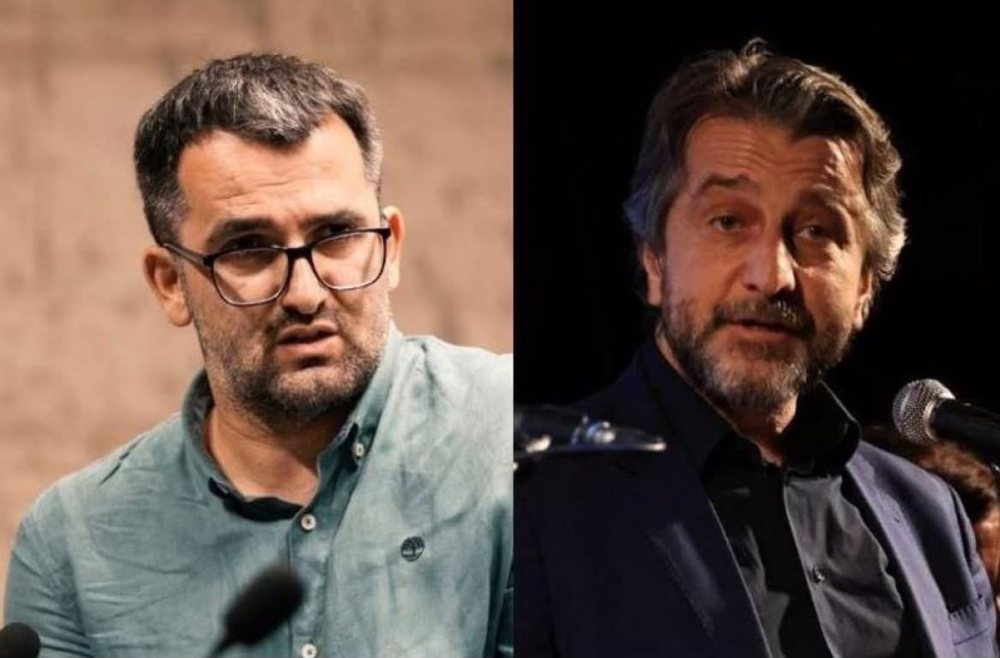
An exhibition funded by the Kosovo Assembly has opened a much larger issue than a cultural or historiographical debate. The exhibition is based on Shkëlzen Gashi’s book and is funded by the Kosovo Assembly. In some of its panels, dozens of Albanian victims of massacres, including the Dubrava case, are presented as “armed persons”. After public reactions, the Municipality of Pristina revoked the exhibition’s permit, while the Assembly stated that the content remains the responsibility of the authors and organizers. Gashi himself said that he relied on the list of the Humanitarian Law Center and that Kosovo still does not have an official and comprehensive list of the killed.
These episodes give Serbia narrative ammunition. In modern warfare, especially in the Balkans, narrative is a weapon. When a Kosovo institution funds material with unclear or erroneous formulations about Albanian victims, Belgrade gains a golden sentence for diplomatic and propaganda use: “even Kosovo institutions themselves are admitting that they are not clear about who was a civilian and who was a gunman.” This is not a legal victory for Serbia, but a victory in the field of influence, suspicion and relativization.
This is especially dangerous because Serbia has long waged the battle with selected archives, aggressive diplomacy, the media, the production of moral equivalences, and the introduction of the thesis that “everyone has committed crimes, so no one has the right to speak from a moral position.” In this game, every inaccuracy on the Albanian side is multiplied. A mistake in Pristina becomes “evidence” in Belgrade, a “source” in peripheral international media, then “legitimate suspicion” in diplomatic circles where no one has time to delve into the details. This is how hybrid warfare works.
The second consequence is internal, and it is equally serious. These episodes shatter the national cohesion of memory. Kosovo needs a strong architecture of state memory: verified, documented, institutionally protected and immunized from amateurism, revisionism or irresponsible activism. When this does not exist, memory passes into the hands of fragmented actors: NGOs, individual authors, polemicists, parties, families of martyrs, veterans and the media. Then memory ceases to be state-forming and becomes an arena of internal struggle. Consequently, the external rival wins without spending anything.
The third consequence is related to the allies. NATO has this month reaffirmed its strong commitment to stability in the Western Balkans and the role of KFOR in maintaining peace in Kosovo. At the same time, there are reports and public debates about the possibility of a reduction in the American presence in KFOR, which has caused concern in Washington and Europe, although there is no official announcement from NATO of a major immediate change. This means that the security umbrella is still there, but the strategic nervousness is real. In such a climate, Kosovo does not have the luxury of producing cracks in its narrative legitimacy on its own.
This gives Serbia polemical, propagandistic and psychological legitimacy. It gives it the right to say: “Kosovo’s history is not as clean as it is claimed.” It gives it the opportunity to relativize Serbian crimes. It gives it space to present the KLA structures not as a liberation force emerging from an oppressed people, but as a suspicious entity that has instrumentalized victimization, right now before the decision of the Special Court in The Hague. Although these theses are untrue, they become politically functional when our side itself makes their job easier.
My prediction is this. In the short term, Serbia will use this kind of opportunity to intensify the information war, to increase diplomatic pressure and gradually weaken Kosovo’s credibility in the eyes of tired Western actors. With KFOR still on the ground and NATO officially maintaining a line of engagement, a direct Serbian military entry into Kosovo remains the least likely scenario for now; the more likely scenario is a hybrid pressure scenario, controlled crises in the north, instrumentalization of local Serbs, influence operations, and the continued production of a crisis of confidence.
In the medium term, the biggest risk for Kosovo is not that Serbia wins immediately on the ground. The biggest risk is slow erosion: fatigue of allies, fragmentation of messages within Kosovo, delegitimization of the state-forming elite, and the normalization of the thesis that “the truth is somewhere in the middle.” For a small and young state like Kosovo, this is a time mine. Small states do not survive on morality alone, but without public morality and historical clarity, they also lose strategic support.
If Kosovo does not centralize, verify, and formalize the memory of the war with high scientific, legal, and archival standards, cases like this will be repeated. And every repetition will be a victory on the table for Belgrade. Not because Serbia is right, but because Kosovo is giving Serbia material to use against it.