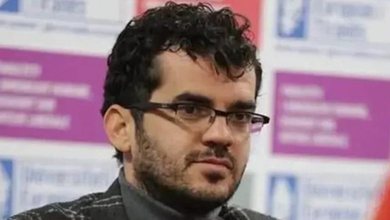



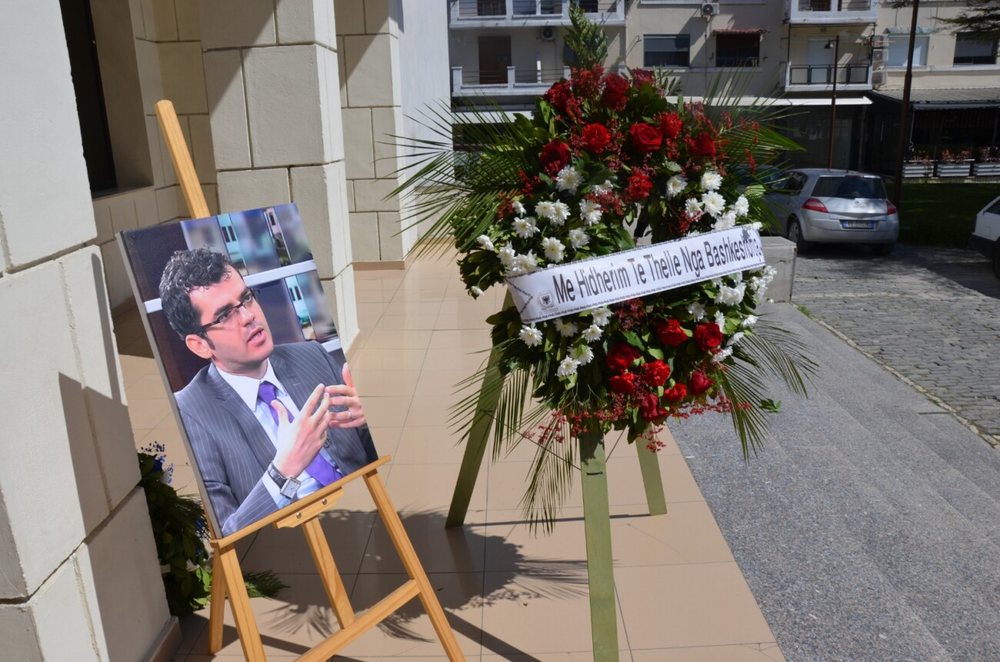
On March 25, in the heart of the city of Berat, amidst tributes and prayers, the final farewell was given to journalist and publicist Namir Lapardhaja, who passed away on March 18, while political representatives, analysts, citizens, and believers gathered around him across all divisions.
"Namir's departure is one of those losses that cannot be reduced simply to the personal pain of a friend or a precious person," Miklor Pasku, a tourism expert, told Media Amfora. "It is a loss that transcends the boundaries of the intimate and affects the public space itself," he added.
From 11:00 to 13:00, at the Palace of Culture, family, friends, citizens, colleagues and representatives of political and public life paid homage to Namir, while an uninterrupted line of people formed in the hall, pausing for a few moments before continuing in silence.
At the entrance, his picture with a calm smile seemed to await everyone, as one by one, in silence, people stopped to bid their final farewell to Namir, in a moment that spoke louder than any words.
"It is an extraordinary loss. We lost a colleague, a brilliant guy, who will be missed by journalism," said journalist from Berat, Sulo Gozhina, to Media Amfora.
He tried to keep his emotions under control through the camera that accompanies him everywhere, professionally documenting this last moment as a form of respect for his colleague, while each shot seemed to contain more feeling and responsibility than usual.
With flowers in their hands and slow steps, people from different worlds stopped one by one, bringing with them memories, unspoken words and respect for Namir. They were all there, united in the same moments, for a figure who had known how to stand above divisions and leave a mark on each of them.
"The premature departure from life of Namir is very painful. A rare friend, whose presence gave meaning to every circle he was in," Nevila Hyska, an economist in Berat, told Media Amfora.
Facing his photograph, placing a flower, condolences for his parents, wife, two sisters and two daughters, as well as the final farewell to Namir passed quickly, leaving behind a lack that is expected to be felt in the city square where he spent his days, next to his favorite coffee shop that will no longer await him with impatience, like every summer when he returned from Germany.
Namir Lapardhaja passed away unexpectedly on March 18 in Germany, at the age of 40, leaving behind a profile built between journalism, critical thinking, and civic engagement.
Born in Berat to a persecuted family and educated in literary studies, he worked as a teacher, while at the same time becoming a well-known voice in the media for his direct analysis of political and social developments, while through writings and books he sought to influence public debate and civic awareness.
"A journalist, but also a civic voice, an impartial opinionator who expressed his opinions openly - he will not only be missed by Berat, but also by the Albanian public opinion," said journalist Sulo Gozhina.
Among those who experienced the loss as a bond built on values was Nevila Hyska, with whom she shared a friendship nourished by culture, books, and reflection on social developments.
"Today the city seems poorer and quieter, as if it lacks a voice that kept it alive," she said.
Beyond the personal loss, for some of those who had followed and appreciated him in the public space, his departure was linked to the lack of a voice that brought clarity and resisted the banality of the times.
"For me, this departure remains difficult to accept, precisely because he was one of those people who create the feeling that they should still be among us, with their words, clarity and integrity," said Miklor Pasku.
According to him, Namir's loss goes beyond the city and affects the very climate of public opinion and debate in the country.
"Because Namir represented an increasingly rare trait in our public life: the man who thinks freely, who articulates with dignity and who does not submit to the banality of the time. His departure is, in this sense, also an impoverishment of our civic and cultural climate; we have lost a voice that was good for thought, debate and public honesty," concluded Pasku.
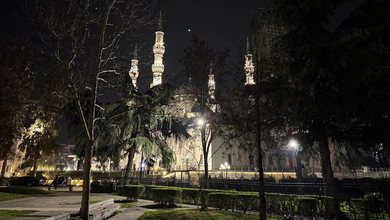
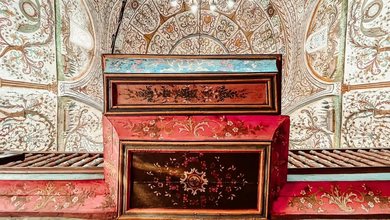
In the courtyard of the King Mosque, hundreds of practicing men and women then lined up in silence for the "Funeral Prayer", in a solemn moment where the city seemed united in prayer.
In front of them, the hoxha led the rites, while everyone, in a common humility, stood lined up, with hands clasped and heads bowed, in a prayer that united silence with faith.
Raised in a family that practiced the Islamic faith and closely associated with the same values, Namir was also guided through this ritual that represented not only a religious obligation, but also an act of respect and humility.
He passed away just two days before Eid al-Fitr, after fasting that day, which turned out to be his last, experiencing it like every year, although far from his family and friends, with whom he would share his congratulations from afar, as he always did.
His absence was felt even more strongly on the day of the holiday, as a close friend of his in Berat described in a post on social media.
"My dear brother, today marks two days since I received a single text message from you. It's the first Eid that I haven't received a greeting from you. For me, it's also the first Eid that I haven't posted a single photo from the party, because I didn't shine anymore... What now?" wrote Helibak Muçogllava.
At 1:00 PM, Namir Lapardhaja was escorted to his final resting place, the Burdullias cemetery, amidst a procession that described the city center, the "Martyrs of the Nation" neighborhood, which he loved so much and for which he often raised his voice, as a municipal councilor and as an active citizen, before arriving at his final resting place.
Family, friends, and citizens followed him in silence until the end of the procession, to say their final farewell with a broken heart.
At the age of 40, as the author of three books, the father of two daughters, and a voice that influenced public opinion, he left behind more than a personal journey.
What remains is not just a memory, but a presence that continues to live on in the speech and debate he built.