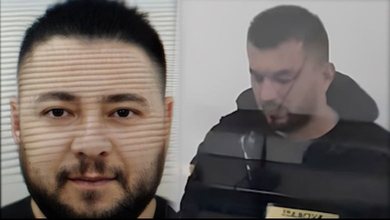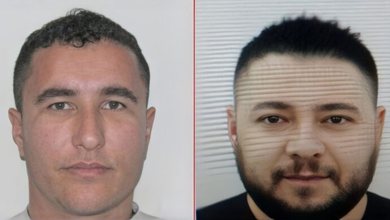




The show "Në Shënjestër" on News24, with author Klodiana Lala, brought this Tuesday the story of Imer Hajdari, the police officer of prison 313 executed 14 years ago, on April 10, 2012 in Tirana.
Based on the data from the investigative file, new details from the still unsolved incident were broadcast during the show, although Imer Hajdari's family members are seeking justice.
His murder could have been considered a mystery, with a hundred unknowns, if the circumstances in which he was shot were such a truth.
But if today this crime remains a mystery, this is not due to the ability of the perpetrators to hide their tracks, but rather to the apparent inability of the investigative team to fully investigate this crime, which still cries out for justice today.
A murder that actually came a year after another crime that surprisingly dated to the murder of the prison officer.
A coincidence not to be underestimated, when the victim had been the subject of constant threats of blood feud, at a time when he was not at all guilty of the murder committed by his relative.
But how did prison police officer Imer Hajdari find himself shot dead with three bullets inside his vehicle, in one of Tirana's alleys, in April 2012, as he was on his way to take duty?
What was the enmity between his family and that of Xheçuka, which had begun a year earlier?
And why the investigative group, despite its suspicions that the murder was committed by members of the Xheçuka tribe, never reached the real perpetrators of this crime.
Perpetrators who, even today, 13 years after committing this crime, continue to be at large.
Did the state fail to prevent the murder of a prison police officer who had knocked on the doors of institutions seeking protection?
Meanwhile, the family continues to seek justice today.
According to the investigative file provided by the show 'Në Shënjestër', Imer Hajdari was found murdered inside his car, on 'Teodor Keko' street in Tirana, in the early hours of the morning, on April 10, 2012.
At the exact moment when he was driving his car towards prison '313', in the capital, a prison where he had only recently been transferred, this after the problems he had in his city, where he lived, that of Mamurras.
Where he had to abandon his residence and his work in the Fushë-Krujë prison, after threats from the Xheçuka family, who had promised to take revenge for the murder of their close friend, Imer Hajdar's nephew.
Something about which he had also sent word to the Hajdari family.
But not only that, they had sworn that they would kill the best man they had, specifically mentioning the name of Imer Hajdari.
According to them, the person responsible for the arrest of the prison police officer was his nephew Alket Hajdari, the latter of whom had also committed the murder of their close friend, Shaban Xheçuka.
On April 10, 2012, at around 6:00 AM, the Operations Room of the Tirana Police Directorate received a report that on 'Teodor Keko' street in the capital, near the branch of a second-tier bank, citizen Imer Hajdari, an officer at prison 313 in Tirana, was found shot dead.
Where the preliminary investigation resulted in the victim being driven in a gray 'Seat' vehicle with license plate AA762AD from the rented apartment in this area, towards the main road, to go to work.
What was found at the scene was that Imer Hajdari had received three bullets in his body.
Bullets that had taken his life instantly without giving him any chance to escape.
Meanwhile, the shooter, who is believed to have been a lone gunman, was seen waiting for his victim in the alley before the victim drove his car onto the main road.
Which was also evident from the calmness with which the author approached.
As well as the shots he fired at the windshield of the vehicle in which prison officer Imer Hajdari was driving that morning.
Choosing to get in front of him and shoot him at the exact moment the car had slowed down.
This was enough time for the killer to collect the casings.
Thus cleaning up the crime scene.
A crime that seemed well-organized and by a hand that had not only studied the area, but also obtained accurate information on the target's movements.
From the dynamics of the event, it appears that the victim was shot with a firearm, inside the vehicle, without being able to exit to the main road.
An examination of the scene also revealed that there were three entry holes in the front windshield of the vehicle driven by the victim, on the driver's side, while the victim was found dead in the driver's seat.
While no shell casings were found at the scene, 3 gunshot wounds were found on the victim's body.
So from what we can see, the author is thought to have been a professional shooter.
This is not only for the skill he has shown in his actions but also for his trained hand.
By precisely hitting the victim at the most sensitive points of the body.
Neutralization that aimed at his immediate elimination.
What is interesting is that the shooter took almost meticulous care to stay out of range of security cameras in the area.
Which he seems to have successfully achieved.
After reviewing the footage in the area, he does not appear either before the crime or during the assassination.
But what is noticeable is that the investigative group has stopped at reviewing the footage only before and after the assassination.
But not in the previous days to see if there were any suspicious movements in the area.
Or even to comb the area with cameras the day before and after the event.
Which constitutes a deficiency in terms of a full investigation of the event.
Investigation File
Reviewing the bank's video footage did not yield any clues for the investigation, as they did not have a view of the scene.
Meanwhile, the chemical examination of the additional factors of the shooting resulted in the fact that in the four fingerprints subject to examination for citizens Gjergj Kaçurri and Akil Xheçuka, the presence of nitrites, which are present in the additional factors of the shooting, was not detected.
But why were the first to be called to take additional samples of the gunshot marks members of the Xheçuka family?
Family members who were kept under surveillance, in order to document their connection to the murder of prison officer Imer Hajdari.
A murder that, as we said, came right on the eve of the 1st anniversary of another murder, that of Shahin Xheçuka.
Who on April 23, 2011, was shot dead in Mamurras by Alket Hajdari, who at that time worked as an officer in the prison police. Alket Hajdari was the nephew of Imer Hajdari, the police officer of prison 313 who was killed in Tirana. Where members of the Xheçuka tribe are also suspected as organizers of this murder.
But their guilt has still remained unproven.
From the examination of the phone of citizen F. Xheçuka, it was concluded that deleted data cannot be recovered from his phone's memory. While no deleted data was found from the SIM card.
Likewise, from the interception of direct conversations between the family members of citizen Shahin Xheçuka, at the ceremony of the 1st anniversary of his death, precisely at the place called 'Mamurras Cemetery', no data of interest for the investigation of the criminal proceedings could be obtained.
But what was this murder that had brought so many nightmares to the Hajdari family?
And why was the Xheçuka family's target now precisely prison officer Imer Hajdari?
What did Imer Hajdari's widow, now a widow, tell the police about the concerns that the murder of Shahin Xheçuka, committed by her now deceased husband's nephew, had brought to the family?
And why exactly was the Xheçuka family looking for the lost blood of their relative, Shahin Xheçuka, from Imer Hajdari?
Xhevahire Hajdari, the widow of Imer Hajdari, who also confessed to the entire conflict, which allegedly led to the murder of her husband. Xhevahire Hajdari
My husband, Imer Hajdari, was employed as a police officer in the Fushë-Krujë prison and from there he was later transferred to prison 313 in Tirana.
The reason for this transfer was a feud created with the family of citizen Hysen Xheçuka.
The enmity that arose after my husband's nephew, Alket Hajdari, on April 23, 2012, killed citizen Shahin Xheçuka. And after this murder, he surrendered to the police./In Shënjestër