The number of Italian soldiers stationed at the Ali Al Salem base in Kuwait has been significantly reduced. Initially there were 41, but after another group left the country, just over 20 soldiers remain at the base, the minimum necessary to avoid completely closing this military post.
The night before, through an operation coordinated by intelligence services, other Italian military personnel were also evacuated from Baghdad, first passing through Kurdistan, then to Turkey and finally to Italy. Italian Defense Minister Guido Crosetto announced that a small patrol from Erbil will also leave Iraqi territory in the coming hours, which is considered exposed to possible Iranian retaliation.
However, for the time being, the Italian embassy will not be closed.
These moves are part of what the Italian government calls a "careful remodulation" of its presence in the region, a decision taken by Palazzo Chigi and implemented by the Ministry of Defense.
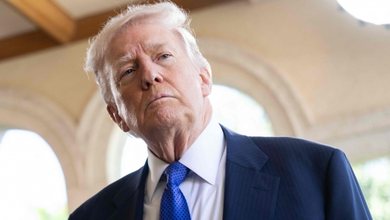
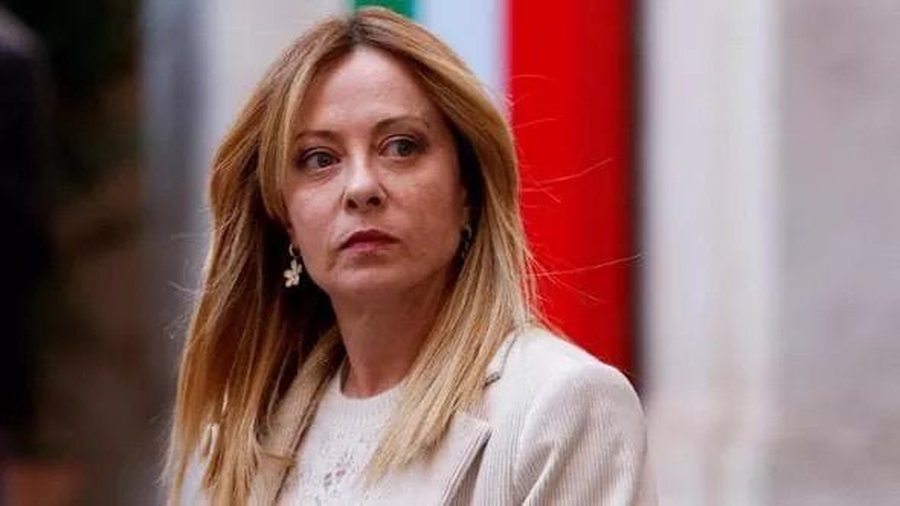
This development is also seen as a signal that the war launched by US President Donald Trump is not being well received in Rome and is creating political embarrassment for the Italian government led by Giorgia Meloni.
Italy has chosen to keep a cautious distance from the US offensive against Iran. Prime Minister Meloni signed the G7 declaration along with other European countries, but without the involvement of Washington, while Rome has refused to participate in a military mission in the Strait of Hormuz, requested by Trump.
Minister Crosetto stressed that many countries have rejected a mission that could be interpreted as entering into war. According to him, such an operation should be multilateral, perhaps under the leadership of the United Nations.
Meanwhile, the Italian military presence in the Gulf region remains a concern for the government in Rome, as the bases could become the object of retaliation from Tehran. In recent hours, scenarios for the security of these bases have been discussed at Palazzo Chigi, including the possibility of closing embassies, repatriating soldiers and transferring sensitive documents and strategic technologies.
At the same time, Italian diplomacy is trying to limit the consequences of the crisis and maintain relations with allies in the region, such as Kuwait, the United Arab Emirates and Qatar, countries with which Italy has important energy agreements and strategic contracts.
The Italian government is trying to avoid direct confrontation with the Trump administration, but at the same time is emphasizing the need for de-escalation and diplomacy. Prime Minister Meloni stated that Italy does not participate in attacks against Iran and that its priority is to reduce tensions.
According to her, the world is experiencing a visible crisis of international law, where unilateral decisions are increasing and international institutions are becoming less and less effective.