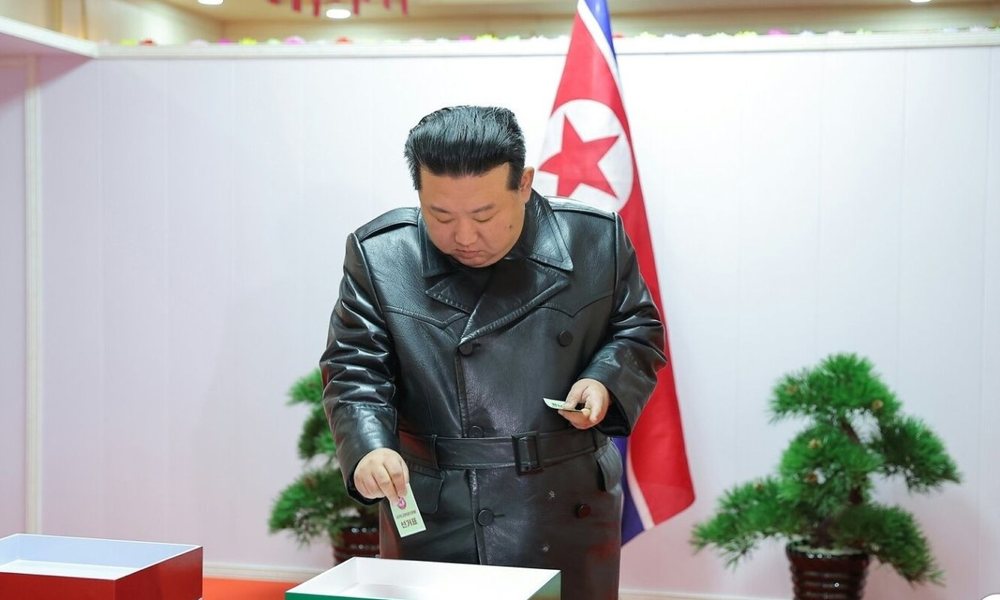
Kim Jong-un has secured a landslide victory in the elections for the Supreme People's Assembly of North Korea. The leader's ruling party won an impressive 99.93% of the vote. The elections were the first since 2019, according to the country's state media, with the result moving, as expected, to… overwhelming levels of “unanimity”. A total of 687 deputies were elected to the Supreme People's Assembly, within the framework of an electoral process that is internationally contested. According to the same sources, the turnout reached 99.99% of registered voters, confirming, at least on paper, a near-universal turnout at the polling stations.
The Supreme People’s Assembly functions as the country’s parliament, with responsibilities including approving the state budget, appointing officials and passing legislation.
Kim Jong-un himself exercised his right to vote at a polling station set up in a coal mine in South Pyongan province, while citizens over the age of 17 were asked to choose between accepting or rejecting a single candidate nominated by the ruling Workers’ Party. The Korean Central News Agency (KCNA) said the result reflected “the citizens’ fervent desire and self-confidence to firmly safeguard the glorious political system of their state.”
However, the news caused a stir on social media, with many wondering what happened to the 0.07% who did not vote for the party… Kim did not run for re-election. However, he is expected to be reappointed in the coming weeks as head of North Korea's State Affairs Commission, a position he has held since 2016, when he created it to strengthen his control over the country.
His sister, Kim Yo Jong, was among the main beneficiaries of the vote, after being promoted to the position of director of the Department of the party's top Central Committee.
The term of office of members of the Supreme People's Assembly is normally five years. Observers estimate that this time, it may have been extended to seven years, to coincide with the party congress, which is held every five years. New members of the Central Committee were elected at the last congress, however, without including names such as that of Choe Ryong-hye, chairman of the Supreme People's Assembly's standing committee. Observers also point out that North Korea's parliament may be passing on to a new generation of executives.