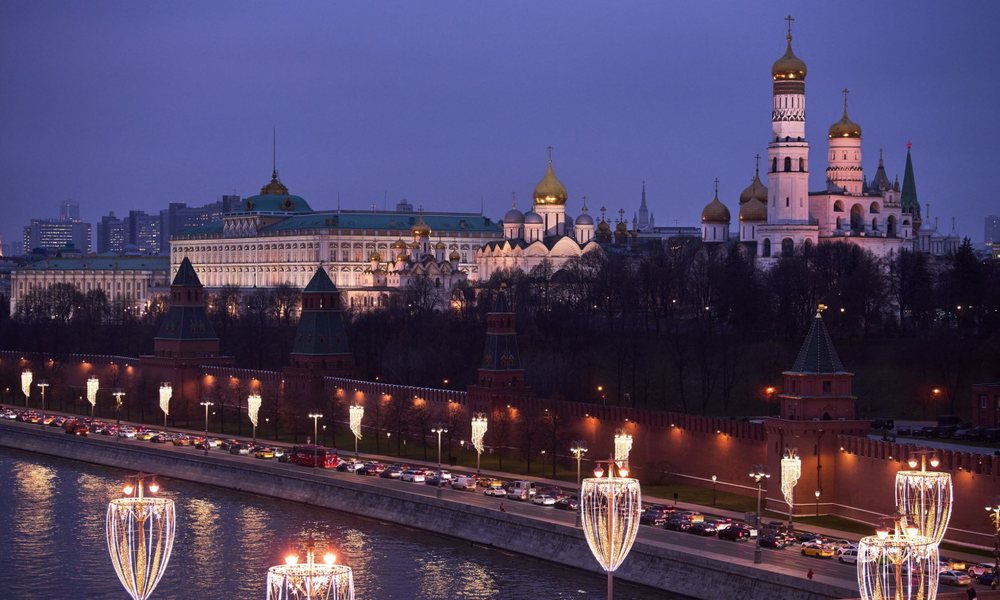
"A digital 'dark veil' has fallen over Moscow, revealing the growing psychological uncertainty in which Vladimir Putin lives. Last week, the Russian president ordered a complete shutdown of mobile internet access throughout the capital, a modern metropolis of over 13 million inhabitants," writes Corriere Della Sera.
According to Italian media, such a decision was never announced, but was implemented suddenly for unspecified security reasons, and its duration remains unknown.
The increasingly strict censorship of the internet adds to the restrictions of recent months. Since the summer, the Kremlin has gradually restricted and blocked messaging apps considered difficult to control, such as WhatsApp and Telegram, as well as social platforms such as YouTube.
The Italian newspaper further highlights that the ban on 'Telegram' has also caused problems for Russian soldiers on the Ukrainian front, who used the platform created by Pavel Durov to communicate.
In place of the “old” internet that was controlled but still functional, the Russian leadership promoted the launch of a new social network, controlled by people extremely close to Putin. The platform, launched a year ago and called Max, is controlled by the state-owned company VKontakte. Max’s administrators include Putin’s personal banker Stepan Kovalchuk, Vladimir Kyriyenko (son of the deputy head of the presidential administration), and Mikhail Shelomov (son of the president’s cousin).
The digital disconnect in Moscow, the heart of the Russian economy, is plunging the city into 'uncharted waters'.
Outside of Wi-Fi areas, it is impossible to make payments in stores by card or app, call a taxi or delivery service through an app, or use any messaging system.
This decision appears to combine several factors; Putin's deep fear, political manipulation, and control through a closed group of oligarchs.
Putin appears to have been psychologically traumatized by the way the Israelis and Americans used Tehran's local mobile network to assassinate leaders such as Supreme Leader Ali Khamenei and Security Council Secretary Ali Larijani, tracking their movements.
Finally, the measure also serves the interests of the oligarchs who make up Putin's personal "presidential guard."
The removal of any other private platform satisfies the "greed" of those few who control information, without considering the consequences for the residents of Moscow, all of Russia and certainly for Ukraine, concludes Corriere Della Sera.