


Now a “wild river national park,” the Vjosa needs more trees planted to preserve its fragile ecosystem. And visitors are being asked to help…
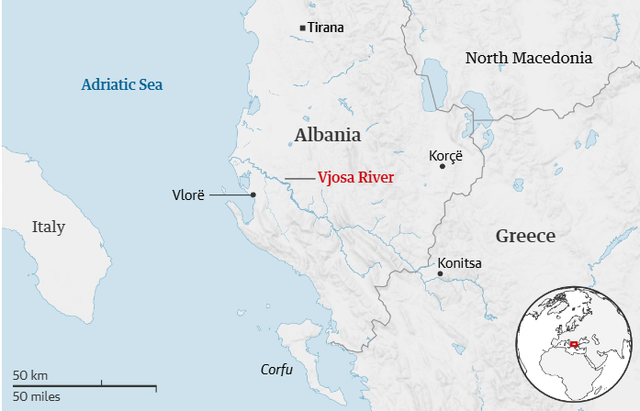
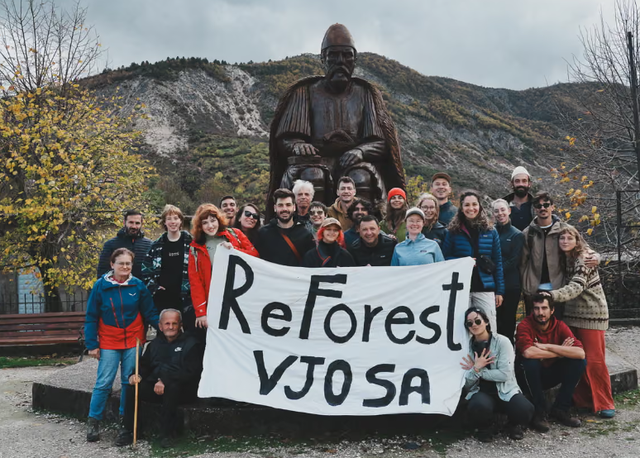
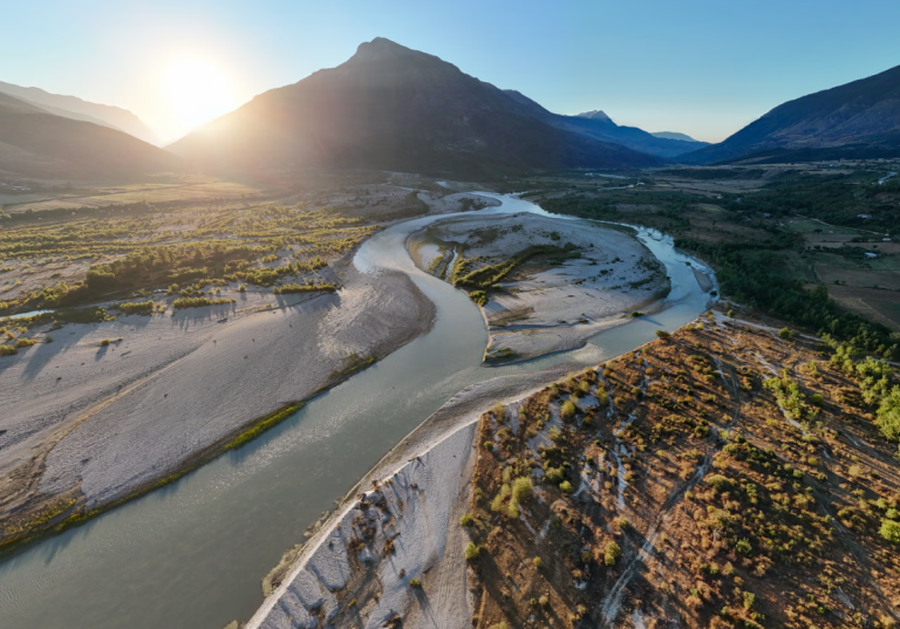
Our introduction to tree planting comes from Pietro, an Italian hydromorphologist tasked with overseeing our group of about 20 volunteers for the week. We stand in a makeshift nursery, full of slender willow and poplar seedlings, just above the Vjosa River – an elegant, winding waterway that runs through southern Albania from east to west, from its source 169 miles away in Greece.
Artfully pulling a small willow sapling from the clay-rich soil, Pietro holds the plant up for all to see. Its roots, covered in soil, look strangely exposed and fragile. “The secret is not to accidentally cut the stem or break the roots,” he says. The message is clear: we grab our picks and start working in pairs, following his instructions.
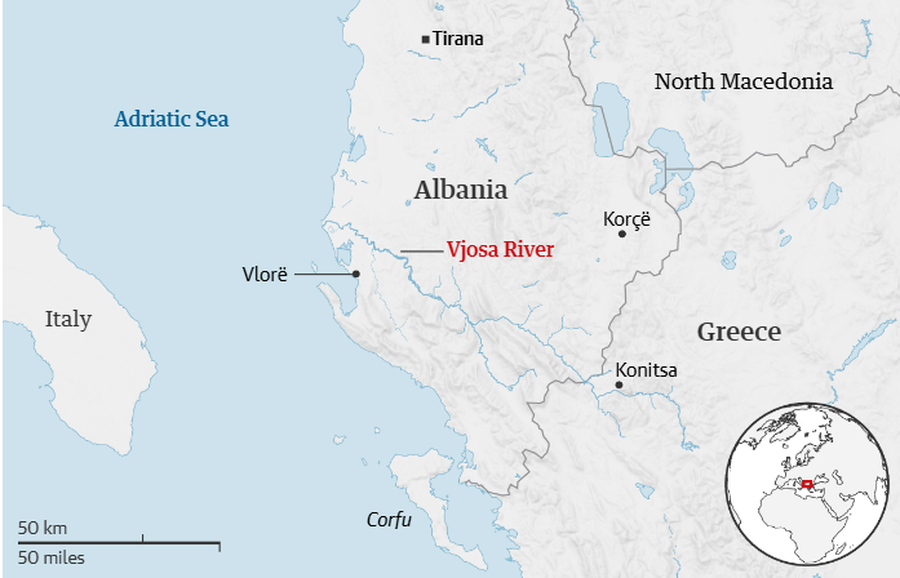
The volunteer week is the brainchild of EcoAlbania and Austria-based Riverwatch. In 2023, the two environmental organizations succeeded in convincing the Albanian government to declare the Vjosa River as Europe’s first “wild river national park.” It was a timely intervention. According to a new study co-funded by Riverwatch, Albania has lost 711 miles (1,144 km) of “near-natural” river segments since 2018 — more, proportionally, than any other country in the Balkans. Now, the question for both organizations is: what comes next?
On the first evening, Riverwatch’s executive director, Ulrich (“Uli”) Eichelmann, gives a presentation outlining his answer. But before that, we dine on lamb and home-grown vegetables. This traditional meal is a specialty of the Lord Byron guesthouse in Tepelena, a small town in the heart of the Vjosa valley and home to EcoAlbania’s field office – our base for the week.
Today, Tepelena has a somewhat dilapidated castle and little else, but two centuries ago it was the political center of Ali Pasha, a local ruler in the early 19th century. Under the Ottoman Empire of the time, the Pasha administered a vast territory of what is now southern Albania and mainland Greece – hence the visit (in 1809) that the inn bears its name.
Uli is a worthy heir to the notoriously harsh Ali Pasha. Armed with slides and statistics, he offers a powerful insight into the threats facing Europe's river network. His criticism is particularly harsh on the thousands of dams that now block the continent's once-free rivers, which he says have caused irreversible damage to fish stocks and aquatic ecosystems.
“Tourism is like fire,” says the director of EcoAlbania. “You can use it to cook soup, but it can also burn down your house.”
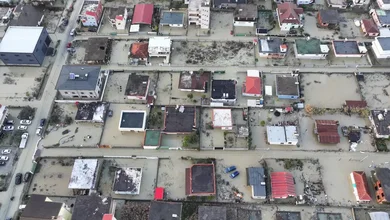
As one of the last wild rivers in the Balkans, Albania’s Vjosa has escaped such a fate, he claims. But that doesn’t mean all is well. “Although the river looks beautiful,” he says, “there are critical things missing.” At the top of the list are trees, much of which have been lost to fires, logging, road construction and aggressive grazing. The result: high levels of erosion and, consequently, a greater risk of flooding.
Inspired by Uli’s presentation, the next day we approach replanting with double the energy. Our group includes a London-based book illustrator inspired by David Attenborough’s documentary Ocean; a geospatial analyst from the US with the noble hope of creating “an Albania where Albanians would want to stay” (a reference to the 1.2 million Albanian emigrants abroad); and an Italian university student interested in ecotourism, to name a few.
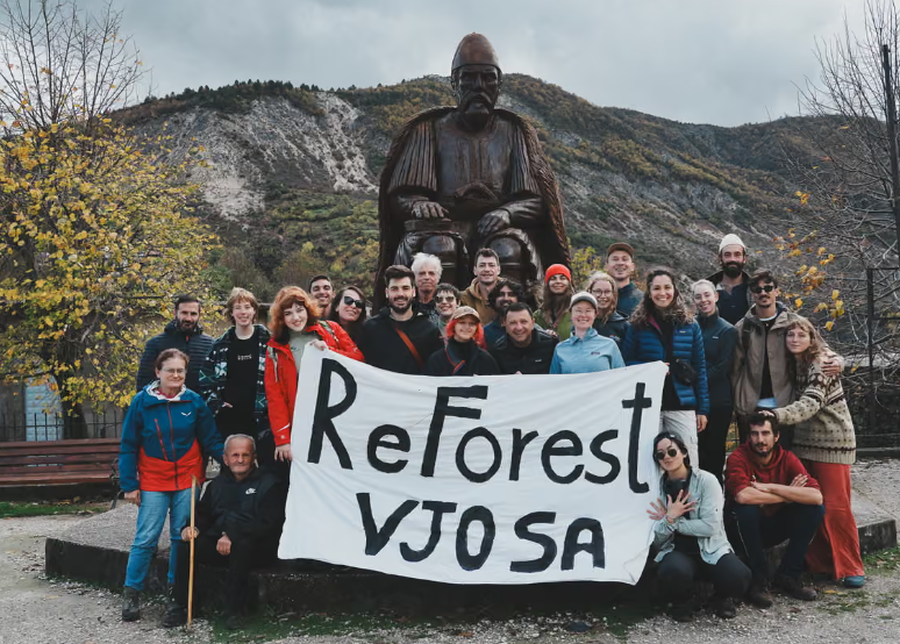
Over lunch on the second day, I start talking to Aida, a tour guide from Tirana who wants to get to know the Vjosa region better. Visitors rarely come to this part of Albania, she says. “Maybe they make a short stop in Gjirokastra,” she says, referring to the historic city on the neighboring Drino River, “but otherwise they just pass by.”
Looking at the river with its interwoven islands and rugged mountainous backdrop, we agree that such neglect is unfortunate. The region has a rich cultural and religious history (Albania was officially declared atheist in 1967), an interesting gastronomic tradition (“maybe not very sophisticated, but somehow delicious”), and a veritable abundance of natural attractions, she tells me.
A large portion of the trees have been lost to fires, logging, road construction and aggressive grazing. The result: a greater risk of flooding.
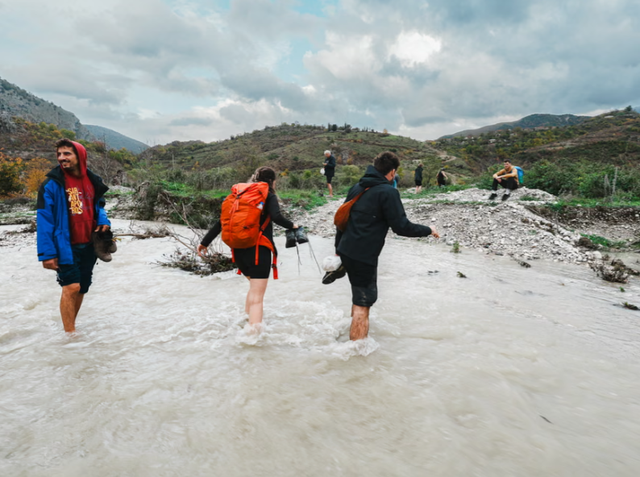
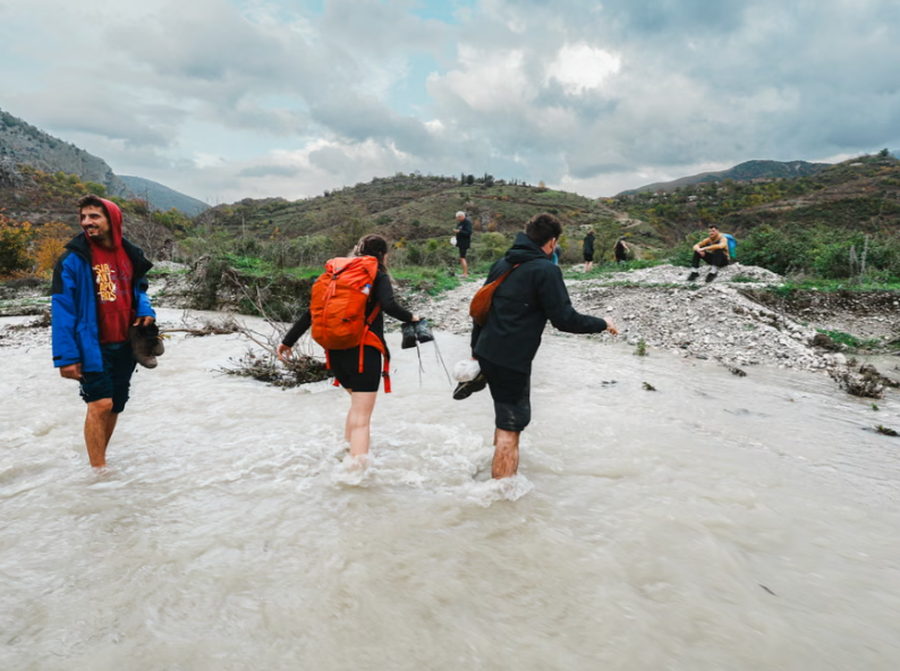
That night it starts to rain. Real rain. Torrents of water pour from an angry, thunderous sky. The next morning, news comes from Pietro that the planting area is now several meters under water. With the planting work temporarily suspended, I join some volunteers on an impromptu excursion. Equipped with a list from Aida, we set off towards the source of the river, stopping first in the “slow food” town of Përmet (“Besides the Sea,” reads the town’s self-confident slogan, “we have it all”). Then we visit the Orthodox Church of St. Mary, a hidden gem high in the hills, where the local shepherd doubles as a watchman. Finally, we take a walk in the Langarica canyon, which, despite the terrible weather, we complete without needing the widely advertised emergency services (“ambulance,” “police,” “fire brigade”).
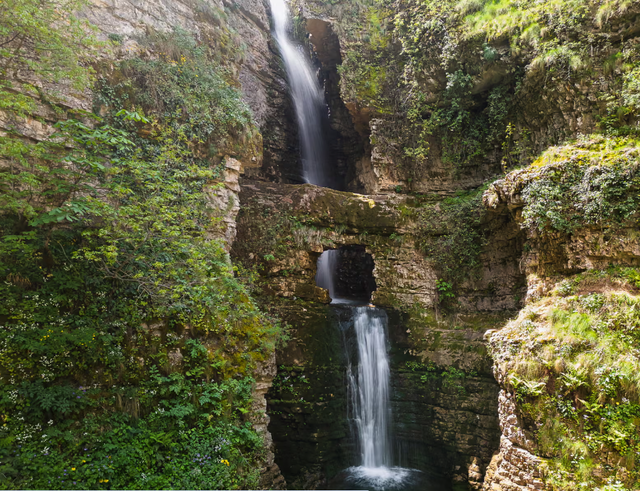
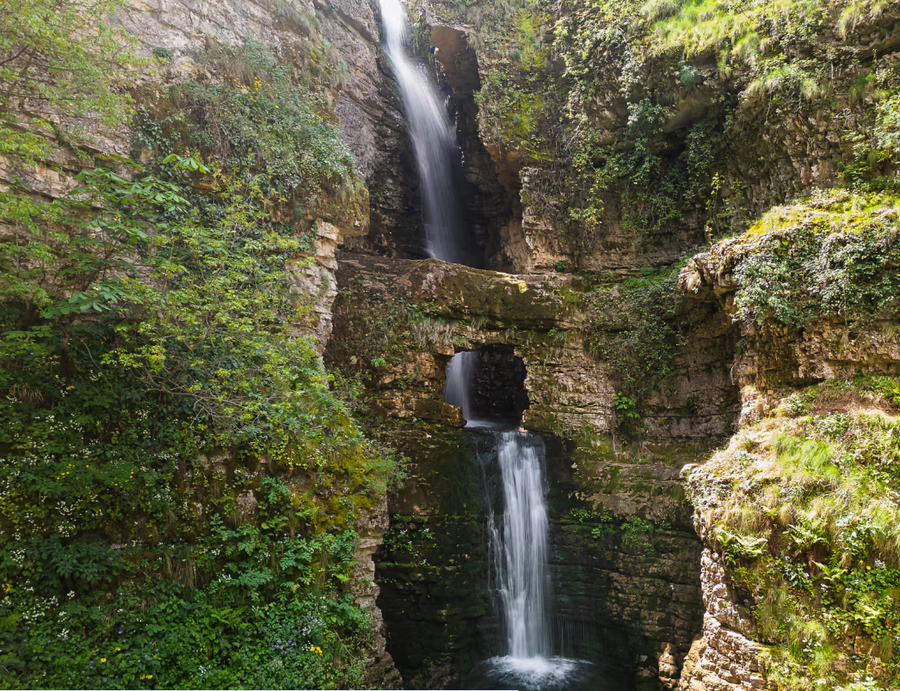
The next day, the rain continues to pour heavily. For a moment I consider rafting or kayaking, two popular activities on the Vjosa, but the river has now turned into a raging torrent. Instead, I take a wet walk to the nearby Peshtura Gorge to see a famous waterfall, which, “drunk” by so much rainfall, bursts down the slopes with force. In the afternoon, I decide to see if Gjirokastra is all it’s cracked up to be. A visit to the ethnographic museum and the majestic cliff-top castle convinces me that yes, it really is.
Later that night, I share the pleasure of discovering what the Vjosa region has to offer with Olsi Nika, the executive director of EcoAlbania. As happy as he is about my enthusiasm, I can see that he is also concerned. He is not against tourism, I want you to know, but as an environmentalist (he recently won the prestigious Goldman Prize for the Environment), the prospects for the park worry him. Albania’s coast is already filled with package tourists, and an airport is being built in the river delta, despite it being a protected area. And so, while he is pleased that a modern visitor center is being built in Tepelena, he is concerned that the government will implement its management plan for the park – something that has so far been slow to implement. “Tourism is like fire,” he says. “It can cook soup, but it can burn down your house.”
Olsi’s words still ring in my ears the next day as I head back towards Tirana. I stop just north of the river’s mouth, at the archaeological site of Apollonia, an ancient Greek trading community later colonized by the Romans. The hilltop site is completely devoid of other tourists, giving me a few magical hours to wander alone among the extraordinary ruins.
If Herodotus is to be believed, Apollonia was once on the Adriatic coast, but centuries of deposits from the Vjosa have pushed it several miles inland. Over the same period, the riverbed has also changed. But nothing stands still, especially the hydrology. Change is coming to the Vjosa again. What it will bring remains unclear, but, as a national park, it is hoped that it will continue to flow, wild and unimpeded./ The Guardian/