


Immigration 2.0 is creating a new generation of bilingual and multicultural children, growing up between two identities and two realities. But with great economic and educational potential comes risks: the disconnection of the younger generation from Albania and the loss of human capital. The essential question is whether the country will know how to turn this new energy into development, or will it let it dissipate beyond its borders.
In the early 2000s, the word emigration in Albania had a strong emotional charge: It was associated with separation, with the image of a parent leaving to work mainly in Greece, Italy or Germany, while the children were left behind in Albania, in the care of their mother or grandparents.
The collective memory of those years is full of images of suitcases, but also of tears; of rare phone calls from public booths, of gifts that came for holidays or birthdays, as a way to replace the physical and emotional absence of a parent.
Immigration was a sacrifice. A promise of a better life, but one that was "paid for" with years of separation and a generation of children who grew up knowing their parents more in photographs than in everyday life.
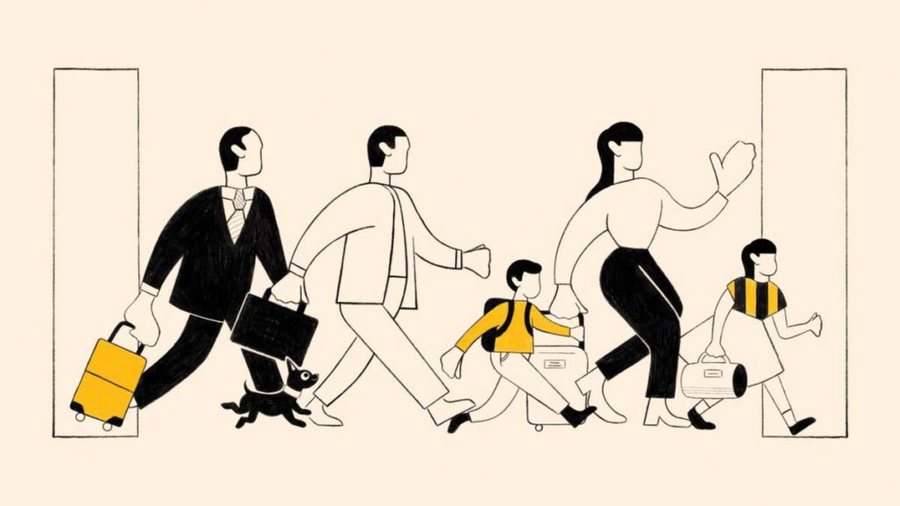
But today, the picture of Albanian emigration has changed radically. The new waves of departures are no longer the economic escape of individuals, but it is the whole family that “moves” its roots and goes together. Now these roots extend to two countries, to two realities. And thus a new phenomenon has been born, called “emigration 2.0”, which does not imply separation, but a double life.
Unlike the first generation that sought to survive and provide income for the family in Albania, the second generation seeks quality of life, better education, and stability. They no longer see emigration as a temporary phase, but as a long-term family project.
Their children attend schools in Italy, Germany or France, learn two languages at once, are immersed in different cultures, while spending their summers in Albania, in houses that their parents have carefully purchased or built to maintain the connection to their country of origin.
The emotional impact that children experience during migration is much more complex than a simple process of "adaptation", because, as psychologist Valentina Telhaj explains, "children absorb their parents' tension like a sponge, even when they have no words to describe it", and for this reason, the emotional traces of the transition often appear later, in various forms of anxiety, withdrawal or behavioral changes.
But the roots of this experience are not only psychological: economist Silvi Boçe sees the first years of emigration as a period that "creates invisible contradictions within the family, because the parent tries to survive economically, while the child tries to survive emotionally."
According to her, unstable income and long work hours reduce quality time with children to a minimum, creating "a silent void that the child fills with their own insecurities."
On the other hand, sociologist Marsida Simo says that immigrant children live "in two parallel value systems, where neither is complete and neither is completely theirs," creating an identity state that oscillates between family memory and new social norms.
This duality is noticeable in the way they speak, behave and build relationships, often with a maturity that exceeds their age, she explains.
At school, the clash becomes even more concrete: a teacher in Milan explained a few weeks ago on TikTok that "Albanian children grasp academic material very quickly, but speaking with confidence is the most difficult test, because language follows them like a shadow all day long."
Meanwhile, Eris M., a mother in Germany, recounts that her young son told her: "At home there's me, at school there's someone I don't know," a sentence that sums up the interior of the two worlds that children try to unite.
International studies, according to Ms. Simo, show that "the child's emotional integration process is proportional to the family's economic stability" and that delays or regressive behaviors are common in the first and second year after emigration, especially when the new language has not yet been acquired.
But Albanian communities abroad also observe this dynamic every day, Albanians in the diaspora always express that "the children of immigrants are children of two generations, the one they are building in the country where they live and the one that remains to them as a memory of Albania."
This makes the role of the parent more important, because, as psychologist Telhaj says, "the child's internal stability begins with the daily stability of the home: a shared lunch, a short conversation, a small cultural ritual that creates continuity in a world that otherwise changes every day."
Education experts add that parental involvement in school is crucial, because it creates bridges of communication that the child himself is unable to articulate. Meanwhile, economists emphasize that community support, orientation to the labor market, and material stability directly affect the degree of a child's academic integration.
This mosaic of factors, such as emotional, economic, cultural, and linguistic, shows that the success of an immigrant child is not measured only by grades in school, but by their ability to create a stable identity in two worlds that often demand different things of them.
And as psychologist Telhaj says in the end, "if the parent manages to show the child that the two worlds are not a burden, but an asset, then adaptation is transformed from a challenge into an opportunity."
Economic dimension
In the last decade, Albanian emigration has entered a new phase that is no longer associated with extreme poverty or total unemployment, but with the search for a better quality of life, more advanced education, and long-term stability.
This phase is radically transforming the way Albanian families function economically and how they project their financial future.
If in the early 2000s, remittances were "commodity money", to pay bills, food and daily expenses, today financial flows from emigrants have become more stable, higher and more investment-oriented.
In 2023 alone, remittances that Albanians abroad sent to their families in Albania reached around 930 million euros, an increase of 11.3% compared to the previous year.
According to data from the Bank of Albania, in the first 6 months of the year, emigrant remittances reached 510 million euros, an increase of 14.4% compared to the same period a year earlier.
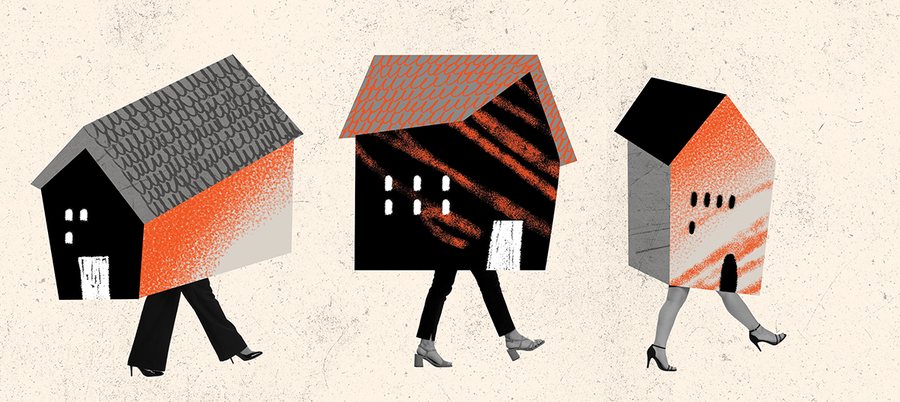
Families that immigrate today no longer aim to simply “send someone abroad to bring money,” but to build a dual economic strategy. They simultaneously invest in real estate in Albania, apartments in major cities, villas or houses in rural areas, and in quality education abroad for their children.
This approach turns immigrant families into transnational economic actors, maintaining dual ties to the markets of two countries: they consume and invest in Albania, but earn and save abroad.
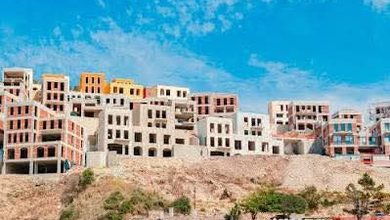
According to real estate agencies, around 40–45% of apartment purchases in urban areas (especially in Tirana, Durrës and Vlora) are funded by emigration income.
The diaspora, especially those living in Italy, Greece, Germany and the United Kingdom, is significantly influencing the increase in real estate market prices.
In this way, emigration is becoming one of the most important factors shaping domestic demand and prices in the construction sector.
In addition, investing in education abroad has become an essential part of the economic strategy of Albanian families in emigration. In recent years, the number of Albanian students attending European universities has increased, with Italy, Germany and the United Kingdom as the main destinations.
But the real difference lies in the children who grow up between the two systems, attend school partly in Albania and then continue abroad. Many families spend thousands of euros a year to secure bilingual education, either in international schools in the country or in the educational systems of host countries.
This model of "living in two countries" has direct economic consequences for Albania. On the one hand, it increases the inflow of foreign exchange and investments that keep consumption and the real estate market stable.
On the other hand, the risk of the younger generation being disconnected from the Albanian labor market increases, as many of these children of immigration 2.0 study, graduate, and enter the labor market abroad, without ever integrating into the domestic economy.
In fact, education has become a central pillar of modern family immigration strategies. Parents who immigrated in the 2000s, who primarily worked in manual labor, are now investing in their children through education abroad.
They no longer send remittances just for consumption, but pay for international schools, university fees, and language courses. This is an investment in human capital, not only for the individual, but potentially for Albania as well, if this generation is to maintain ties with their country of origin.
Another important aspect is the education of children of immigrants, who often follow two systems in parallel. Many of them spend part of the school year in Albania, attending public or private schools, and then return to the host country, where they resume school according to the local system.
This creates a bilingual and multicultural experience, which on the one hand gives them flexibility, but on the other hand creates complex identity and social challenges. They learn to write and think in two languages, but often feel “neither here nor there.”
Schools in the diaspora and initiatives for teaching the Albanian language are trying to maintain this connection. Dozens of Albanian language courses have been opened in Italy, Greece and Switzerland, supported by the Albanian government and diaspora organizations.
However, for most children born and raised abroad, the connection to Albania remains symbolic, through family, summer vacations, and social networks.
The generation "between two realities"
In this new wave of emigration, it is no longer just the parent who leaves – the entire family leaves. This creates a new identity structure, where the home may be in Milan, but the grandparents in Korça; school in Berlin, but vacations in Dhërmi.
Children of this generation learn from a young age to navigate between two systems, to preserve the Albanian language and customs, while adopting the values, way of thinking, and discipline of the countries where they grow up.
They speak two or more languages and are often more integrated than their parents, but at the same time they face new questions about identity: who am I, the Albanian who speaks Italian or the Italian who understands Albanian?