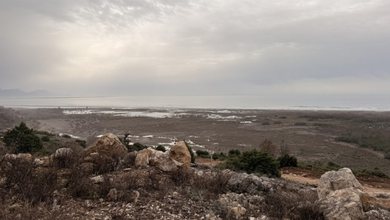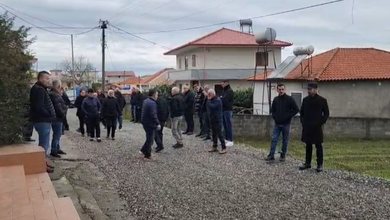



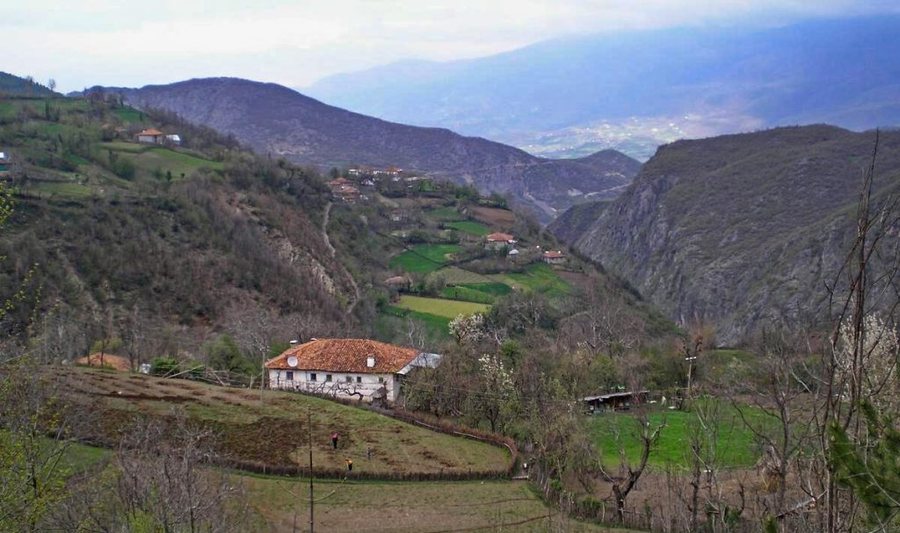
In recent years, Albania has been experiencing a demographic drama that is profoundly transforming the country’s rural landscape, making the abandonment of villages not just a statistic, but a painful story of loss and insecurity. Imagine mountain villages like those in the North or South, where once the noise of children and work in the fields echoed, now silent, with abandoned houses and only the elderly waiting for the end of the day.
According to the 2023 Census and Eurostat data for 2025, Albania's population has fallen to around 2.36 million inhabitants, with an annual contraction of 1.2%, which is the highest rate in the region.
This decline is most pronounced in rural areas, where depopulation has reached critical levels, with some villages completely empty, while over 500 villages have fewer than 10 inhabitants.
This phenomenon is not accidental, but the result of a vicious spiral that has accelerated in 2021-2025, where low birth rates and massive emigration abroad are absorbing the population base, creating economic instability and hindering any chance for sustainable development.
Let's start with fertility, which has reached alarming levels in recent years.
In 2024, the fertility rate fell to 1.53 children per woman, and in 2025 it fell even lower, falling further to 1.52, just below the population replacement level of 2.1. This translates to fewer than 22,000 births in 2024 and 2025, a dramatic decline from previous years. UN projections show that by 2050, the number will be halved to 10-11,000 annual births.
The causes are varied, but it is mainly related to young people, especially in rural areas, who are postponing or giving up on starting a family due to economic insecurity, the high costs of raising children, and the lack of basic services such as kindergartens or nearby hospitals.
In 2025, the youth dependency ratio fell slightly to 23.8%, but population aging is accelerating, with the average age reaching 43-44 years. This decline in births in 2024-2025 is not just a number, as it is leaving behind a “lost generation” in the villages, where schools are closing due to a lack of students, making life there even more impossible for the remaining families.
But low fertility is not the only cause, as it is closely linked to massive emigration abroad, which is absorbing the workforce and weakening the foundations of the rural economy.
In 2024-2025, around 50,000 Albanians emigrated, mainly young people aged 19-40, to Italy, Germany or the UK. According to INSTAT and World Bank data, 1.6 million Albanians live abroad, representing almost half of the global Albanian population, and this has resulted in a net loss of 40% of the population since 1990. In rural areas, this exodus is catastrophic, because young people who leave for higher wages and a better life leave behind only the elderly who cannot work the land.
As a result, family farming is dying out every year as small farms are unprofitable due to high raw material costs and lack of technology, leading to a decline in agricultural production and an increase in food imports.
The effects of this spiral are devastating for the economy and its sustainability. Emigration is contributing to an annual loss of GDP growth of 0.2-0.4 percentage points in 2024-2050, making Albania one of the most exposed economies in Europe.
The shrinking population is creating severe labor shortages, increasing pressure on public finances with fewer contributors to pensions and healthcare, while dependence on foreign money flows (remittances and other informal inflows) is expected to reach 8% of GDP in 2024-2025. However, these cash flows are often spent on basic consumption and on the purchase of real estate and consumer goods, creating an unsustainable dependence, as they do not go to investment in production and agriculture.
In rural areas, this means less investment in agriculture or agritourism, a cycle that fuels more emigration.
UN projections show that by 2050, the population will decline by 19.5% (see table), inverting the demographic pyramid and making sustainable development almost impossible without radical reforms.
To stem this tide, urgent action is needed that goes beyond temporary subsidies.
Support for modern agriculture and agritourism needs to be increased, as foreseen in the Rural Development Strategy, but with more aggressive implementation.
Offering incentives to young people with favorable loans for rural startups, training, and digital infrastructure could curb emigration, although it is unlikely to be massively applicable, for reasons ranging from culture and informality to corruption and access to quick-return activities in the service sector.
Pro-natal policies, such as financial support for young families and improving health services in rural areas, are essential to increase fertility, but they appear to be fragmented and disconnected, forcing the government to change its current approaches. Cooperation with the diaspora for investment and knowledge transfer can turn a loss into an advantage. All these measures should be part of co-governance platforms with all stakeholders, with the objective of not losing not only the villages, but also the economic base of food and livestock production, so as not to leave the future in the hands of an aging and shrinking population./ALTAX