


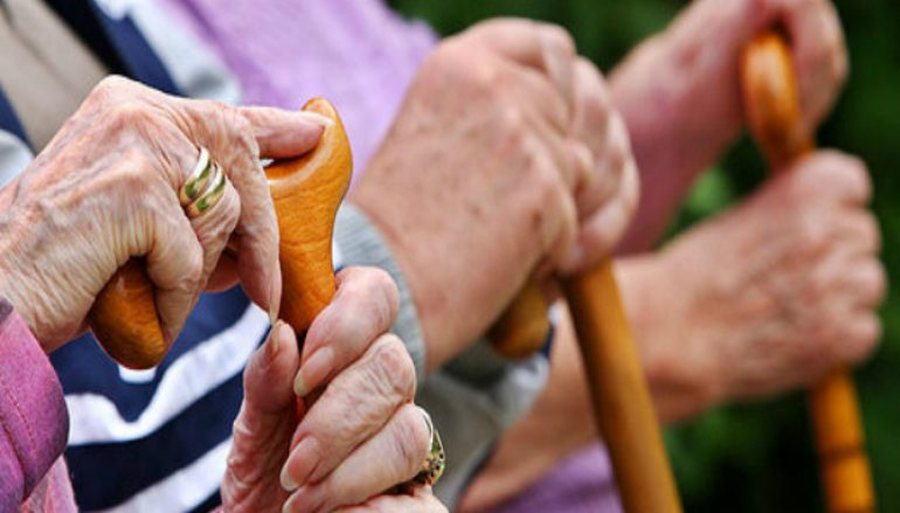
For decades, Albania led Europe as one of the countries with the most vital and youngest populations on the continent, but the latest data from Eurostat for 2025 shows that Albania has experienced the highest rates of aging, with a median age of 44.3 years in 2025, very close to the European average of 44.9 years. In 2015, the median age (which divides the population in half) was 34.7 years.
This means that in 2025, half of the population was under 44.3 years old, while 10 years ago Albania was much younger, with half of the population being younger than 34.7 years old.
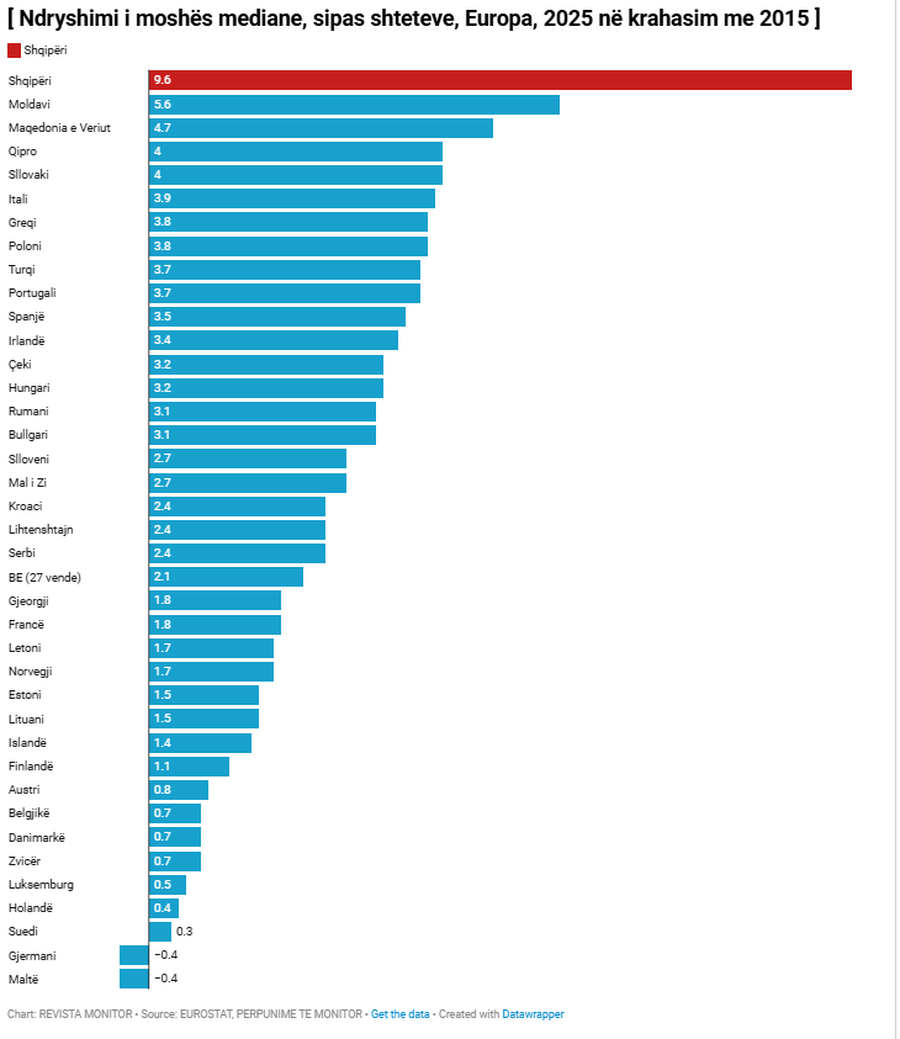
While Europe took several decades to transition to a stage of population aging, Albania has undergone this transformation within just one decade, as from 2015 to 2025 the median age in our country increased by 9.6 years, the highest rate on the continent, while the European average during this period was 2.1 years.
With this progress, our country has lost its demographic advantage by aging 5 times faster than Europe in 10 years. The aging rate is so fast, almost twice as high as in Moldova, which aged by 5.6 years in the same comparison period.
From a comparison of data, Albania has left behind many countries that were once considered much older than us. Today, we have a population with an average age identical to that of the Czech Republic and Lithuania, two countries that have been facing deep demographic crises for years.
Even more alarming is the fact that Albania is already older than its close neighbors in the Western Balkans; while Albania is 44.3 years old, North Macedonia remains at 42.1 years old and Montenegro at 40.4 years old.
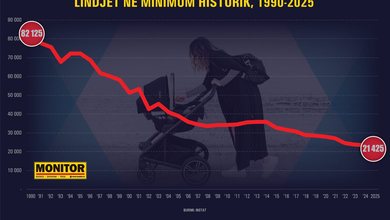
The process of shrinkage and aging in Albania is happening at a much more aggressive pace than in our neighbors. The consequences of these developments are expected to be severe for the national economy. A population with an average age of 44.3 years means less active labor force, less innovation in the market and a strong pressure on the pension scheme and the health system.
If state policies fail to curb the departure of young people and encourage the creation of new families, the country risks entering a cycle where old age will be the main characteristic of society, making the objective of sustainable economic growth increasingly difficult to achieve.
On 1 January 2025, the average age of the EU population reached 44.9 years. Between 2015 and 2025, the average age increased in all EU Member States, except Malta and Germany, where it fell (both by -0.4 years).
As a result of demographic changes, the proportion of people of working age in the EU is decreasing, while the relative number of those retiring is expanding. The share of older people in the total population is expected to increase significantly in the coming decades./Monitor.al/