


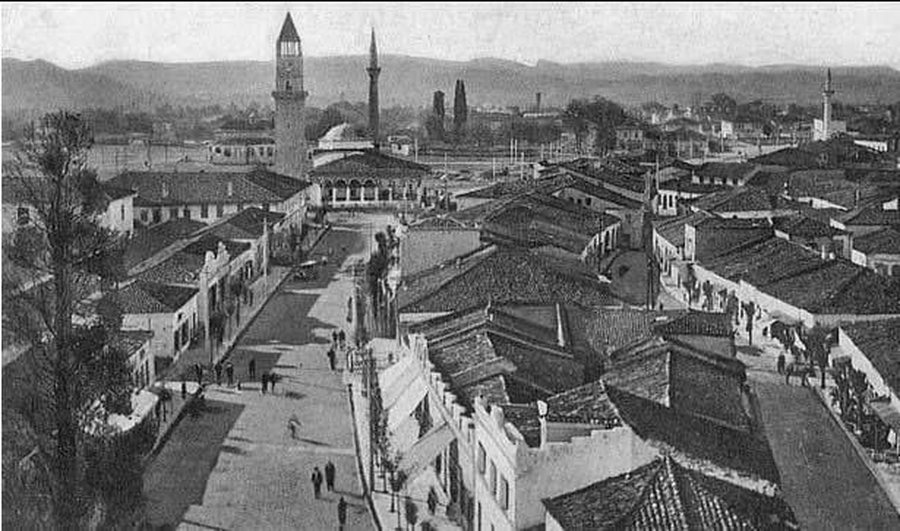
Today Tirana marks its 106th anniversary as the capital of Albania. From a small town with a few thousand inhabitants in 1920, it has transformed into a metropolis with over 1 million inhabitants in the expanded urban area. The growth has been rapid, unstoppable and often uncontrolled. And if 106 years ago the challenge was to build state institutions, today the challenge is to build a functional city for its citizens.
There is a tower, but no road.
In recent decades, Tirana has experienced a construction boom, especially in the center and expanding suburban areas. High-rise towers have become the symbol of urban development, but supporting infrastructure has lagged behind. Narrow streets, unwidened axes, lack of parking and chronic traffic are the daily reality.
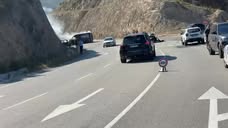
In the absence of a functioning public transport, the city moves with private vehicles and buses that are stuck in the same traffic as cars. Capital citizens spend a minimum of 1–2 hours a day just going to work and returning home. This is lost productivity time, lost family time and an invisible economic cost that no one calculates.
Promises of trams or dedicated lines still remain on paper. The reality is simple: the city has grown vertically, but it has not been planned horizontally.
The area that was filled with buildings, but not with services
One of the most significant examples is the area from the Botanical Garden, the Dry Lake and up to the TEG. This area did not develop overnight. For more than 10 years, building permits have been issued for buildings of all heights and shapes. The population has grown significantly. What about public services?
There is no public kindergarten.
There are no public gardens.
There are no public schools.
There is no functional health center for the area.
The residents of these neighborhoods have been paying education taxes and other local taxes for years. But investments in social infrastructure are lacking. These citizens are no longer “new residents” – they have been contributors to the local budget for a decade.
The question is legitimate: where have the revenues from the infrastructure impact tax gone? What concrete investments have been made in these areas in the form of schools, kindergartens or health centers?
Development or just a building permit?
Tirana's development model in recent years seems to be oriented towards increasing revenues through building permits and infrastructure taxes. This has led to a significant increase in local revenues and a high volume of private investment. But a city is not measured by square meters of construction.
A city is measured by the time citizens spend moving around, access to public education, basic healthcare, and real, not just aesthetic, public spaces.
In many new areas, the ratio between residents and educational capacity is unbalanced. Existing schools in other areas are overcrowded, while new neighborhoods function as “urban dormitories” without social infrastructure.
Public transport – the weakest link
Tirana continues to rely solely on buses. There is no metro, no functional tram, no urban rail network. Buses, even when new, are part of the traffic and not a solution to traffic.
A city that aims to be European cannot function with the same transportation model of the 1990s. Meanwhile, the number of vehicles has increased significantly, while road capacity has remained almost the same.
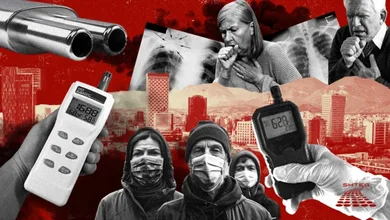
The economic cost of traffic translates into lost productivity, higher fuel consumption, greater pollution, stress, and reduced quality of life.
106 years later: what kind of city do we want?
On its 106th anniversary as the capital, Tirana needs a serious debate on its urban development model. Will it continue to grow with towers and no services? Or will it move into a new phase of sustainable planning?
Taxpaying citizens have the right to demand accountability for investments in social infrastructure, a realistic public transportation plan, and the balance between private development and the public interest.
Because a capital city is not just an administrative or financial center. It is the place where people live, where children grow up, where communities are built.
After 106 years, Tirana's challenge is no longer to build a state. It is to build a city that functions. /Ekofin.al/