


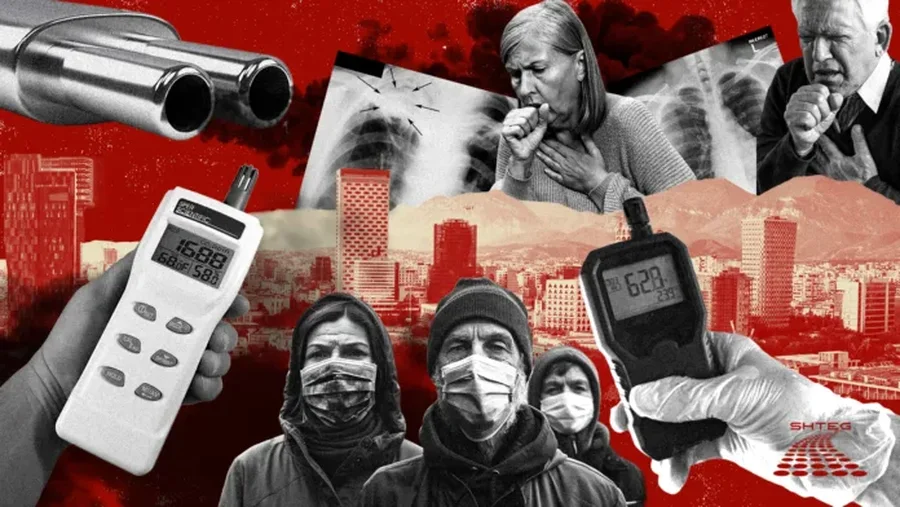
Reports list Albania among the most polluted countries in terms of air quality and with a mortality rate 3 times higher than the EU and WHO, while institutional measures remain only within the legal framework.
2300 people have died as a result of pollution emitted into the air we breathe.
Data collected by the "State of Global Air" Report shows that the loss of human lives in Albania is related to the dispersion of harmful particles, mainly produced by fuel combustion and the construction sector.
Reports list Albania among the countries with the highest pollution rates, namely 3 times higher than the European Union average.
Tirana is considered the most polluted city not only due to its construction density but also due to the high number of vehicles circulating, thus emitting fine particles known as PM2.5 and PM10.
Experts say that precisely these dangerous particles emitted into the air are the main cause of diseases such as cancer, asthma, dementia, but also heart disease, diagnoses that have the highest number of deaths in Albania related to air pollution.
When the air turns to cancer
Amid the rising towers and scaffolding surrounding concrete construction sites, the city is being overrun with greenery and with it, clean air.
The World Health Organization ranks our country fourth on the continent for premature deaths caused by air pollution. Statistics show that there is one death per 600 inhabitants, caused by air pollution, which has raised the concern of environmental activists, according to whom this phenomenon has affected the entire ecosystem.
"If we talk about air pollution in Tirana, we are talking directly about human health, we are talking directly about diseases caused by air pollution, without discussing here that air pollution affects not only people but also plants, the few that are in the city, are covered by all this smog and all this dust," expert Besjana Guri told "shteg.org."
Diseases such as cancer, asthma, cerebrovascular problems and even dementia are directly linked to long-term exposure to polluted air.
According to statistics from the Institute of Public Health, in Albania, 46,869 people diagnosed with chronic lung disease are registered in the health system, of which 14,814 are in the Tirana district.
In the Municipality of Tirana alone, 154 deaths from a group of 4 diseases are attributed to air pollution. The groups most at risk from pollution remain children, the elderly and pregnant women.
"When we think that we are raising children in such polluted air, it is truly unfortunate, because children are the age group that is most affected since the pollution is closer to the ground, where they walk, and the pollution passes directly into their respiratory tracts," says Besjana Guri.
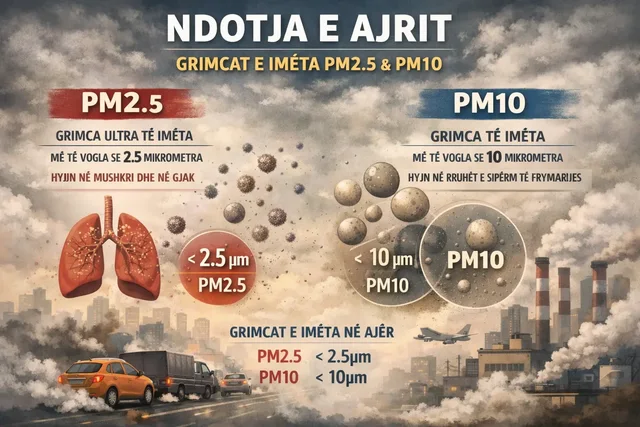
Among the most dangerous particles, fine particles PM2.5 and PM10 are identified, as well as the harmful gases NO2 (Nitrogen Dioxide), S02 (Sulfur Dioxide), 03, C0 (Carbon Monoxide) and BTEX, particles which are measured through air monitors to assess its pollution.
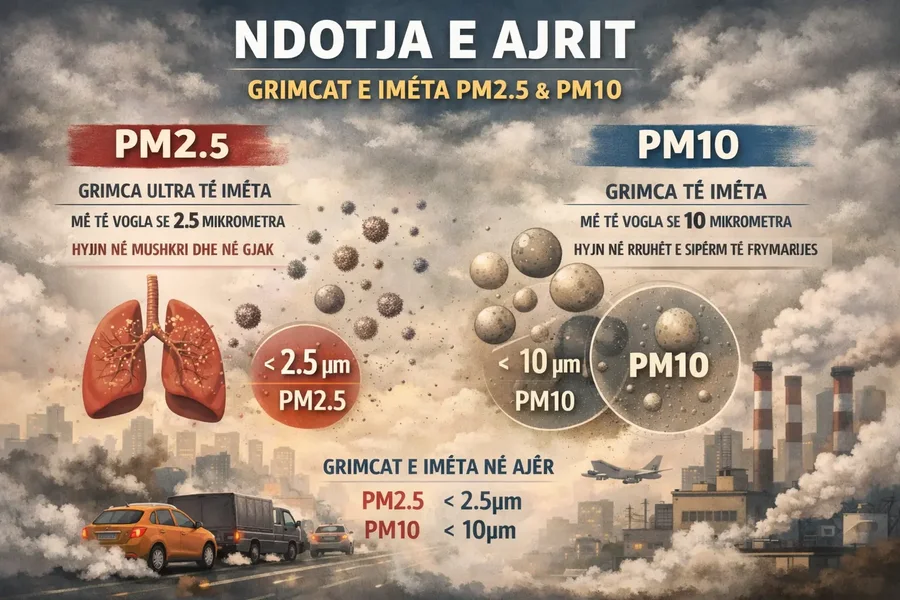
Environmental expert Greta Shehu explains that PM2.5 and PM10 particles, fine dust particles found in the air, are among the main air pollutants in urban areas. Their diameter does not exceed 2.5 micrometers (µm) and 10 micrometers (µm) and are created as a result of construction, transportation, but also from other urban activities.
"Among the most dangerous particles that we can call the main air pollutants are PM2.5 and PM10 particles. These particles are found in the air and are caused mainly by construction activities, transportation but also by intensive urban activities such as burning wood or other fuels which cause what we call carbon dioxide.
"Due to the smaller size of the PM2.5 particle, it is more dangerous as they manage to penetrate very deeply into the respiratory tract," explains expert Shehu.
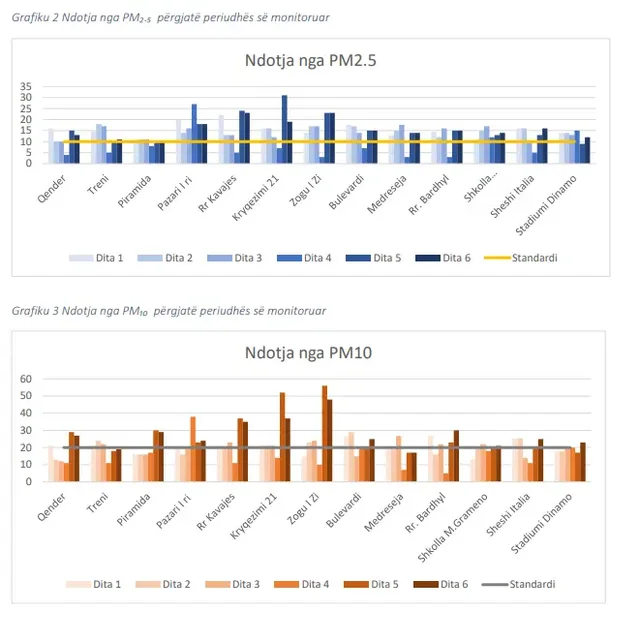
While the European Union norms for PM2.5 and PM10 particles are 10 and 20 µg/m³, respectively, data from monitoring 13 stations show that the recorded values exceeded them twice, and were three times above WHO standards.
Urban pollution hotspots
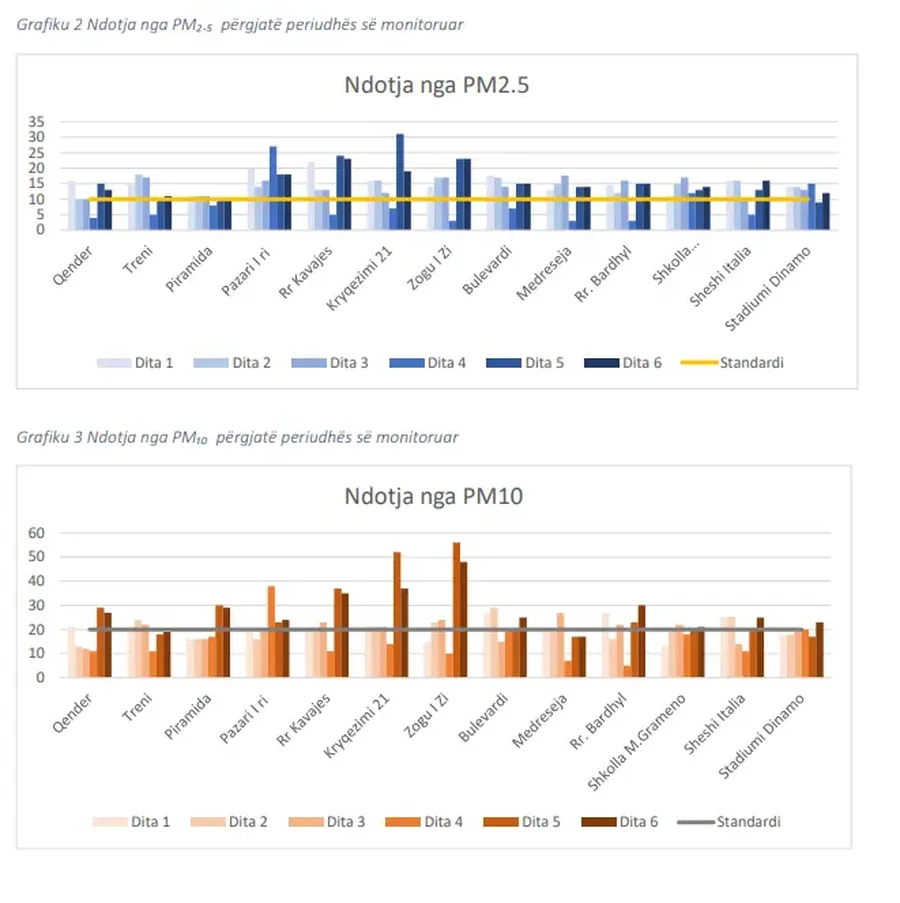
There are places in the capital where the air is not just polluted, it is a clear danger to every breather. 21 Dhjetori and Rruga e Kavajës are two of these areas where toxic particles and gases spread every day, becoming part of the daily lives of residents.
Monitoring by the Co-Plan Center for Habitat Development shows that these areas are not just “a little more polluted” but that they are urban pollution hotspots, where PM2.5 and PM10 exceed twice the European Union norms and three times those of the WHO. Almost every monitoring station in the city shows the same alarming results, indicating a problem that affects the entire city, but especially children near schools such as “Mihal Grameno” and the Medreseja.
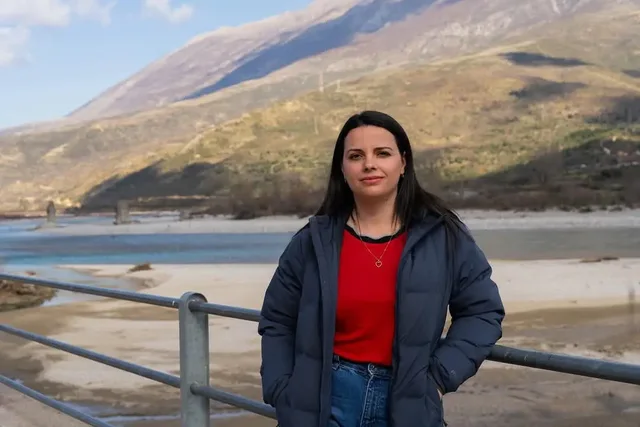
"However, an important finding of this Report is that even the area near the Mihal Grameno school or the area near the Madrasa school had very high and very worrying levels of pollution," says Greta Shehu, who was part of the working group that conducted the monitoring.
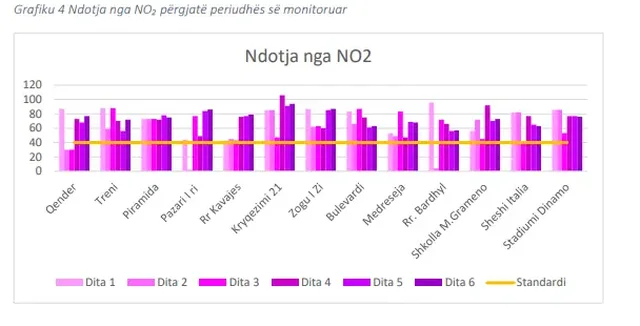
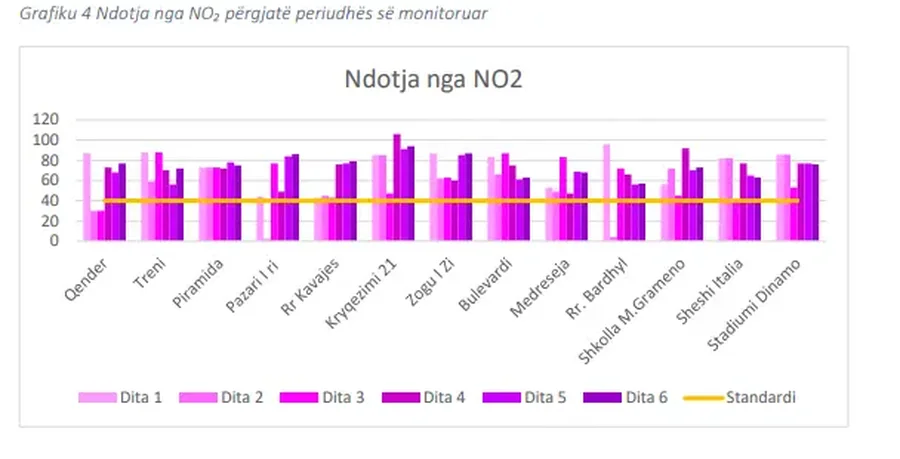
The December 21 area has become a traffic-heavy hub, with vehicles emitting a mix of toxic fumes into the air. Kavajës Street and Zogu i Zi are also hotspots, with particulate matter and nitrogen dioxide (NO₂) levels that exceed the permitted levels several times. NO₂, a gas produced mainly by the burning of fossil fuels, sometimes exceeds the permitted standard by four times.
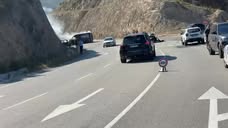
This is explained by the fact that these areas, the main segments where traffic in the city is heavy, are overpopulated and characterized by kilometer-long vehicle traffic.
Transportation is not only one of the daily challenges for Albanian citizens, but also one of the main causes of pollution.
According to a report by the Supreme State Audit Office, Albania has an outdated vehicle fleet: the average age of vehicles is 18 years and about 70 percent of them use diesel. Nearly 9 out of 10 cars are over 10 years old and belong to Euro 0 to Euro 3 standards, standards that have been exceeded for years in European Union countries. This situation translates into smog, high emissions of toxic gases and a continuous deterioration of air quality.
Greta says that during the morning, when traffic is heavy, an increase in harmful gases and particles was observed, as a result of the burning of fossil fuels.
Nitrogen dioxide (NO₂) is also a pollutant gas that is produced mainly by the burning of fossil fuels and is directly related to road traffic. Continuous exposure to this gas is considered harmful to the respiratory system, especially for children, the elderly, and people with chronic diseases.
Data collected by COPlan show that NO₂ pollution has been present throughout the monitoring period and fluctuations follow the rhythm of urban activity.
Tirana is not the only city that breathes polluted air. Several other cities also experience high pollution rates. Elbasan is one of them. The pollution of this city is related to the emission of waste into the air from the Metallurgical Plant.
Environmental expert Ahmet Mehmeti told "shteg.org" that the pollution of this area concerns residents around the industrial area, but also those in the cities of Belsh, Elbasan, Cerrik and Belsh, affecting all body tissues and causing carcinogenic and genetic diseases.
"Air pollution in Elbasan is one of the main problems that concerns residents, not only those around the industrial zone but also the cities of Elbasan, Cerrik and Belësh. When in the industrial zone the pollution is double the EU norm, in the city of Elbasan the pollution is 100 percent above the norm. The diseases caused by industrial pollution affect all tissues of the body, including cancerous and genetic diseases." - environmental expert Ahmet Mehmeti told "shteg.org".
The city of Korça has also shown an increase in air pollution, mainly from the use of coal and wood stoves that increase PM10 and PM2.5, while Durrës faces increasing pollution during the summer, as a result of the influx of tourists and seasonal urban activity.
Clean air policies, only on paper
While citizens feel the consequences of air pollution every day, concrete measures to improve air quality often remain only on paper. Albania is obliged to monitor air quality and inform the public about the impact of pollution on the health of the population, according to European Union laws and directives. However, the production and publication of data remains fragmented, and so do the measures to improve the situation.
"Based on the monitored air quality data, it is assessed that the air quality in the monitored cities is not at a very good level." - states the National Environment Agency's "State of the Environment" report for 2024.
Although the pollution phenomenon is acknowledged, measures remain largely declarative and rhetorical. According to Burden of Disease (BoD) data, Albania recorded 3,551 deaths in 2023 linked to exposure to PM2.5 above EU norms.
Environmental activists are skeptical of institutional activity, highlighting the lack of clear urban policies and environmental management that prioritizes the health of citizens.
"This has been an alarm bell for years and we are not seeing an institutional response. Institutions have a duty to inform communities, but the data is old, not coherent, and air quality monitoring reports are missing," says Besjana Guri.
Meanwhile, expert Ahmet Mehmeti blames institutions and industrial operators for not implementing environmental laws, especially in the Elbasan area.
"Air pollution is a consequence of the failure to implement environmental laws by relevant institutions and industrial operators," he told "shteg.org."
Environmental activists and experts are calling for immediate action, identifying chaotic transportation and the construction sector as the main enemies of clean air.
"To minimize air pollution, the most extreme measures must be taken in transportation. Tirana does not have well-organized public transportation, and construction methods and schedules must be monitored, not only because it is built endlessly, but to respect spaces and schedules that do not harm the air." - emphasizes Besjana Guri.
The main element that can improve the air remains green spaces, which are very scarce. Experts call for the revitalization of existing green spaces and the planting of native, non-decorative trees that produce oxygen throughout the year.
"People often take things for granted and don't understand the seriousness of it. Even though they know that polluted air is not healthy, they remain silent and don't raise it as a problem, harming themselves." - says activist Besjana Guri./Shteg.org/