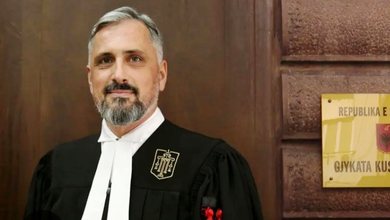



A recent report on national television sparked public debate, making strong accusations against the Judicial Appointments Council for the way it handled Asim Vokshi’s candidacy for the Constitutional Court. On screen, the word “hiding documents” was used casually, while allusions to a lack of investigation took the form of a moral denunciation. But a reading of the official documents is enough to see that the story is, in fact, more complicated.
On June 17, 2025, the Council approved decision no. 14, which allowed Vokshi's candidacy after a thorough verification process that included AKSIK, SHISH, State Police and the General Prosecutor's Office. The reports from these institutions were clear: no element that would violate the moral or professional integrity of the candidate. With this, his candidacy was considered valid for the continuation of the procedure.
In the months that followed, specifically in July and August, AKSIK sent a classified “secret” information about the same candidate. The Council treated this material with due legal care, opening an extended administrative verification process. Additional clarifications were requested, meetings were held with representatives of other institutions, and every step was documented with official minutes.
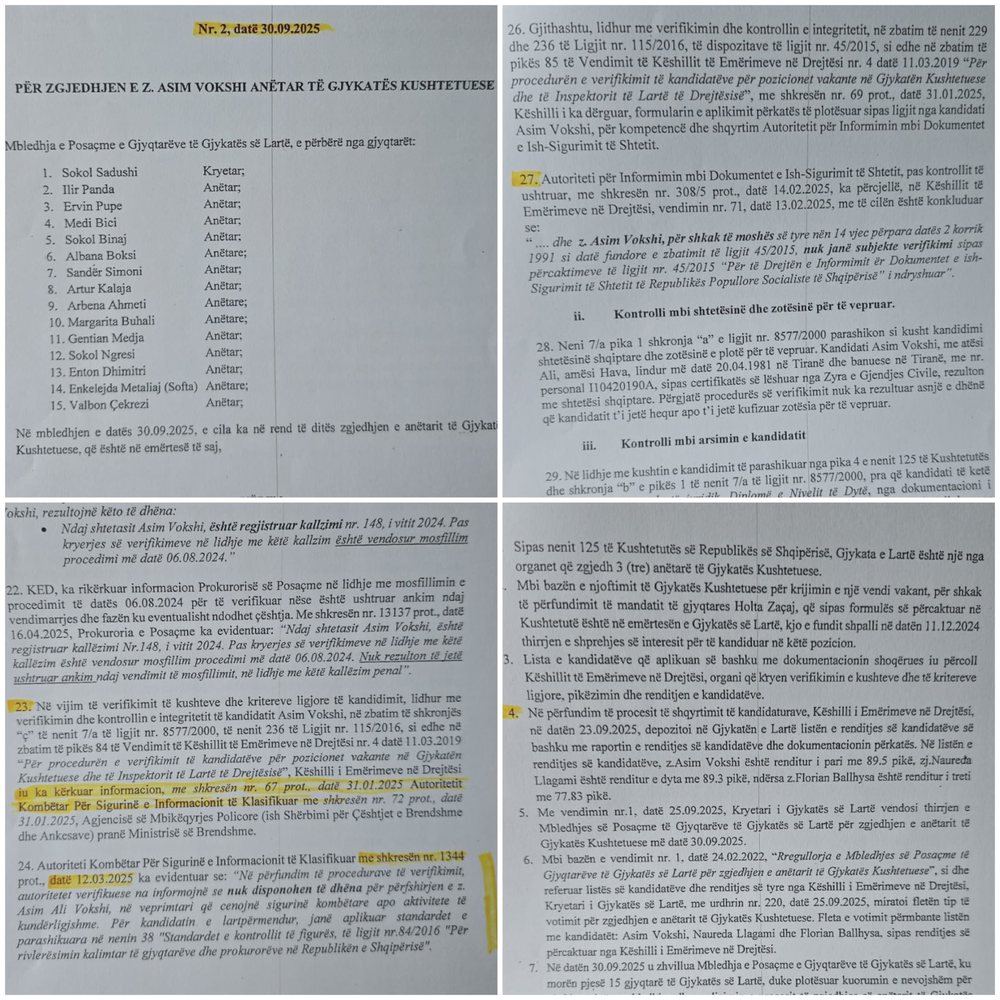
At the meetings of September 11 and 16, the members of the Council reviewed every detail of the new information. The result was concluded in decision no. 27, dated September 17, 2025: “The information provided did not constitute a reason for revising the previous decision, as it was unfounded and had no impact on the purity of the candidate’s image.”
The role of the President of the Council, who according to the Constitution is also the President of the Supreme Court, is a leader, not a decision-maker. Every decision of the KED is collegial and documented. After the completion of the verifications, the complete file of Vokshi's candidacy was sent to the Special Meeting of Judges of the Supreme Court, which in its decision confirms that the members were familiar with the materials a few days before the vote, confirming that the information and verification procedure was followed in accordance with the law and without any documented violations.
The reasons that push a national television station to attack a member of the Constitutional Court may be known to some and unknown to the public. But these accusations, at best, are malice towards Asim Vokshi as a judge elected to this position, and at worst, a well-planned attack on someone else's behalf. These are calculations that everyone should make carefully when going to the limits of a violation that could constitute a criminal offense.