


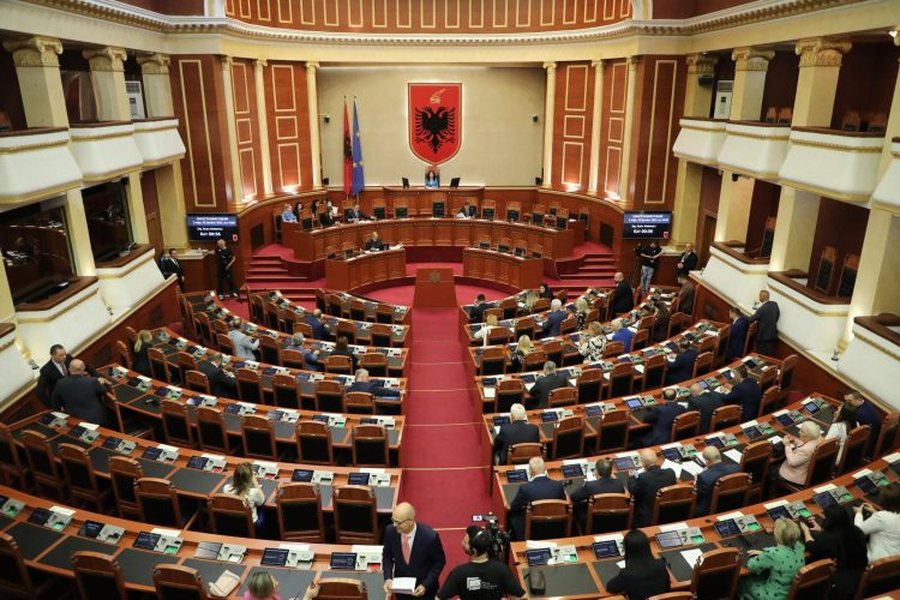
The draft law on additions and amendments to the Criminal Code was approved with 85 votes in favor, 9 against and zero abstentions, which includes, among other things, wording of articles for the decriminalization of defamation for journalists and their protection in the line of duty, wording that has been contested as "partial and unenforceable" by media freedom organizations.
International organizations defending media freedom such as the SafeJournalists Network, partners of the Rapid Response Mechanism for Media Freedom (RRM), Reporters Without Borders (RSF), as well as 17 civil society organizations in the country called for the full decriminalization of defamation and insult in the new Criminal Code of the Republic of Albania.
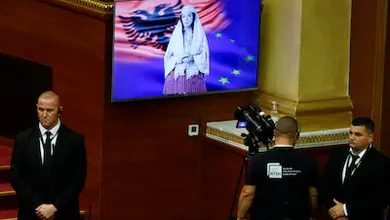
In a symbolic protest before the plenary session, representatives of these organizations emphasized that defamation should be decriminalized not only for registered journalists, but also for human rights activists or other advocates of free speech.
According to the adopted legal provision, "an employed or self-employed journalist, registered and recognized as such in accordance with the legislation in force, regardless of citizenship or the place where the activity is carried out, shall not be held criminally liable for the offense of defamation under this article, for the dissemination in good faith of data/statements or any other information, through the press, audiovisual media, electronic media or other public communication platforms."
According to the position of media organizations, this approach is problematic and not in line with European standards, as freedom of expression is protected because of the function it serves – the public interest – and not because of the professional status of the speaker.
According to them, any reference to "registered and recognized journalists" creates legal uncertainty and risks paving the way for control mechanisms over journalism, contrary to the fundamental principles of media freedom and independence.
The provision is also accompanied by several conditions, such as that the journalist is not aware that the factual data or information is false and has made reasonable efforts to verify its accuracy and to act without delay when informed by the affected person.
Further, the provision clarifies that the term “good faith dissemination” means dissemination that is carried out in accordance with the ethical and professional rules of journalism, on a factual and reasonable basis.
The changes also affected the article that defines "assaults in the line of duty" as a criminal offense, adding violence against journalists as a criminal offense.
The majority decided to pass a government variant, while it had previously agreed in joint rounds with civil society actors and the opposition to fully decriminalize defamation. /BIRN/