


The Supreme Court of Justice decided not to rule on the file of Judge Irena Maneku, which was forwarded to it by the General Prosecutor's Office.
One of the members, who, like the others, thought that the matter did not belong to the Supreme Court of Justice, had the idea to draft a letter “on competence” and forwarded the practice (in photocopies) to the High Inspector of Justice. To be clear: the High Inspector of Justice does not impose measures. He examines the case and, if he thinks that the magistrate has violated it, proposes taking disciplinary measures.
Magistrates are divided into two categories: magistrate judges and magistrate prosecutors.
For magistrate judges (like Maneku), the High Inspector, when he finds a violation, proposes measures to the Supreme Court of Justice — that is, to the same address where the Prosecutor General was initially addressed.
The Supreme Court did not say in its decision that the case should be reviewed first by the ILD to await its proposal. Nor did it return the file to the General Prosecutor's Office, explaining the incorrect address. The Supreme Court simply replied: "it is not our business", without indicating which institution should handle the practice.
For "prosecutor" magistrates — as Gramoz Ruçi once called them — measures are proposed in the KLP; but for this story it remains to be seen what the KLP will invent when its turn comes.
So, we are at the point where the Supreme Court said that Manek's case "is not ours" and did not review the magistrate's file. Meanwhile, the High Inspector announced that he has started the review. There are two options:
- either the ILD closes the case without investigation;
- or takes the proposal to the Supreme Court.
Which means: back to the Supreme Court again.
But what is left for the President of the Supreme Court to do, who himself filed a "complaint" with the High Inspector?
And where was the High Inspector before the day he received the KLGJ's complaint? If he had the authority, why didn't he act on his own initiative?
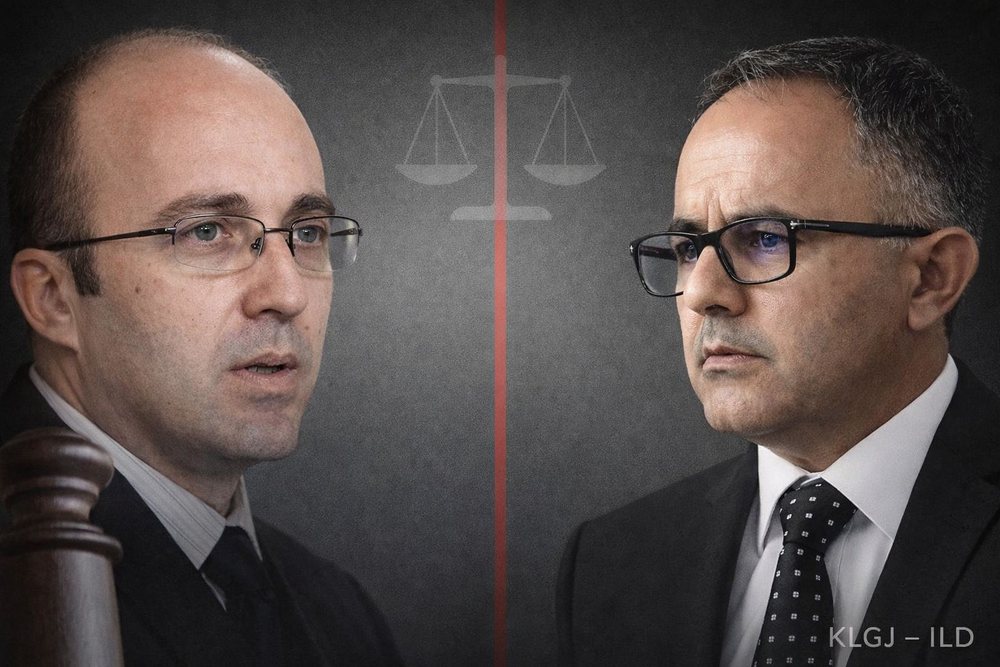
In all this debate between the justice institutions, one thing is clear: stalling responsibilities door to door seems to be the most popular sport of the President of the Supreme Court of Justice, Ilir Rusi, and the President of the ILD, Artur Metani. Known only for their ambiguous appearances before parliamentary committees, the only trace they are leaving is the game of deadlock.
If these people are incapable of dealing with such a sensitive and public interest issue, imagine how the problems of ordinary citizens are blocked in offices.
Moreover, being leaders of institutions closely linked to the majority — and seeing their already public dissatisfaction with the justice system — perhaps improvement should start with them.
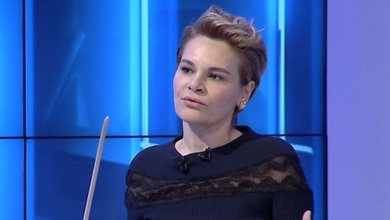
Instead of Ulsi Manja going into a television studio and giving ultimatums to prosecutors and judges, it would be more appropriate for him, as the chairman of the Laws Committee, to directly confront the institutional responsible for this situation.
But there is a legal limit here that is often overlooked in political rhetoric: The Laws Committee does not have the right to summon to a hearing either the President of the Supreme Court of Justice or the High Inspector of Justice. These institutions are independent and are not subject to political control through routine hearings.
The only real option that the majority has, if it is truly dissatisfied with the functioning of the reform and the role of the ILD, is to open a parliamentary investigative committee to request the dismissal of the High Inspector of Justice.
If the Socialist Party thinks that the system is being blocked, that those responsible are being shunned, and that reform has failed — let it start right here. Not with public pressure, not with television ultimatums, but with the constitutional mechanism at its disposal.
Otherwise, the dissatisfaction with the reform and the desire for change are so evident that it seems clear that the problem is not related to either the unresolved files or the high number of detainees.
In short: they are not worried about people, but about the shackles that are approaching them.
If they really want to improve the reform — and they have the votes — it would be better if they put their finger on the issue and start with their subordinates. At least it would look like they are concerned about the citizens, not themselves.