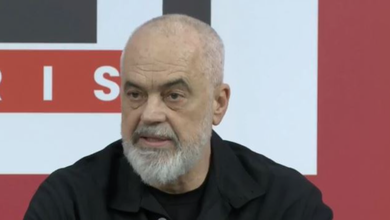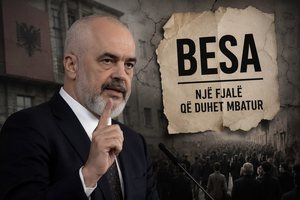


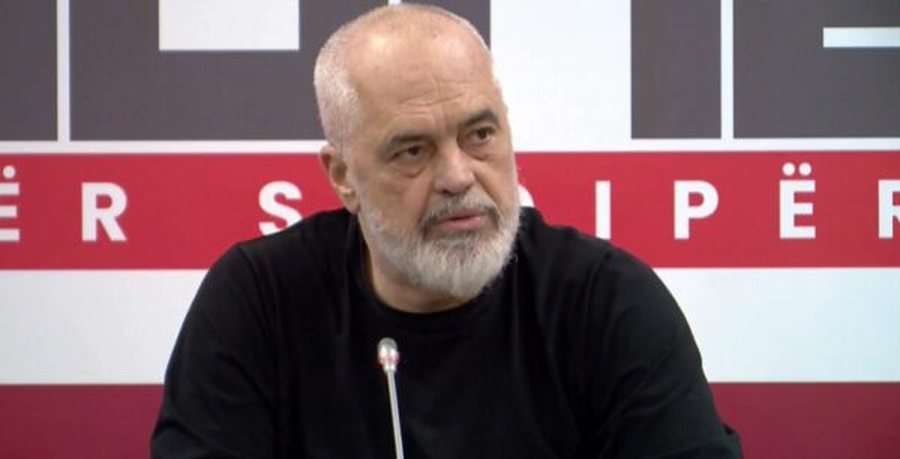
In a new twist in the political narrative, Prime Minister Edi Rama has begun to prepare the ground for a less optimistic scenario regarding Albania's membership in the European Union. From the sensational electoral promise of a near European horizon, the discourse has shifted to a more realistic, or more precisely, more justifiable, version where the blame is initially delegated to the opposition.
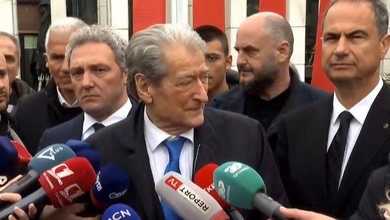
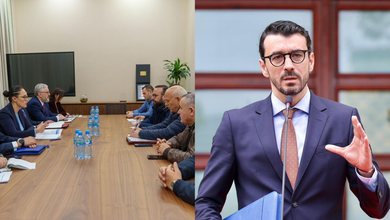
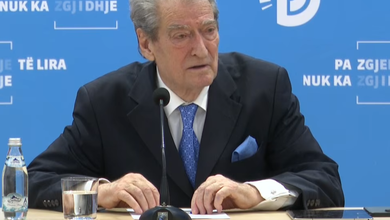
During a meeting with SP structures in unit no. 14 in Tirana, Rama articulated the thesis that the eventual failure of integration would not be the result of governance, but of an internal “political war.” According to him, the opposition leaves nothing unsaid in the European Chancellery, and is attempting to damage the process.
"They leave nothing unsaid so that this process does not happen. There is a political war and in other countries Macedonians have never done this to Macedonians. Never. For them to say there, look at these... we have nothing to do with this. We have nothing to do with some wicked people who have no idea what they are doing. They are trying to damage a moment where fate, history is smiling on Albanians. Something magnificent and the most extraordinary thing we can do for our children. The opposite is the most dramatic thing. So that we cannot make it," said Rama.
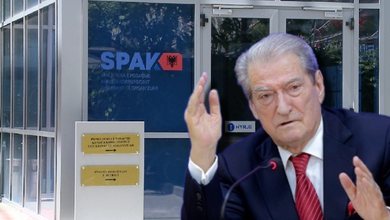
In reality, the EU integration process is less a rhetorical equation and more an administrative one. Conditions, reforms and standards that must be met by the incumbent government. And this is precisely where the problem lies, while the criteria focus on the fight against corruption and the functioning of justice, Albania continues to produce news where senior officials face serious accusations, while the political protection of the prime minister by obstructing justice is increasing.
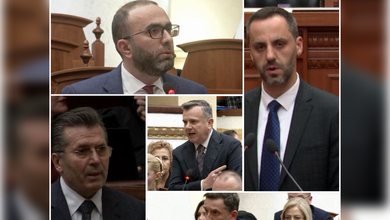
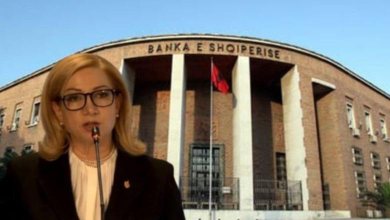
Here it is enough to mention the recent case with Deputy Prime Minister, Belinda Balluku, that Rama ignored the calls of internationals by defending her with cards in Parliament. This action alone seems to cost Albania the further slowing down of this process.
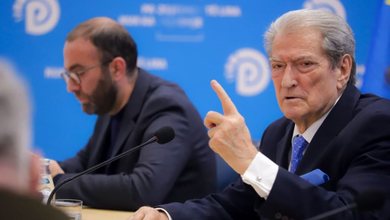
In this context, the attempt to identify the opposition as the main obstacle sounds more like a warning that the promise trumpeted so loudly during the campaign will not be fulfilled. Especially when it comes to an opposition that is very small in numbers and unheard of internationally.
In conclusion, it seems that European integration has entered a new phase, from a sure promise to a big lie that was served to Albanians just to get the votes for a fourth term.