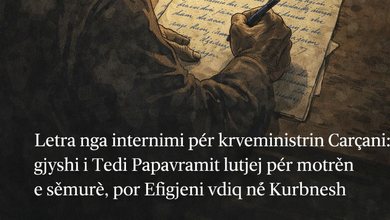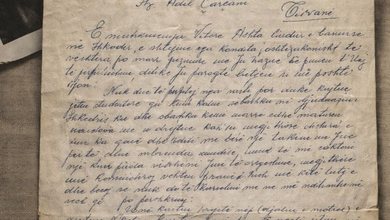



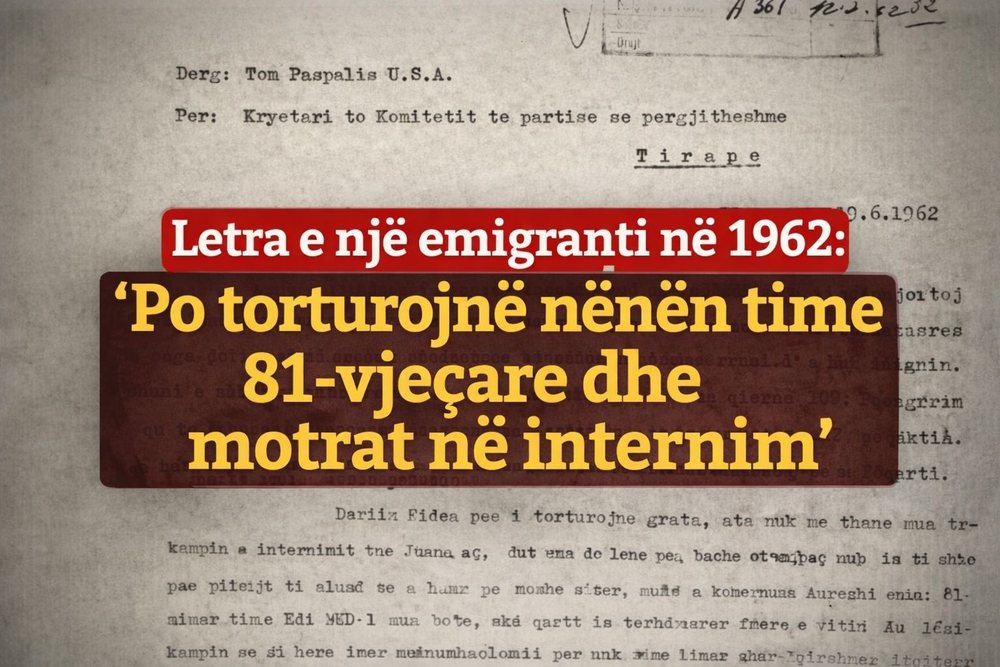
A letter sent from the United States in 1962 sheds light on the drama of a minority family in the Pogon area, in Gjirokastra, and on the climate of fear that, according to its author, was exercised by the local organs of the communist regime.
The letter is dated June 19, 1962 and was sent from Chicago. Its author, Athanas Vasiliu Paspali, a minority refugee from the village of Skoriade in Gjirokastra, addresses the high leadership of the Albanian state to denounce the injustices that, according to him, are being committed by local authorities against the residents of the area.
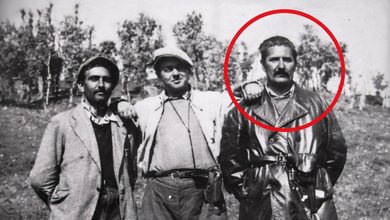
In the lines of the letter, Paspal describes a difficult reality for his community. He accuses several local officials connected to the power and security structures of having created a climate of fear and persecution, using their power to punish innocent people. Among the names he mentions is Mitro Karçena, whom he accuses of arbitrary behavior and pressure on the population.
But the drama becomes even more personal when he talks about his family.
According to the letter, his mother, Helene Vasil Paspali, at the age of 81, was being held internment on the Goranxija farm, in dire conditions. He writes that the elderly woman lives without bread and without means of subsistence, while the money he tries to send from abroad does not reach the family.
Her two daughters, the author's sisters, are also in exile. One of them, according to his testimony, was held in the Borsh camp and tortured, while the other is interned in Lushnja.
Paspali emphasizes that his family members are being punished solely because of his actions, after he left Albania and went to the mountains with a gun in 1957. “Albania cannot stand with my 81-year-old mother,” he writes in a direct and desperate tone, demanding that the women in his family be released and the abuses against the residents of Pogoni stop.
At the end of the letter, he calls for intervention to stop what he describes as torture and injustice against innocent people, warning that these actions are driving people away from the country and creating a difficult climate in the area.
The letter remains a strong human testimony to the fate of families who were affected by internment and collective punishment during the years of the communist regime in Albania.