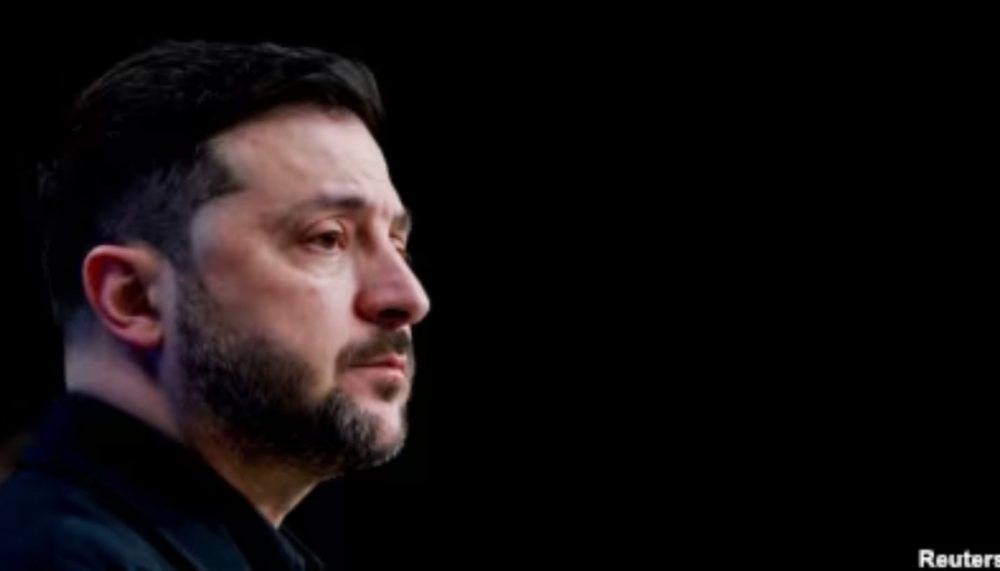
Ukrainian President Volodymyr Zelensky welcomed the New Year with a speech in which he pledged to continue working towards a peace deal to end the war with Russia, but stressed that such an agreement could not be reached "at any cost."
The 21-minute New Year's Eve speech was delivered as he prepared for the next round of peace negotiations and as Ukrainian forces struck Kremlin energy targets after intensifying Russian attacks on civilian infrastructure in Ukraine.
A US-brokered peace deal is "90 percent" complete, Zelensky said, but the Ukrainian leader warned that the remaining 10 percent will be difficult and will decide "the fate of peace, of Ukraine and of Europe."
"What does Ukraine want? Peace? Yes. At any cost? No. We want to end the war, but not end Ukraine," Zelensky said in a televised address.
"Are we tired? Very tired. Does this mean we are ready to give up? Anyone who thinks this is seriously mistaken."
The Ukrainian leader stressed that he would only sign a "strong agreement," as any signature "based on weak agreements will only fuel war."
In a much shorter speech to Russians, President Vladimir Putin told his country that it would win the war in Ukraine, while speaking of Russia's destiny and the unity of its citizens, which, according to him, guarantee the sovereignty and security of the "fatherland."
"I congratulate our fighters and commanders on the beginning of the New Year! We believe in them and in our victory," Putin said in the short three-minute speech, which was dominated by what the Kremlin calls a "special military operation" in Ukraine.
A diplomatic storm began in November 2025, when US President Donald Trump urged Zelensky to accept a 28-point peace proposal that many saw as favoring Russia.
Ukraine and its European allies, led by the UK, France and Germany, quickly tried to draft a counterproposal, ultimately presenting a 20-point plan that took greater account of Kiev's interests, particularly in terms of security guarantees and territorial integrity.
Zelensky said national security advisers from the so-called Coalition of the Willing states will meet in Ukraine on January 3, shortly before European leaders gather in Paris on January 6.
The coalition is an informal grouping of about 30 countries, led by the UK and France, that have expressed interest in supporting peacekeeping efforts in the event of a ceasefire in Ukraine. It is not known which of these countries would attend the meetings.
Zelensky called on "the whole world" to put pressure on Moscow and said that trusting the Kremlin's words is a "punishment against common international security."
French President Emmanuel Macron said in his New Year's address that European states and other allies would make "concrete" commitments to Ukraine's security during talks in Paris.
Trump's special envoy, Steve Witkoff, said on December 31 that he had a "productive" phone call with the national security advisers of the United Kingdom, France and Germany to discuss the peace process.
Witkoff said the participants also discussed a "prosperity package" for Ukraine and that Rustem Umerov, Kiev's chief negotiator, was also in the conversation, along with US Secretary of State Marco Rubio and Trump's son-in-law Jared Kushner.
"We focused on how to move discussions forward in a practical way within the framework of [Trump's] peace process, including strengthening security guarantees and developing effective conflict avoidance mechanisms, to help end the war and ensure it does not happen again," he added./REL