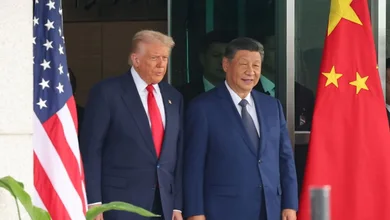
In a long and vague address to the American people on April 1, US President Donald Trump claimed that the US war on Iran had been a success, vowing to “finish the job … very quickly”. This was a statement in clear conflict with the facts. Trump continues to portray Iran as another minor US adversary, one that can only withstand sanctions, react locally and ultimately surrender under constant military and economic pressure. In fact, Iran has challenged the model on which American intervention has long been based.
For many years, the United States has believed that it could wage wars outside its territory without exposing itself to the risk of serious retaliation. This was made possible by carefully selecting targets—such as Grenada, Panama, Iraq, Libya, and even Venezuela—that did not have the capacity to inflict significant costs beyond their borders, for example by striking U.S. assets or U.S. allies in a sustained or significant manner. Even when insurgencies weakened U.S. forces, as in Vietnam and Afghanistan, the conflicts remained geographically limited.
This pattern of “asymmetric cost” – a war that the US starts ultimately costs the other side much more – has been essential to maintaining the illusion of American invincibility and limiting domestic political resistance to US military intervention. Now, Iran has broken this pattern.
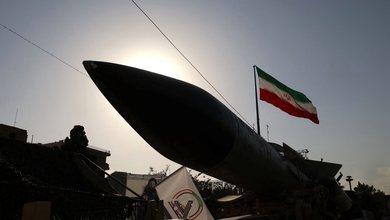
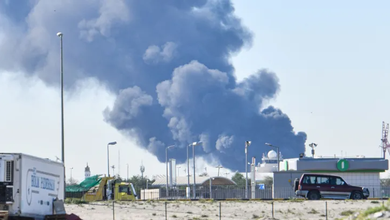
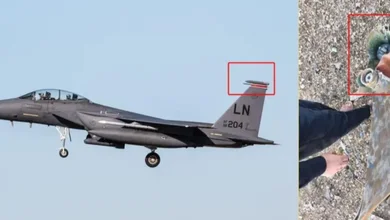
Iran’s security doctrine is based on “advanced defense,” which uses asymmetric military capabilities—including ballistic and cruise missiles, drones, and a network of partners and proxies—to defend itself and project power beyond its borders. When the U.S. and Israel attacked, Iran was able to leverage this strategic depth to immediately respond to targets throughout the region, including U.S. allies, military bases, and forward-deployed assets.
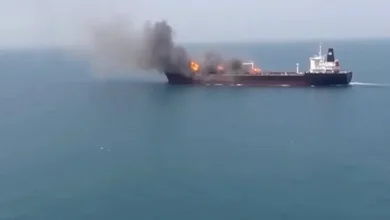
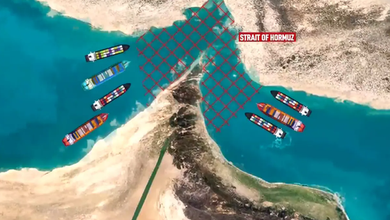
By threatening infrastructure, air bases, and key economic hubs like the Strait of Hormuz and the Bab el-Mandeb in the Persian Gulf, Iran is effectively forcing U.S. partners to share the costs of the conflict. As Gulf states, which have long hosted U.S. bases in exchange for a place under the U.S. security umbrella, bear the brunt of the Iranian response, strategic tensions within the U.S. coalition are rising. Thanks to Iran, allies that once enabled the U.S. to project power in the Middle East now have a strong incentive to contain it.
The United States should have anticipated this. After the US assassination of Iranian General Qassem Suleimani in 2020, Iran responded not through proxies or deniable escalations, but with a direct ballistic missile attack on a US base: Al-Asad Air Base in Iraq. This action should have removed any doubt that Iran is capable of retaliating against US forces with precision and without fear of immediate retribution. Since then, Iran has further developed its strategy of distributed counterstrikes.
The Trump administration failed to anticipate this expected reaction, in part because of another widespread illusion among American planners and policymakers: the belief that higher military spending automatically brings superiority in war. According to this view, the United States can strike its “enemies” with such overwhelming force that they are forced to accept its demands almost immediately. Yet, from Vietnam to Afghanistan, the United States has been involved in long, costly, at-risk conflicts that it neither won decisively nor sustained politically, ending in difficult withdrawals.
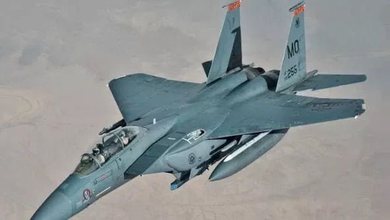
Yet this illusion has persisted. Since Iran’s defense budget is a fraction of America’s, the Trump administration apparently assumed that the country would not be able to offer serious resistance. What was not understood is that Iran does not need parity; it needs the ability to upset the balance. Its arsenal of low-cost, high-effect systems is designed not for conventional victory but for strategic denial. Swarms of relatively inexpensive drones or missiles can overwhelm even the most sophisticated air defense systems, as Israel is learning.
With this strategy, Iran has turned America’s greatest strength—its global military presence—into a source of weakness. It has also exposed a fundamental weakness in the American way of war: its reliance on high-value, high-cost assets that can be undermined by sustained asymmetric pressure. The imbalance is both tactical and economic. The United States is now forced to spend vast sums to defend its assets and allies against weapons that cost very little to produce and use.
The US waged war on Iran within a framework designed for a weaker, more isolated adversary. It assumed that military force, combined with economic pressure, would ensure submission. Instead, it faced a state that had spent years preparing for just such a confrontation and that could withstand the blows by steadily increasing the cost of escalation. Yet Trump continues to expect a quick capitulation.
The Trump administration’s strategic mistake goes beyond underestimating Iran’s ability to respond. It reflects a fundamental misunderstanding of the nature of modern conflict. In a world of economic interconnectedness, geographically dispersed military capabilities, and low-cost weapons systems, a country that appears weak in conventional terms can inflict serious damage. The message is clear: the era of relatively low-cost American wars is over.
The United States can still use overwhelming force and cause great destruction. But it can no longer control the consequences or limit the side effects. What Iran has demonstrated is not just resilience but also the ability of a weaker state to gradually erode the advantages of a superpower. A superpower that once felt untouchable now must face adversaries that can drain its resources, burden its allies, and overturn its strategic calculations.
The future of the Middle East – and of American power – depends on whether the United States learns and assimilates the lessons of this strategic mistake with Iran. If it fails to do so, it will continue to engage in conflicts that it cannot ultimately win, cannot afford to pay, and cannot justify from a strategic perspective./reporter.al