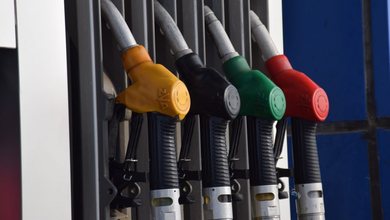



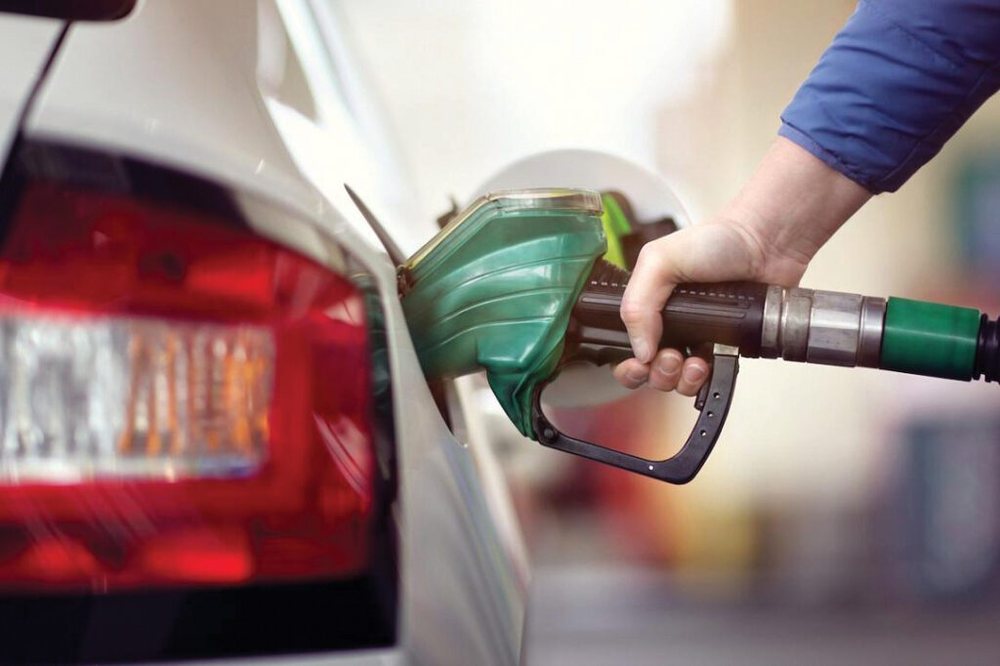
The queue of vehicles has increased at the gas station in Tuz, on the border with the Murriqani customs point, which connects Montenegro with Albania.
Most of the residents there cross the border and get their supplies of diesel, as it is much cheaper than in Albania. A liter of diesel was yesterday traded in Montenegro for 1.57 euros, while in Albania it was 214 lekë, or 2.2 euros at the daily exchange rate.
With 2 thousand lekë, in Albania you can buy 9.3 liters of diesel, while in Montenegro, with the same amount, if you exchange it you get almost 21 euros and buy 13.1 liters, or 42% more. The difference in price is so high that it is worth the time spent and the extra fuel spent on the way to the border.
Not only the residents of the surrounding area, but also the citizens of Shkodra have turned Montenegro into a favorite destination. Koçi, together with his wife, go to Podgorica every two weeks.
On the way, they fill the tank full, but they are not satisfied with that, they stock up on food in supermarkets. A jar of yogurt costs 1.3 euros, while the same one in Albania costs 70% more. Milk is also cheaper, flour, oil, canned products too.
Above all, they claim that in addition to being cheaper, the products are also of higher quality. Eurostat data shows that food prices in Albania are the same as the European average (98.7% of the European average), while in North Macedonia they are 73% of the European average and in Montenegro they are 82.6%. (The latest data is for 2024, there is no information for Kosovo). Milk, cheese and eggs cost even 31.5% more expensive than the European average.
No one has measured how much the Albanian economy is losing as a result of price differences with border countries, which are shifting the consumption of both fuel and other products to neighboring countries, such as Montenegro, Kosovo, and North Macedonia.
This phenomenon potentially translates into loss of fiscal revenues, contraction of domestic consumption, pressure on domestic businesses and a lower contribution to GDP growth, due to the transfer of expenditures outside the Albanian economy, which if there were no price differences would remain in the country.
The Association of Hydrocarbon Companies estimates that around 300-500 tons per day of oil are taken by Albanian customers near the border areas. In addition, another lost consumption of 120-300 tons per day is estimated by foreign citizens, who would potentially buy in Albania, but are supplied at the border entrance and exit.
The association calculates this lost consumption with daily vehicle crossings in border areas, secondly with the number of tourists and trucks that enter and exit with foreign license plates and are refueled. Thirdly, a calculation is made with the number of cars in border areas and the consumption in these areas compared to the same number of cars in internal areas, as well as with information on how much gas stations near our border with the three countries sell per day.
According to data from the Ministry of Finance and Customs, the annual consumption of fuels in Albania is around 740 thousand tons per year, or around 2000 tons per day (which at the current price of 214 lek per liter translates into a consumption of 5.2 million euros per day).
From the data, it is estimated that fuel purchases in neighboring countries are on average 15-25% of total consumption in the country.
Converting 500 tons into liters, at an average price of 1.5-1.6 euros per liter, it is estimated that Albania is currently spending around 1 million euros per day on fuel purchases in neighboring countries, or over 350 million euros per year.
While the more expensive food prices are related to the lack of competitiveness and high dependence on imports, turning the economy into a large supermarket, for oil, one of the main reasons is related to the high tax burden paid for each liter.
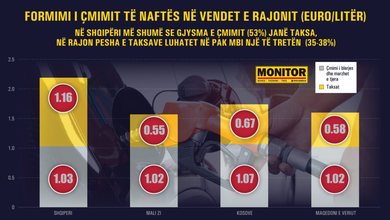
In total, currently, an Albanian pays 1.16 euros in taxes on a liter of diesel (53% of the final price); a Macedonian citizen 0.58 euros per liter (36% of the final price); a Montenegrin 0.55 euros (35% of the final price); a citizen of Kosovo 0.67 euros, or 38.5% of the final price. In North Macedonia and Montenegro, where fuel is currently being traded at around 1.6 euros per liter. In Kosovo the price recently increased to 1.7-1.8 euros/liter, in Albania it is 2.2 euros/liter.
In value, every time they buy a liter of fuel, every car user in Albania pays twice as much in taxes as residents of Kosovo, Montenegro, and North Macedonia.
The state can collect almost the same amount of revenue if it reduces taxes and increases consumption.
If prices were at similar levels to the region, consumption would be concentrated domestically and increase by 25-30%, reaching close to 1 million tons per year. This increase in consumption would undoubtedly compensate for the reduction in the fiscal burden on oil.
In 2025, with current consumption of 740 thousand tons per year and an average price of 175 lek per liter, it is estimated that Albanians will pay around 1.5 billion euros to buy oil, half of which is taxes. This year, if taxation does not change and consumption remains the same, the expenditure will reach 1.7-1.8 billion euros per year, with an average price between 200-214 lek per liter, of which the state would collect half (around 900 million euros).
If, for example, the circulation tax were removed, which reduces the price of diesel by 30 lek per liter, for example at a price of 180 lek per liter, consumption would increase to 2.1 billion euros and the state would collect 40%, or about 850 million euros, significantly recovering the loss from the removal of the circulation tax. /Monitor.al/