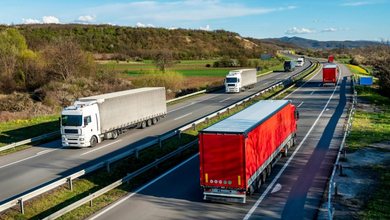



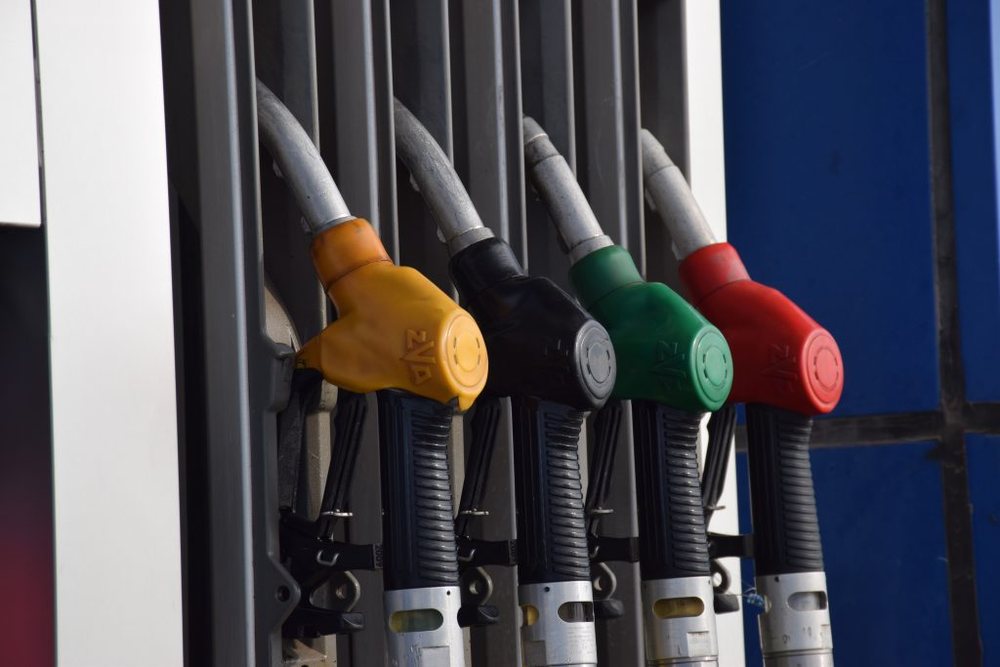
The price of the main petroleum products consumed in Albania, gasoline and diesel, has increased on the international market from around $750 per ton before the start of the US and Israeli war against Iran, to $1,430 on Monday, March 23.
With a 48% increase, the cost of fuel has become a major additional headache for all businesses and consumers. Considering that Albania imported 741 thousand tons of fuel during 2025, which, before the war, cost approximately $555 million and at current prices could cost almost $1.1 billion, the total cost of the crisis for the Albanian economy could easily reach half a billion dollars or around 400 million euros, if the crisis lasts a whole year.
This is a figure equivalent to approximately 1.4 percent of Gross Domestic Product and, if this is the reality, Albania's economic growth this year will not be 3.6 percent as predicted by the International Monetary Fund, but will fall to 2.2 percent.
In such a scenario, not only consumers and businesses, but also the government will have to take additional measures to manage the unexpected budget deficit, or it will be forced to increase public debt. The government has projected a budget deficit of 64 billion lek, or 2.3% of GDP, and if it has to meet this in the face of falling revenues and economic growth, then it will have to make spending cuts. The alternative, maintaining high spending against lower revenues, means that the government will have to take on more public debt, which translates into higher interest rates and higher costs as well.
However, this is a very superficial calculation and does not take into account that the economy is affected by many factors. One of the factors, for example, is that, depending on the rainfall and, consequently, the production of energy from hydroelectric power plants during this year, Albania may have to import larger amounts of energy to cover consumption, with higher economic consequences, or it may, if the rains are abundant, benefit something from the sale of excess electricity.
Furthermore, the higher cost of oil will likely be accompanied by higher costs across all prices and a general slowdown in the economy, thus with additional indirect effects.
On the other hand, the increase in fuel prices also means a decrease in consumption, because demand is not completely inelastic and many citizens may choose to travel less or use public transportation, which translates into a decrease in consumption, a decrease in imports, and a decrease in the additional cost of the crisis.
The main news is that the crisis is unlikely to last long, and commodity and stock markets are betting that it can be resolved within a few weeks with the reduction of American bombing and the gradual restoration of navigational safety in the Strait of Hormuz.
The other valuable news for Albanians is that, while the oil crisis has a real and tangible cost, it does not seem as high as the usual cost of misgovernment.
The state budget plans to spend 887 billion lek this year, a figure equivalent to almost 8.9 billion euros. Nearly 1.4 billion euros will go to the salaries and social security of 185 thousand employees in the public sector, whose efficiency in work with very high security can be said to be negative.
The number of employees has increased in recent years, apparently for electoral effect, at considerable cost. Likewise, public sector wages increased before the elections at a higher rate than economic growth. For example, in 2023, public sector wages cost 100 billion lek or 4.2% of Gross Domestic Product, while this year they are expected to cost 140 billion lek or 5% of Gross Domestic Product.
In short, the cost of increasing patronage for electoral effect costs us much more every year than the oil crisis. Not to mention the cost of systemic manipulation of public procurement on the street, which was seen in the case of former Deputy Prime Minister Belinda Balluku, where tenders worth hundreds of millions of euros turned out to be manipulated at the expense of taxpayers. In this context, while the oil crisis is something that Albanians have no choice but to pay the cost that they are obliged to pay, the cost of misgovernment is in their own hands to fight. / BIRN