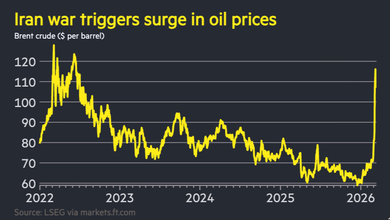
The increase in oil prices in international markets, driven by geopolitical tensions in the Strait of Hormuz, is quickly being transmitted to the Albanian economy. According to an analysis by ALTAX, Albania is a typical “price taker” economy in the global energy market, which means that it has no influence on the formation of international oil prices, but immediately absorbs its effects.
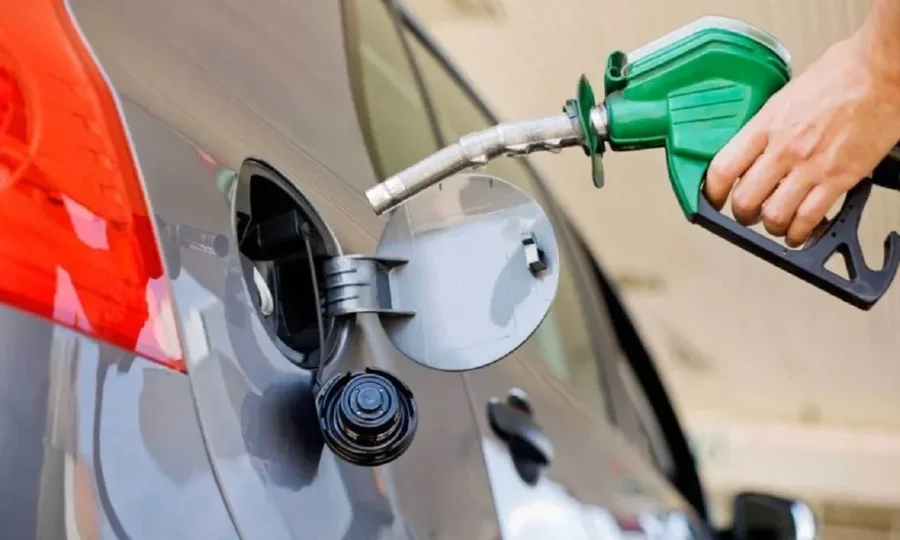
In an economy with high dependence on imports, such as the Albanian one, the increase in energy prices is transmitted through a chain mechanism that starts from fuels and ends with the prices of consumer products. According to the analysis, the increase in international prices is immediately reflected in the costs of import, transport and insurance of goods, leading to rapid increases in fuel prices in the domestic market. Currently, the price of oil in the domestic market has reached about 179 lek per liter.
Energy functions as a transversal input in the economy. This means that its increase affects almost every sector, from transport and industry to food and services. In the case of Albania, the effect is even stronger due to the high dependence on imports and the concentrated structure of the fuel market, where a few dominant operators and a high level of informality reduce competition. As a result, price increases from international markets are quickly and almost completely transmitted to the consumer, while price decreases are usually reflected more slowly.
This phenomenon creates an asymmetry in the market. According to the analysis, price increases from abroad are immediately passed on to the domestic market, while decreases are amortized through higher profit margins. In this way, the inflationary blow to Albanian consumers is often stronger and more lasting.
One of the sectors expected to be hit hardest is agriculture. Being an intensive sector in the use of imported fuels and inputs, the increase in oil prices translates into higher costs for agricultural machinery, transport of products and for inputs such as chemical fertilizers, pesticides or seeds. In Albania, over half of agricultural inputs are imported, which makes the sector very sensitive to shocks from international markets.
In economic terms, this increase in costs translates into direct inflationary pressure. According to historical precedents such as the energy crisis during the war in Ukraine, farm operating costs can increase by up to 20–30% in similar periods of crisis. This increase is usually accompanied by a decrease in production, an increase in food prices and a weakening of the competitiveness of the sector.
Albanian agriculture is particularly vulnerable to these shocks. Its contribution to Gross Domestic Product has fallen from over 20% in the early 2010s to around 17% today. Rural migration, fragmentation of small farms, lack of modern technology and dependence on climatic conditions have reduced the sector's resilience to external crises.
Another factor that increases vulnerability is the low level of budget support. In Albania, only about 1–2% of the public budget goes to agriculture, while in the European Union the average support for the sector exceeds 5% of the budget. This difference leaves the sector without protective mechanisms in crisis situations such as the current one.
The effect of the increase in oil prices is immediate in field and greenhouse agriculture. In open-field agriculture, fuel for tractors, planting and harvesting machinery, and transport of products constitute a significant part of costs. During the 2022 energy crisis, fuel costs for Albanian farmers increased by 25–40%, leading to a decrease in planted areas and a decline in production in some regions.
In the greenhouse sector, the impact is even stronger due to the energy intensity of production. Heating and irrigation systems often depend on fuel or electricity, which is also affected by energy prices. In 2022, greenhouses in Lushnje reported a decrease in exports of about 20% due to rising energy costs.
The increase in costs is also transmitted to the agri-food processing sector. Flour factories, canning or processing agricultural products face higher costs for the transportation of raw materials and for the energy needed in production processes. During the inflationary crisis of 2022, costs for the flour industry increased by about 30%, leading to an increase in bread prices of about 20%.
Livestock is also affected, although the effect appears with a relative delay. The increased cost of transporting animal feed and other inputs increases the production costs of meat, milk and eggs. Historically, similar crises have led to a reduction in livestock stocks in some mountainous regions, due to high feed and energy costs.
ALTAX's analysis highlights that the impact of rising oil prices is mainly qualitative, through cost pressures and inflation, but in prolonged scenarios it could lead to a decline in agricultural production of up to 10–20%. Such a development would directly affect food prices and the incomes of rural households.
To mitigate the effects of this energy crisis, the analysis suggests a package of preventive measures. These include partial subsidization of agricultural fuel for farmers, encouraging investments in solar energy for irrigation and heating in greenhouses, creating state reserves for agricultural inputs, and improving rural logistics to reduce transportation costs.
Soft loans and sovereign guarantees for investments in more efficient energy technologies could also play an important role, while the Albanian Development Bank is expected to have a key role in financing priority sectors such as agriculture. /ekofin.al/