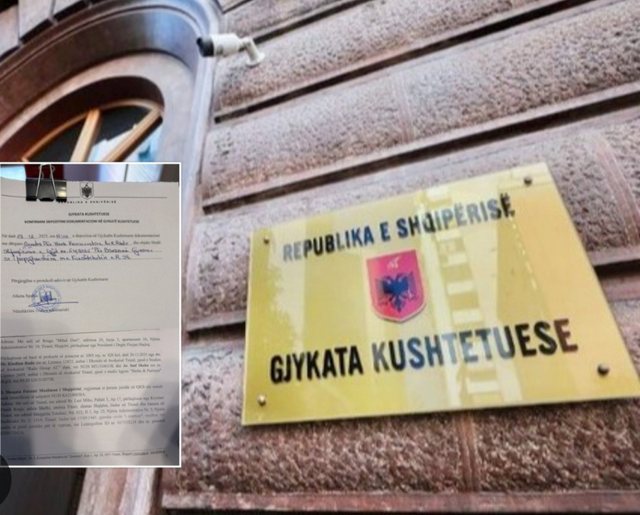



The Coalition for Family and Life and the Albanian Diaspora have sent the "Gender Equality" law to the Constitutional Court. They filed a lawsuit of over 200 pages to annul this law, which they say harms the family and children.
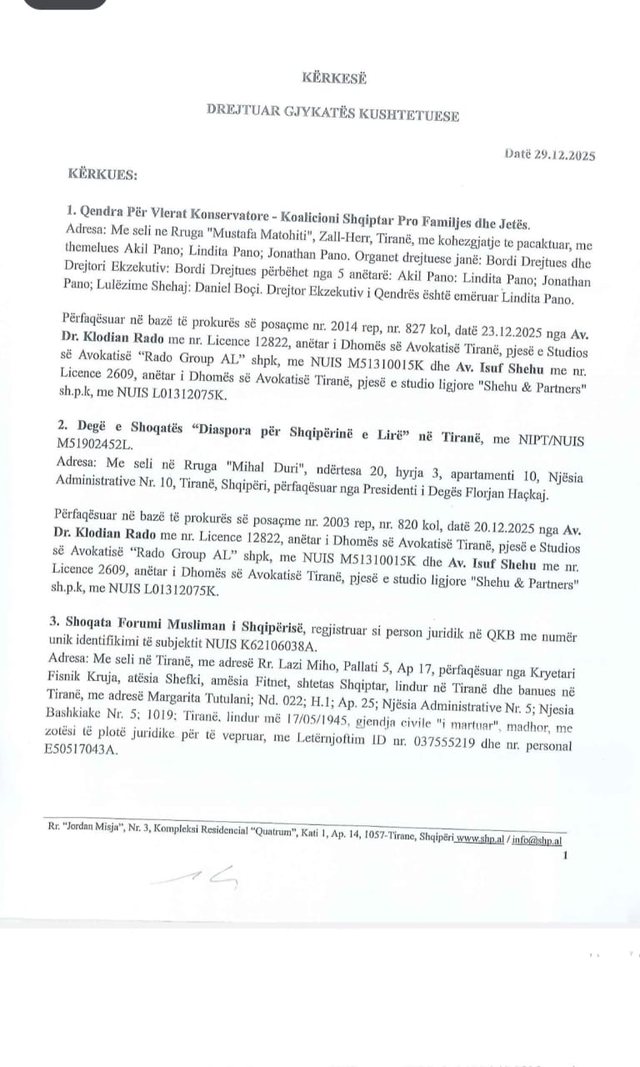
The request was made by three organizations, specifically the Center for Conservative Values, the Albanian Coalition for Family and Life, the Tirana Branch of the "Diaspora for a Free Albania" Association, and the Muslim Forum of Albania Association, represented by lawyers Dr. Klodian Rado and Isuf Shehu.
According to the researchers, the law in question poses a risk of direct and potentially irreparable consequences in several fundamental areas of social and legal life, including children's education, freedom of expression and the media, freedom of conscience and belief, labor relations, as well as the coherent functioning of the legal order.
For this reason, an urgent suspension of its implementation is requested, with the argument that only maintaining the previous status quo guarantees legal certainty and avoids chain effects on institutions and society.
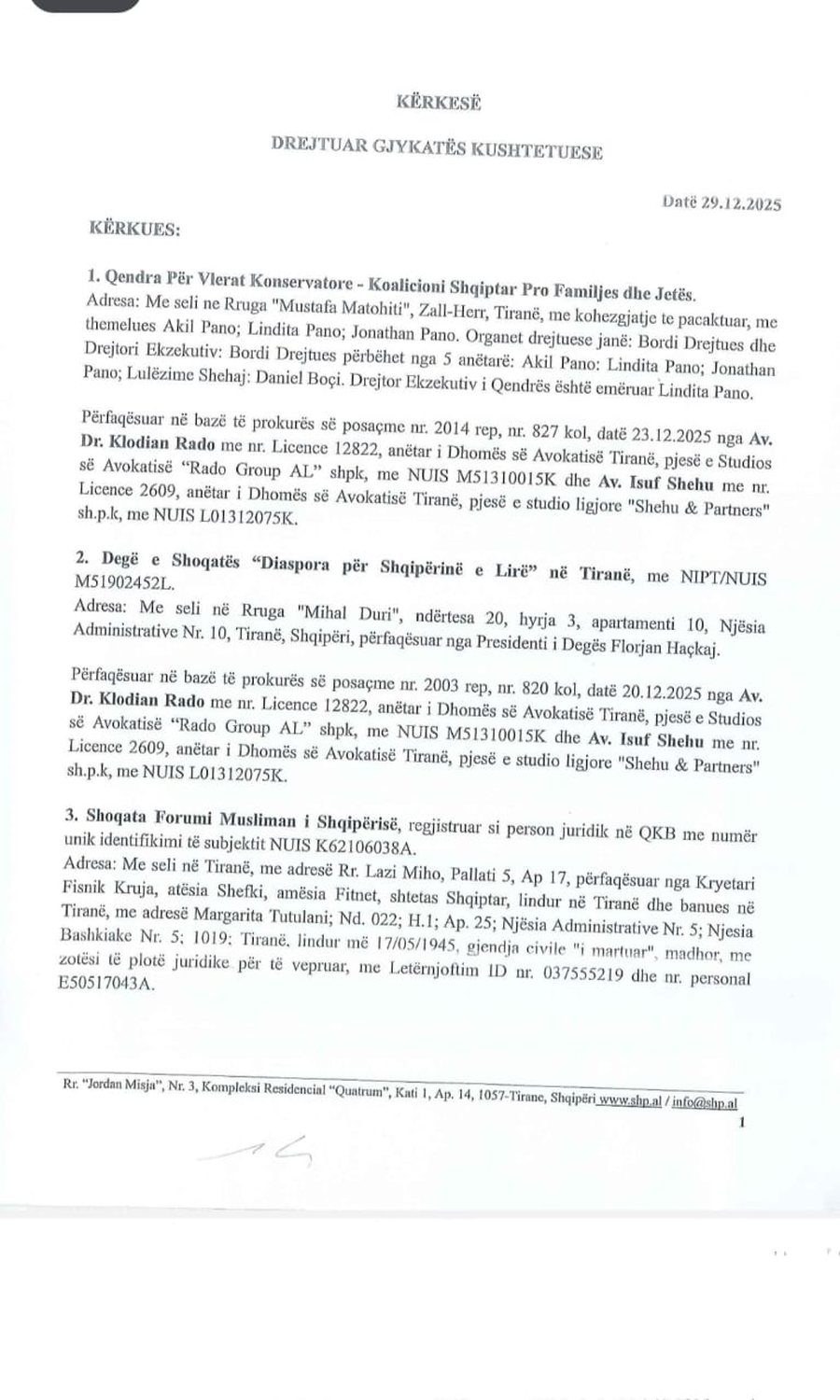
The request highlights a number of provisions of the law that are considered constitutionally problematic, including the redefinition of the concept of "gender", the reversal of the burden of proof, the obligations to use so-called "inclusive" language, the establishment of mandatory gender quotas, and the collection and processing of gender data.
According to the document, the alleged violations are both procedural and substantive. The petitioners point to the lack of a real public consultation, the lack of in-depth constitutional and financial analyses, as well as the violation of parliamentary procedure, including the failure to respect the “article-by-article” voting. In terms of content, it is argued that the law violates fundamental constitutional principles such as legal certainty, freedom of expression, freedom of belief, family rights and due process standards.
Another important aspect of the request relates to the law's inconsistency with a number of existing codes and laws, creating, according to the applicants, a conflict of norms and uncertainty for implementing institutions, citizens and private entities. The request also raises the issue of the law's compatibility with Albania's international obligations, including the European Convention on Human Rights and other ratified instruments.
The initiating organizations emphasize that this initiative does not intend to deny the principle of equality, but requires that any legal intervention be constitutional in procedure and content, clear, predictable and proportional, respecting the standards of a democratic and pluralistic society.