The increase in oil prices on international markets following the outbreak of conflict in the Middle East is increasing the risk of a new wave of imported inflation in Albania. Experts warn that the Albanian economy remains particularly exposed, due to its high trade deficit, heavy dependence on food imports and weaknesses in domestic production. They recommend fiscal intervention measures, including temporary tax cuts.
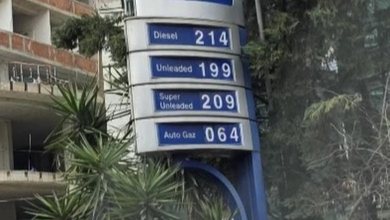
In these first 12 or so days of the war in the Middle East, Albanians are buying oil on the retail market 10 to 13% more expensive compared to the period before the conflict began. The retail price has risen from 175 lek per liter to 193 lek per liter (while for several days in a row, oil was traded at around 200 lek per liter).
If oil prices on the London Stock Exchange reach 150 USD per barrel, due to the escalation, prolongation of the conflict and the closure of the Strait of Hormuz, the chairman of the Albanian Hydrocarbons Association, Luigj Aliaj, calculates that the price on the retail market will reach around 260 lek per liter. This means an increase of around 49% compared to the price before the start of the war.
In addition to the increase in oil prices and the increase in transportation tariffs, there is also an expected increase in food prices in the domestic market.
Importing companies and food packagers warn that, if the crisis continues, food prices could start to rise in the retail market within a month or two.
According to them, in foreign markets where Albanian companies are supplied, prices for sunflower oil and plastic packaging have already started to increase. This is related to the increase in transportation costs and the uncertainty of suppliers to guarantee supply, as many countries are initially trying to secure their reserves.
For some products, a review of price contracts has also been made, which may be reflected in a further increase in prices in the domestic market after a few months.
"In foreign markets, price increases have been observed, especially for plastic materials that importing companies use as raw materials for packaging, as well as an increase in the price of sunflower oil.
It is expected that there will be growth for other products in the food basket, for which signals have already been given by international suppliers.
However, so far, the company has not made new supplies, as they are currently using the food reserves they keep for each product. These reserves are created to cope with possible situations such as delays in transportation, contract termination or other supply problems, in order to guarantee the continuity of goods on the market.
This is a practice that is constantly implemented to efficiently manage the supply chain.
"For this reason, at this moment, no immediate increase in prices is expected in the domestic market. Product reserves, depending on the item, can cover one to two months of sales on the market," explained to "Monitor" on condition of anonymity managers of one of the largest food importing and packaging companies.
For economic experts, the economy's high dependence on imported food supplies, whether for processing, packaging or direct consumption, makes the effects of external influences almost inevitable. According to them, the effects of rising international food prices are expected to be reflected very quickly in the domestic economy, causing an immediate impact on the consumption sector, but also on increasing production costs.
According to economic expert Arben Malaj, the increase in fuel and energy prices in international markets is expected to be gradually transmitted to the Albanian economy, reflecting the effects of imported inflation, especially for food basket products.
Mr. Malaj explains that now, as in previous crises, it is proven that the countries most affected by imported inflation are economies with trade deficits, including Albania.
"There will definitely be an increase in food prices, but the shock wave and the size of imported inflation have their own dynamics. It has been proven in the analyses of previous crises that small countries with large trade deficits are easy victims of high imported inflation. Although we are currently not in the size of other crises, the situation requires careful monitoring by the Bank of Albania, the Ministry of Finance and the Ministry of Economy", underlines, among others, Mr. Malaj.
In 2025, Albania imported a total of 1.3 million tons of food, marking an increase of 4.3% compared to 2024 according to INSTAT data.
The largest amount of imports was recorded for the "Cereals" group, with an imported amount of 374.8 thousand tons, which marked an increase of about 12% compared to 2024.
The second group with the highest imports is “Edible fruits and nuts”, with 69.4 thousand tons, marking an increase of 9%. Likewise, “Edible vegetables, related roots and tubers” have recorded high imports, with 69.4 thousand tons, increasing by 13.4% compared to 2024.
Overall, Albania has a high trade deficit in the food sector for the years 2024-2025, as it imports more than it exports.
For 2025, Albania exported a total of 504.6 thousand tons of food, marking an increase of 7% compared to 2024. The main export group is “Edible vegetables, related roots and tubers”, which accounts for 35% of total exports, with an exported quantity of 174.6 thousand tons. This group has marked an increase of 7% compared to 2024.
The second largest group is "Edible fruits and nuts", with 140 thousand tons, which has recorded an increase of 12.4%. On the other hand, the group "Beverages, alcohols and vinegars" has recorded a decrease in exports, with 77.8 thousand tons, which is 4% less than in 2024.
How long could the energy crisis last?
For energy experts, the spread of this effect in the economy, i.e. the increase in fuel and energy prices that is bringing chain effects to transport tariffs and food products, will depend mainly on the duration of the conflict and the level of prices in international markets.
"Price fluctuations will follow the course of the war in the Middle East. All conflicts in oil-producing countries cause oil prices to rise. At this stage of the conflict, it is difficult to predict how it will develop. The first conflict with Iran lasted only 12 days, with little impact on the markets. This time the markets 'think' differently.
At the same time, President Donald Trump said that the war is nearing its end, causing prices to immediately drop to 88 USD/barrel. In the medium term, the war is unlikely to last for months because the mid-term elections are in November 2026 and President Donald Trump will certainly want everything to be over long before that date.
"But it is certain that the fluctuations from day to day will be very large, as we observed the 20% and 10% movements on March 9 and 10," explains energy expert Laert Dogjani.
According to him, oil and gas are energy products, but also raw materials for by-products such as chemical fertilizers and others.
"This causes chain growth for many sectors of the economy which then causes inflation, which must be combated by increasing the base rate by the Central Bank."
All of these could cause economic decline and stagflation (inflation + economic decline or stagnation) in cases of oil crisis if not addressed immediately", underlines, among other things, Mr. Dogjani./monitor.al