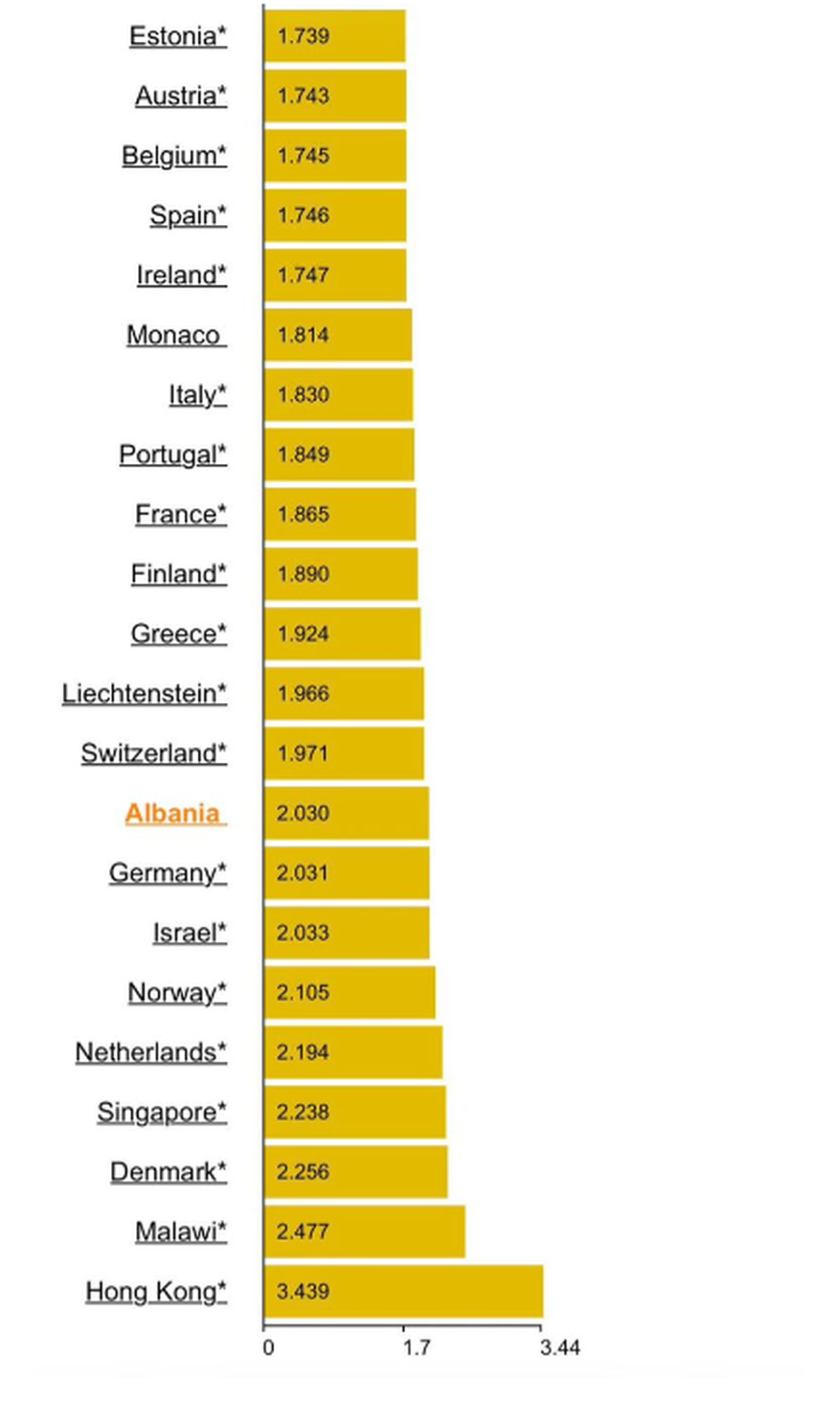



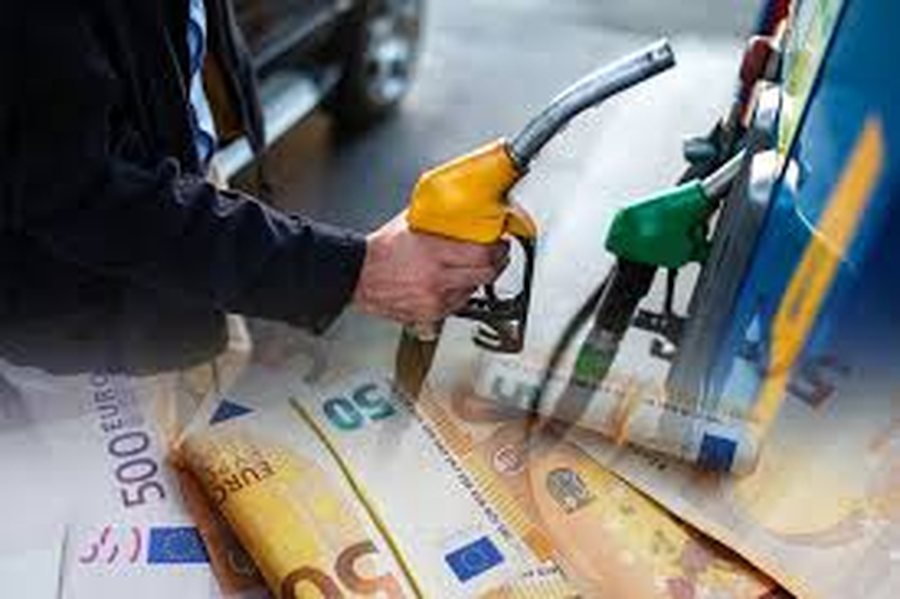
The fuel market in Albania continues to remain one of the strongest economic paradoxes in Europe and the world. According to data published by the international platform Global Petrol Prices, on March 16, 2026, Albania ranked ninth in the world for the highest oil price, with around 2.03 euros per liter.
This position put the country on the same level as economies like Germany, Switzerland, or Liechtenstein, countries with much higher per capita incomes and a purchasing power many times greater than Albania's. Specifically, Albanians paid almost the same price for oil as citizens of the richest countries in the world, but with salaries several times lower.
But the situation has worsened even further.
After the latest increase, the price of oil in the country has reached around 217 lek per liter, or 2.26 euros. At this level, Albania is no longer simply in the “top 10”, but enters the group of 5 countries with the highest oil prices in the world, in line with countries like Singapore or Denmark.
An expensive market in a poor economy
This is the crux of the problem: Albania is not an expensive country because it is rich, but it is expensive despite being poor. And this makes the burden on citizens and businesses much heavier.
Oil in Albania is not simply a consumer product, it is a critical component for every link in the economy: transportation, manufacturing, agriculture, services. Any increase in its price translates directly into higher prices for food, services, and overall living standards.
In a country where the average wage remains several times lower than the European Union average, this price level is not only unjustifiable, but also socially dangerous.
Delayed government intervention
Only after this high pressure and successive increases has the government finally decided to intervene.
The announced measures include: the establishment of a Transparency Board to set retail prices; and a 20% reduction in fuel excise duty.
According to calculations, this is expected to bring a price reduction of 8–10 lek per liter at points of sale.
But here the essential question arises: is this enough?
In a market where the price has increased by over 200 lek/liter, a reduction of 8–10 lek is more symbolic than real. It does not change the structure of the problem, but only temporarily mitigates its effect.
The problem is not just the price, but the model
The oil price crisis in Albania is not episodic, it is structural. It is related to the high level of taxes on fuels; the lack of real competition in the market; limited transparency in price formation; and total dependence on imports.
Administrative interventions such as price boards or partial tax cuts may provide short-term effects, but they do not address the core issue: a market that does not function freely and competitively.
A cost that is paid every day
In the end, the burden falls on the citizen. Every expensive liter of oil is a higher transportation bill; a higher cost to business; a higher price for every product on the shelf.
And when this happens in a country with the lowest purchasing power in Europe, the effect is many times more severe.
Albania today is not simply one of the countries with the most expensive oil in the world, it is the country where this high cost hurts the most. /Ekofin.al/