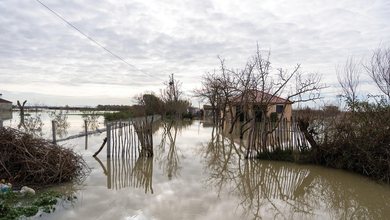



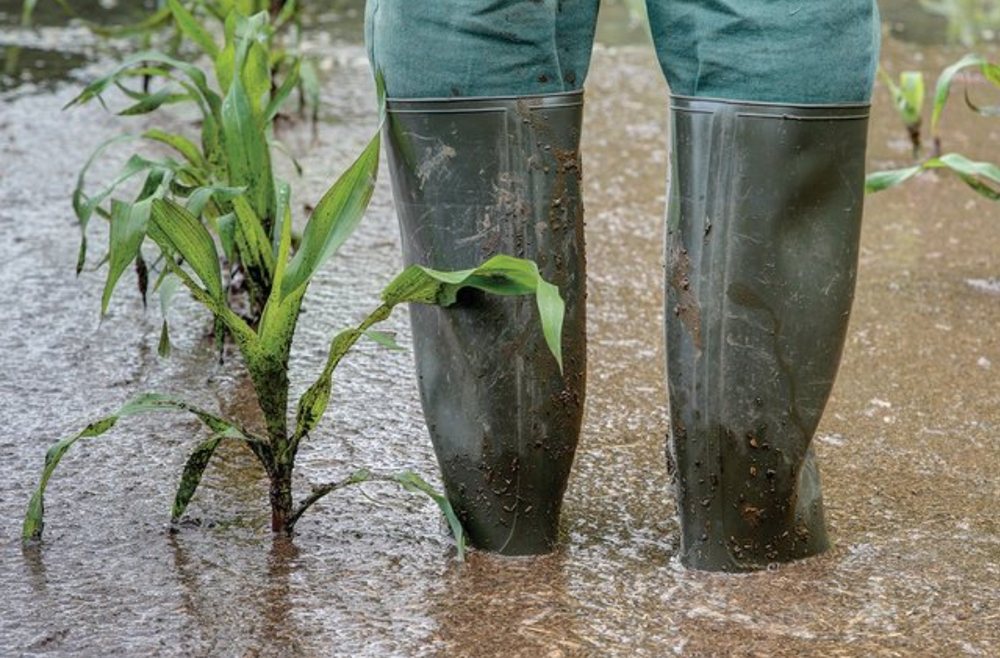
Two hectares of destroyed greenhouses. Around 40 thousand euros in lost investments and over 100 thousand euros in goods that will never be put on the market is the bill for Mirlind Saraçi's vegetable greenhouse farm in Kosova e Vogël, Lushnja.
The floods of recent days have caused damage worth around 150 thousand euros, the recovery of which will take years of work, as the water and silt have also damaged the quality of the soil and negatively affected future plantings.
His disappointment goes beyond the material damage. After 15 years of emigration in Italy, he returned to Albania about 12 years ago, convinced that his experience and savings would be enough to build a functional farm. Today, he calls returning “the mistake of his life,” not because farming doesn’t work, but because the risk remains uncovered and responsibility often remains unaddressed.
Mirlindi's concern is not only with the extreme weather, but also with the functioning of the state. "Nobody announces? Not about the expected rainfall, not about the opening of the HPP gates." Mirlindi says there was no warning about the opening of the dam gates.
The loss did not come from a lack of information and coordination, which in such areas often proves as devastating as the flood itself.
Mirlindi's story is the story of hundreds of farmers in the area. Gentian Ziu, a farmer from Samatica, Berat, says that the damage has spread to several villages and includes greenhouses, field crops and orchards, while an accurate financial balance remains impossible.
In Samatica, according to him, about 8 hectares of newly planted greenhouses have been damaged, while 3.5 hectares of cabbage, ready for the market, have been completely destroyed. In addition, significant damage has also been reported in orchards, where peaches, olives, tangerines and oranges have been affected to varying degrees, without being able to give a final figure yet. "There are many," he says, emphasizing that the situation on the ground changes from day to day.
Throughout Berat, the picture is equally dire. “The damage to greenhouses is incalculable,” says Mr. Ziu, adding that farmers have faced not only floods but also frost, with temperatures dropping to minus 5 degrees. “Problem with frost, problem with floods,” he sums up the situation, describing it as a double blow to agricultural production.
Ilir Pilku, an agricultural data analyst, said that the damage caused by the recent floods in agriculture is around 150 million euros for producers alone. He made this calculation based on the flooded area and the types of crops planted with their production prices.
Calculating the value in the retail and export markets, the losses double to 30 billion lek and are distributed throughout the agricultural chain from the farmer, the collection center, export and consumers, who will pay higher prices and lost investments in greenhouses.
Ruzhdi Koni, who exports fresh fruits and vegetables from greenhouses with his company "Agrokoni", said that the floods have severely damaged specialized export farms that are concentrated in the areas of Berat, Lushnja and Fier. Mr. Koni predicts that this damage will have wide-ranging effects on the economy and is expected to reduce exports by up to 30%.
In addition to crops, damage has also been caused to livestock, animal feed, poultry and fruit growing, housing, roads and other infrastructure.
The funds that the government has available through civil emergencies do not even cover 5% of the damages declared so far based on the flooded area.
Prime Minister Rama said that farmers will be compensated for the recent floods, but the Ministry of Agriculture still does not have a final bill regarding damages and costs, as the data is being updated.
In Albania, losses due to climate change are borne entirely by farmers as insurance schemes do not function, while our government offers very low support to producers, which is not enough even in normal times for the high costs faced by the sector.
Crops damaged on 12 thousand ha by region, 5791 farmers affected
There is currently no official national estimate of total monetary losses, but according to data from operatives from the Department of Agriculture, as of January 16, the January rainfall, floods and frosts have affected about 5,791 farmers and about 12,172 hectares of agricultural land, as well as 5,551 heads of livestock and 147 beehives. The data is provisional and is expected to be updated.
In Fier, 151 ha of vegetables, 1,250 ha of cereals and 1,700 ha of fodder were extensively damaged. Very large damage was also reported to fruit trees (around 300,000 roots), as well as areas with vineyards and olive trees. Fier is one of the regions with the strongest impact on agriculture.
The Berat region has damage spread across several crops – 247 ha of cereals, 368 ha of fodder, 270 ha of other crops and 192 ha of fruit trees.
Korça has one of the largest affected areas with 1,360 ha of cereals and 415 ha of forage, ranking among the most affected regions for these crops.
In Gjirokastra, the damage is more limited with about 85 ha of cereals, 9 ha of fodder, as well as damage to 5,700 fruit trees and 24,000 vineyards.
In Vlora, 80 ha of cereals, 25 ha of forages, and a small area of vegetables (2 ha) were mainly affected, as well as 12,000 fruit trees.
In Elbasan, more limited damage was reported to 36 ha of cereals, 23 ha of fodder, as well as damage to 1,600 fruit trees and 280 vineyards.
In Shkodra and Lezha, the damage was mainly concentrated on cereals, fodder and winter vegetables due to flooding. Many areas were under water for several days, increasing the risk of loss of production.
In Tirana and Durrës, cereals, fodder and vegetables, as well as fruit trees and vineyards, have been damaged.
In some areas of Durrës, damage has reached up to 96% for some crops.
At a national level, cereals have been damaged on about 3,598 ha, forages on about 3,148 ha, other agricultural crops on about 4,151 ha, vegetables and strawberries on about 480 ha, mainly in greenhouses, while fruit trees, vineyards and olives on about 790 ha.
Livestock, 5551 heads affected
The floods and frosts of January 2026 have severely affected not only agricultural crops, but also livestock and beekeeping. Cereals, fodder and fruit are among the most affected sectors, while in livestock, the main problem remains the loss of food and damage to stables.
In beekeeping, the damages are more limited in number, but with a major economic impact for small farmers. The situation remains dynamic and it is expected that the figures will be revised with new reports from the field.
Operational data from the Ministry of Agriculture shows that livestock damage has also been reported, with around 5,551 heads affected nationwide. The damage includes partial loss of livestock due to flooding or the collapse of stables in some areas.
Damage to the food base for livestock, especially in regions where fodder and cereals have been flooded (such as Fier, Korçë, Berat, Lezhë and Shkodër) and risk to the health of livestock from humidity, cold and lack of food.
Also, nationwide, 147 damaged hives have been reported. The damage to beekeeping is mainly related to flooding of the areas where the hives were located, as well as cold and frost, which weaken bee colonies.
From production to the market, 14-30 billion lek damage in agriculture
Based on the areas and types of damaged products, the financial damages to producers, including lost turnover from products that failed to reach the market and potential export losses, range from 14 to 30 billion lek, according to preliminary estimates.
At specific levels, cereals, cultivated on 3,598 hectares, have lost values estimated at between 2.88 and 4.32 billion lek.
Forage crops, on 3,148 hectares of land, represent a loss of 1.57 to 3.15 billion lek. In the case of other agricultural crops, which occupy 4,151 hectares, the damages are estimated at 3.32 to 6.23 billion lek.
Losses for vegetables and strawberries, mainly in 480 hectares of intensive greenhouses, reach 4.8 to 12 billion lek, while fruit trees, vineyards and olive groves, which occupy 790 hectares, represent a loss of 1.58 to 3.95 billion lek.
Experts have categorized the damaged areas by crop and used average yields per hectare, data from Ministry of Agriculture statistics and from the concrete experiences of farmers.
Për drithërat dhe foragjeret janë përdorur rendimente relativisht të ulëta, ndërsa perimet intensive dhe serrat japin fitime shumë herë më të larta. Humbja për secilën kategori është llogaritur duke shumëzuar sipërfaqen e dëmtuar me xhiron bruto mesatare për hektar, duke marrë parasysh një gamë skenarësh nga pesimistë deri tek optimistë.
Humbjet për fermerët prodhues përllogariten deri në 140-150 milionë euro, por vlera në treg e këtyre prodhimeve është rreth 300 milionë euro, duke përfshirë edhe produktet që nuk arritën të shiteshin dhe të ardhurat e humbura nga eksporti.
Një hektar serrash që nuk ka mundur të dalë në treg përkthehet në dhjetëra milionë lekë të humbura, ndërsa humbjet në drithëra dhe foragjeret ndikojnë në furnizimin e bagëtisë dhe zinxhirin e ushqimit.
Në blegtori dhe në bujqësi, dëmet variojnë nga 280-570 milionë lekë. Për të vlerësuar humbjen ekonomike, është përdorur një metodë e bazuar në praktikën e përditshme të fermave dhe të dhënat e Ministrisë së Bujqësisë.
Çdo krerë ka një kosto mesatare prej 50 000 deri 100 000 lekësh për një sezon për ushqimin dhe shërbimin. Bazuar në këtë vlerësim, dëmet nga bagëtia arrijnë në total rreth 280–570 milionë lekë, duke reflektuar humbjet për fermerët dhe investimet e shpenzuara për përkujdesjen e kafshëve. Në bletari, situata është më e kufizuar në numër, por me ndikim të madh ekonomik për fermerët e vegjël.
Janë raportuar 147 koshere të dëmtuara, kryesisht nga përmbytjet dhe ngricat që dobësuan kolonitë e bletëve dhe shkatërruan prodhimin e mjaltit. Vlera mesatare e një koshere është llogaritur rreth 50 000–100 000 lekë, duke dhënë një humbje totale për bletarinë prej rreth 7–15 milionë lekë.
Por sipas ekspertëve, humbjet shkojnë përtej familjeve fermere, pasi ato godasin tregjet e grumbullimit, përpunimit dhe eksportit, duke ulur sasinë e mallrave në treg dhe duke rritur presionin mbi çmimet e brendshme.
Çdo hektar i dëmtuar është mijëra kilogramë perimesh, drithërash dhe frutash që nuk arrijnë në treg, një kosto që ndikon në ekonominë kombëtare dhe në sigurimin e ushqimit për qytetarët.
Miliona të tjera dëme, nga rrugët te shtëpitë
Përmbytjet e janarit 2026 nuk shkatërruan vetëm tokën bujqësore dhe fermat, por kanë përfshirë edhe komunitetet urbane dhe infrastrukturën e vendit, duke nxjerrë në pah dobësitë strukturore të menaxhimit të ujit dhe planifikimit urban në Shqipëri.
Sipas raportimeve nga emergjencat civile të paktën 1 587 banesa janë përmbytur në të gjithë vendin, ndërsa mijëra të tjera janë ndikuar nga ujërat që kanë hyrë brenda shtëpive, kanë dëmtuar mobilie, pajisje dhe infrastrukturë të brendshme.
Në disa zona, banorët raportojnë dëme që tejkalojnë dhjetëra miliona lekë për familje, me pajisje shtëpiake, mobilie dhe struktura të brendshme të papërdorshme pasi uji ka depërtuar thellë në hapësirat jetësore.
These losses, spread across thousands of homes, pose a heavy financial burden on affected families and paint a clear picture of how vulnerable local housing is to extreme weather and the lack of effective flood prevention systems.
On the other hand, transport networks, the arteries connecting cities and villages, were significantly affected. Main roads were blocked by water and landslides, causing traffic disruptions and isolating some rural communities. Partial collapses of road segments and damage to overpasses were also reported.
Experts have estimated that the destruction and repair of major road segments alone could reach tens to hundreds of millions of euros in a normal year, due to the need to restore road layers, bridges, etc.
Fruit and vegetable exports expected to fall by 20-30%
Fruit and vegetable exports reached a value of 19 billion lek in the first 11 months of 2025, according to official INSTAT data, but for the entire year 2025, their value is expected to exceed 210 million euros.
Exporters warn that damage caused by floods and frosts to the country's greenhouses could reduce the volume of production going to international markets by up to 10–30%, leading to an expected loss of between 21 and 63 million euros in the value of agricultural exports, the most consistently growing group, in both volume and value, in 2025.
Ruzhdi Koni, a well-known exporter, underlines that "specialized greenhouses for export have been hit hard and a significant part of production cannot be exported. This will immediately affect our relationships with partners and planning for future seasons."
Beyond the direct loss of export volume, producers also face additional costs for repairing greenhouses and ensuring the quality of the remaining vegetables, increasing financial pressure on farmers.
The loss of a significant portion of exports is not only a challenge for businesses, but also has a knock-on effect on the national economy, affecting rural employment, price stability, and Albania's competitiveness in international markets.
Agricultural sector experts and farmer representatives insist that an integrated approach is needed, including investments in greenhouse infrastructure, warning systems and climate security, as well as financial support for exporters facing unexpected losses.
Without these interventions, export values that were supposed to record steady growth risk shrinking, turning the progress achieved in the agricultural sector into an uncertain profit vulnerable to the vagaries of nature./Monitor.al