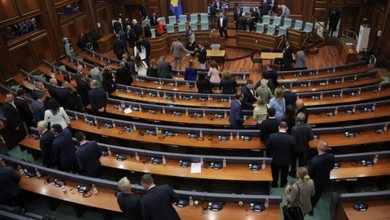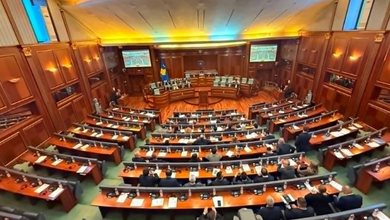


There has been no shortage of reactions from ministers and government officials, after the Greek parliament on April 22 – at the request of the EPPO – voted to lift the parliamentary immunity of 13 MPs from the ruling party, New Democracy, suspected of involvement in a major scandal involving EU agricultural funds.
“Such a massive lifting of parliamentary immunity has never been seen before in Greece,” said Aris Stylianou, a professor of political science at the Aristotle University of Thessaloniki.
Thirteen MPs, including two former ministers, are named in the files that the EPPO forwarded to parliament. They relate to subsidies illegally distributed in 2021 by OPEKEPE – the Greek Agency for Payment and Control of Community Guidance and Guarantee Aid, which administers European funds for agriculture.
The EPPO is currently investigating several cases of suspected organised fraud involving public officials in Greece. These include “criminal offences and misdemeanours detrimental to the financial interests of the EU, such as incitement to breach of trust, computer fraud and false declarations with the aim of obtaining an unlawful advantage for third parties”.
According to suspicions, the deputies helped people unfairly benefit from agricultural subsidies – either for land they did not own or for agricultural activities they did not carry out. The amount of damage is estimated at hundreds of millions of euros.
In addition to the financial damage to the EU, this scheme is suspected of penalizing farmers who were legitimately entitled to benefits, so that “funds were directed towards producers and livestock farmers affiliated with New Democracy,” according to Stylianou.
On the other hand, senior government officials and representatives of the ruling party have questioned the actions of the European Prosecutor's Office, raising accusations of political interference.
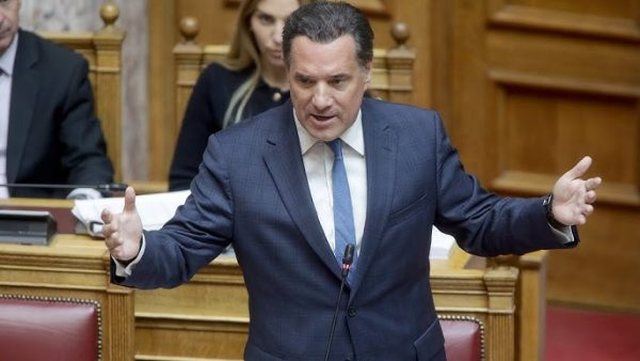
Health Minister Adonis Georgiadis warned in a post on the X platform that the EPPO must "maintain political neutrality to the maximum extent possible," as "involvement in politics risks undermining the institution itself."
Meanwhile, New Democracy MP Sofia Voultepsi declared in a television interview on April 22: "I don't want Ceausescu-type justice in Greece," referring to Romanian dictator Nicolae Ceausescu and the Romanian origin of the European Chief Prosecutor, Laura Codruta Kovesi.
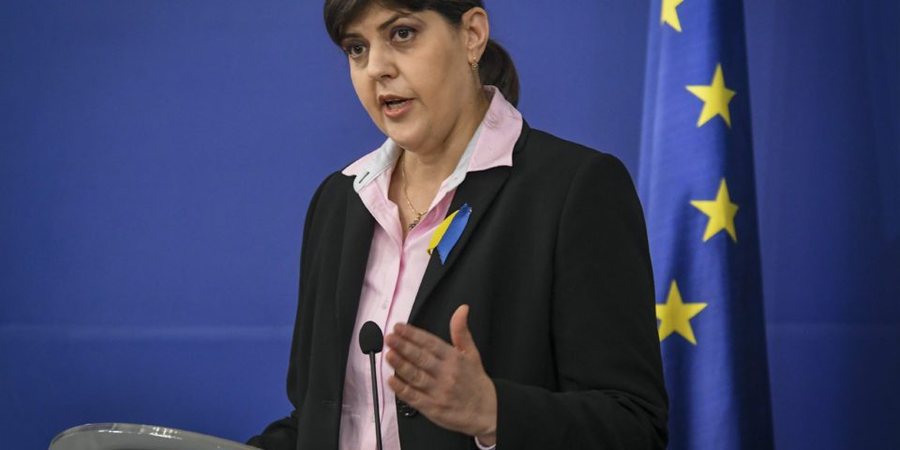
Present at the Delphi Economic Forum, Kovesi reacted to the criticism by accusing opponents of trying to "shift attention from the core of the issue - what really happened in OPEC and who is responsible."
"We are prosecutors and our duty is to do our job. This means proving that the law is equal for everyone. We do not investigate politicians because they are politicians," Kovesi declared.
She also criticized the Greek subsidy distribution agency itself, calling it steeped in corruption. “OPEKEPE is an acronym for corruption, nepotism and clientelism,” she declared.
Similar assessments are shared by Greek experts. According to Sofia Vidali, a former professor of criminology and crime policy at Panteion University in Athens, the scandal reflects the clientelistic way in which “relations are built between the political elite, the public administration and private individuals” in Greece.
For her part, Margarita Gasparinatou, assistant professor of criminology at Democritus University of Thrace, told BIRN that “a systematic strategy is being pursued to discredit the EPPO.”
EU prosecutors only requested the lifting of the MPs' immunity so that the criminal investigation could continue, Gasparinatou said.
"This does not mean that these people ... will be convicted. Of course, the presumption of innocence applies," she added.
Bribes – or just following requests?
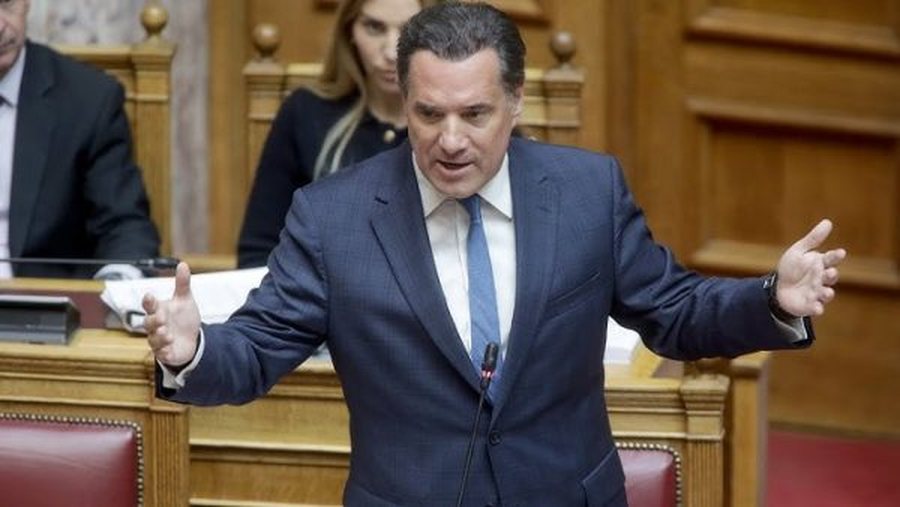
In the April 22 vote, the majority of the 288 deputies present in parliament voted in favor of lifting the immunity of the 13 deputies in question.
The EPPO will investigate two of them, Katerina Papakosta and Kostas Karamanlis, for suspected collusion in a breach of trust damaging the financial interests of the European Union.
Nine other MPs – Ioannis Kefalogiannis, Notis Mitarachi, Kostas Tsiaras, Kostas Skrekas, Dimitris Vartzopoulos, Maximos Senetakis, Lakis Vasileiadis, Christos Boukoros and Theofilos Leontaridis – will be investigated for the same alleged offence, but classified as a misdemeanor.
The last two, Charalampos Athanasiou and Tasos Hatzivasileiou, will be investigated for the alleged offense of incitement to dereliction of duty.
Most of the 13 MPs themselves requested the lifting of their immunity, stating that they intend to clear their names. They insist that they did not pay bribes, but were acting within the scope of their duty as elected representatives, forwarding requests from Greek citizens seeking help.
Among them are three senior government officials who resigned on April 3, denying any wrongdoing: the Minister of Climate Crisis and Civil Protection, Ioannis Kefalogiannis, the Minister of Rural Development and Food, Kostas Tsiaras, and the Deputy Minister of Health, Dimitris Vartzopoulos.
“The role of a deputy is not limited to the parliament hall,” Mitarachi declared during the plenary session. “Political activity is a broader concept and also includes the forwarding of correspondence, the transmission of citizens’ requests and petitions. It is not about bribery, but about forwarding requests… The deputy is the citizen’s main advocate.”
For his part, Vartzopoulos stated in a television interview on April 2 that he had communicated with OPEC many times in his capacity as a member of parliament, without remembering exactly what he had intervened about.
"There is no farmer who at some point in his life has not had problems with OPEKEPE and it is natural for them to turn to a member of parliament to resolve them," he said, adding that his conscience is clear.
On April 3, the Greek media outlet Kathimerini published excerpts of conversations between politicians and OPEC officials, taken from the investigative file, showing attempts to intervene in favor of certain farmers.
According to Margarita Gasparinatou, what is worrying is the way in which clientelistic relationships are being “normalized” by senior officials themselves. State institutions, she says, operate “on the margins of legality, in gray areas,” essentially constituting a circumvention of rules and, in some cases, even constitutional rights.
The government claims that clientelism is a thing of the past.
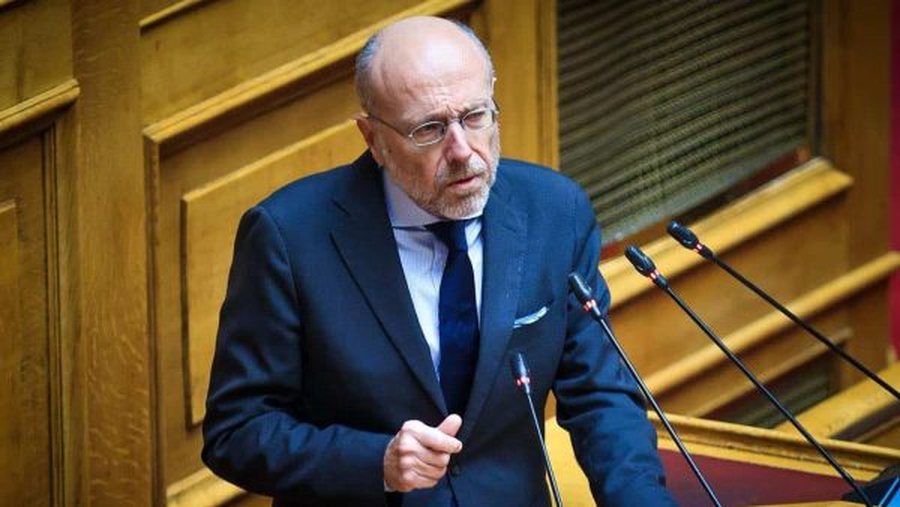
In a separate matter, in June 2025, the EPPO also referred two former Ministers of Rural Development and Food, Makis Voridis and Lefteris Avgenakis, to the Greek parliament for suspected involvement in the fraudulent use of EU agricultural funds.
Parliament voted to establish an investigative commission to examine the allegations, but a few months later, in February 2026, it concluded that the two former ministers were not criminally responsible.
According to Margarita Gasparinatou, parliamentary procedures are being used “more or less as a ‘wash-up’” to ensure that MPs are not held accountable. She also noted that the proceedings in the recent parliamentary inquiry into the wiretapping scandal, which exonerated the lawmakers, were held behind closed doors.
If the majority decides that there are no issues to pursue and this is approved by parliament, "the issue is completely closed," she stressed.
Meanwhile, government spokesman Pavlos Marinakis stated on April 23 that the 13 MPs involved in the OPEC+ affair “will normally be on the electoral lists” in the next national elections expected to be held in 2027.
Prime Minister Kyriakos Mitsotakis argued last week that the problems with agricultural subsidies have a long history, “reflecting the responsibilities of all political parties.”
He added that clientelism "did not arise yesterday", but insisted that it has now been "eliminated", thanks to the government's decision to reorganise OPEKEPE under the control of the independent tax administration. /BIRN/