



The Central Election Commission in Kosovo now has a little over a month to prepare and hold new early parliamentary elections, the third in a row in about a year and a half.
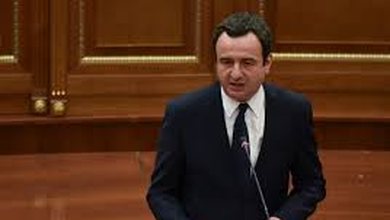
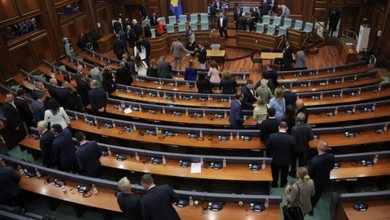
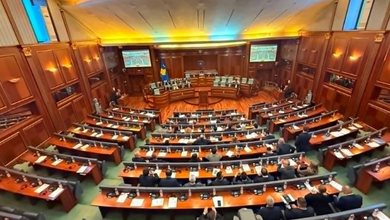
The new elections come after the Assembly failed to elect a new president within the deadline, plunging the country into a new political crisis.
The parliament had until midnight Tuesday to elect a head of state, as President Vjosa Osmani's mandate ended in early April. However, Prime Minister Albin Kurti and opposition parties failed to reach an agreement on electing a new president.
What are the possible dates for election day?
There are only two possible dates for holding new early elections according to legal procedures: May 31 and June 7, according to Melos Kolshi, a researcher at the Kosovo Law Institute (IKD).
Because the president was not elected within the 34-day deadline that the Constitutional Court had set in a ruling in March, the Assembly was automatically dissolved on April 28, Kolshi explains to Radio Free Europe (REL).
The dissolution of the Assembly, according to him, means the immediate start of the process towards new elections, which must be held within the next 45 days.
"In this way, after the failure of the Assembly to elect the president, a mandatory sequence of actions is created: first, the automatic dissolution of the Assembly as a constitutional consequence; second, the activation of the competence of the acting president to set the election date; and third, the organization of early elections within the legally established deadlines," Kolshi tells REL.
How is the election date set?
Acting President Albulena Haxhiu should now invite political parties to a meeting to discuss the preferred date for holding the elections.
This time, they will have an easier time choosing, because they only have two options: May 31st or June 7th.
After such a meeting and agreement on the election date, Haxhiu must officially announce the date of the early elections and she has until the end of next week to do so.
"This decision must be made within a period of 10 days from the day of the dissolution of the Assembly, while the date of the elections must be in accordance with the time limits set by law, namely elections cannot be held earlier than thirty (30) days and no later than forty-five (45) days from the day of the dissolution," Kolshi said.
Why only two possible dates?
All these developments have meant that there are not many options.
In addition to the 30 to 45-day deadline after the dissolution of the Assembly, there is also an electoral practice in the country that leaves so little space: holding elections on a weekend day.
"Also, the law requires that elections be held on a Sunday, respecting electoral practice and standards; in this specific case, considering that the date of the dissolution of the Assembly is April 28, the possible dates for holding the elections are May 31 and June 7," Kolshi explains.
According to Kolshi, this development represents a typical example of how the Constitutional Court, through its interpretation, has clarified and operationalized constitutional norms, creating a clear and automatic mechanism for resolving institutional crises.
"At the same time, it has limited the space for discretionary intervention by the acting president in this case, and has also limited the possibilities for any potential abuse of rights and deadlines by any entity," he concludes.