

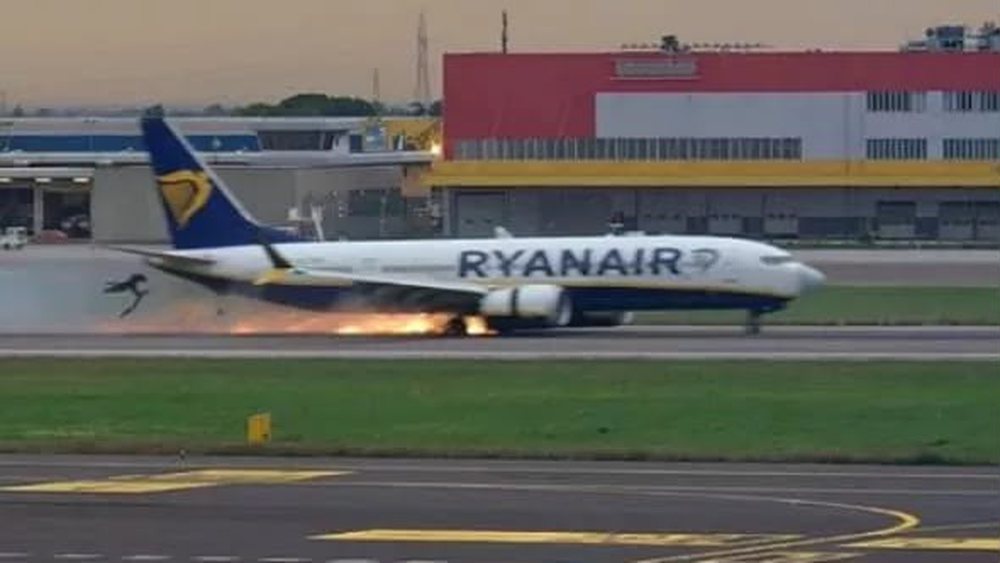
BERGAMO – The Italian Aviation Safety Authority (ANSV) has published the report on the incident that occurred on October 1, 2024, when a Ryanair Boeing 737 MAX 8-200 aircraft, flying from Barcelona to Bergamo, suffered a serious defect during landing at Orio al Serio airport.
As the plane touched down on the runway, four tires on the main landing gear burst, causing significant damage to both the plane and the runway. There were 162 passengers and 6 crew members on board, but fortunately there were no injuries.
According to the report, meteorological conditions were good, the approach to the runway was normal, and the landing speed was within the permitted parameters.
The investigation reveals that the crew was aware that the anti-skid system (which prevents the wheels from locking during braking, similar to the ABS system in cars) was not working. For this reason, the landing procedure had to be followed with a very precise sequence of actions.
According to the ANSV, the pilots began applying pressure to the brakes four seconds after the plane touched down, while the speedbrakes – panels on the plane's wings that reduce lift and transfer the plane's weight to the wheels – were activated just seven seconds after touching down.
At that moment, the braking system had reached almost maximum pressure, while the weight of the aircraft had not yet been fully transferred to the wheels. Without the protection of the anti-skid system, the wheels locked, four tires burst, and the metal wheel disks rubbed the asphalt.
The plane managed to stop after about 1,700 meters, still having approximately 1 kilometer of free runway ahead.
After firefighters intervened, passengers disembarked from the plane via normal stairs, without the need to use the emergency slides.
What did the investigation reveal?
The ANSV report states that several factors influenced the incident:
* lack of practical training in the simulator for landing with the anti-skid system out of order;
* automatic actions of the pilots, created by experience with normal landings where the system is working;
* the fact that both channels of the anti-skid system were deactivated, although the defect was found in only one of them.
The investigation also notes that the procedures for this type of breakdown were scattered across several different manuals and did not clearly present the exact order of actions that had to be followed.
Recommendations for Boeing and changes from Ryanair
Following the investigation, ANSV has made three recommendations to Boeing, requesting:
* initial and periodic simulator training for landings with the anti-skid system out of order;
* drafting a single and clear procedure for these cases;
* more precise maintenance instructions, specifying that the functional channels of the system should not be deactivated without reason.
Meanwhile, Ryanair has changed its procedures. The company has reduced the maximum time allowed to repair a defect in the anti-skid system from 10 days to just one flight cycle and has decided that, before a plane operates in these conditions, the crew must consult with a special pilot on standby 24 hours a day.