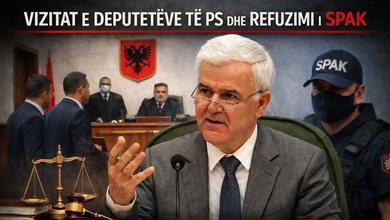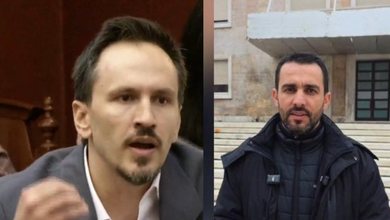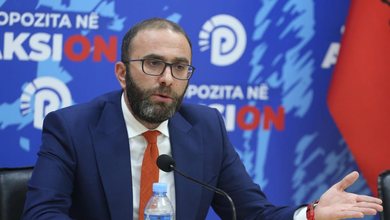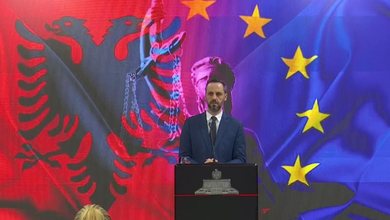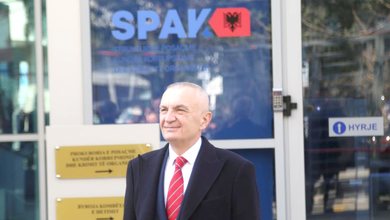



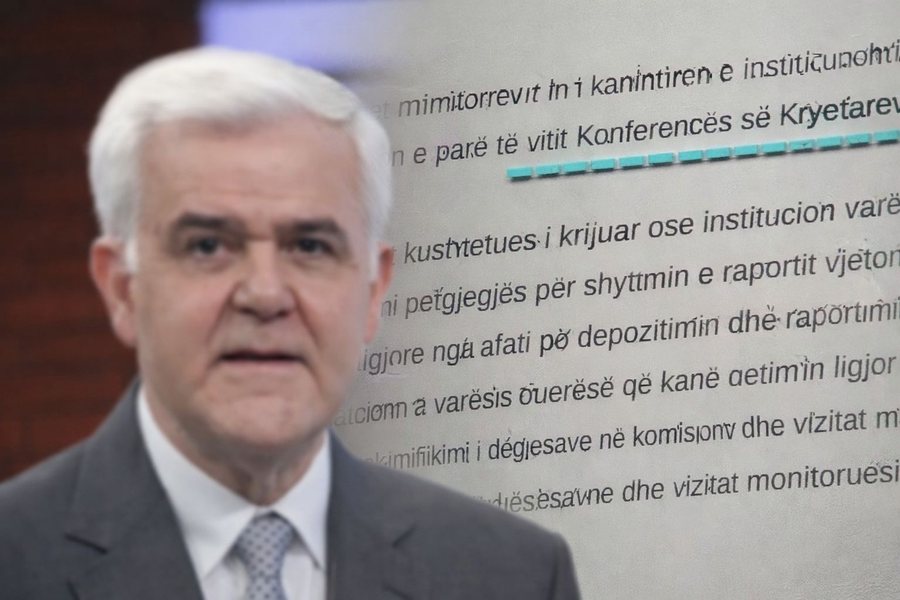
The so-called "monitoring" visits of the parliamentary committee led by Fatmir Xhafaj to the country's courts have not been approved by the Conference of Speakers of the Albanian Parliament and, under these conditions, constitute a clear violation of the law and the Rules of Procedure of the Parliament.
According to the Assembly's Operating Manual, at the beginning of each parliamentary year, the chair of a committee is required to present to the Conference of Chairmen the Annual Draft Calendar of Activities, which must clearly foresee:
• committee hearings;
• field monitoring visits, with specific institutions and defined dates.
From the verification of official documentation, it results that there is no decision of the Conference of Mayors that has approved:
• specific judicial institutions;
• specific dates;
• or a monitoring plan for any parliamentary committee, including the committee headed by Fatmir Xhafaj.
The only calendar approved by the Conference of Speakers relates exclusively to the reporting of independent institutions to the Assembly, that is, to the deadlines when these institutions appear to give an account to the deputies. This calendar does not foresee and does not authorize monitoring visits of deputies or committees on the ground.
In this context, the visits held in:
• Korça, where Bledi Çomo was included (with the absence of Saimir Hasalla due to the lack of a quorum);
• Tirana, with Aulona Bylykbashi and Erjon Malaj;
• Elbasan, with Aulona Bylykbashi and Saimir Hasalla;
• Lezhë and Shkodër, with Onid Bejleri,
They were held without any formal legal basis, without authorization from the Conference of Presidents, and outside any approved calendar.
In the absence of a relevant decision, these actions do not constitute parliamentary oversight, but rather private controls by the committee chair, carried out on behalf of the Assembly, but without a mandate from the sole body that has the competence to authorize them.
It is significant that SPAK is so far the only institution that has officially opposed this “monitoring visit.” In contrast, the Supreme Court and the ILD remain silent, despite the fact that this is one of the most flagrant interventions of the socialist majority in the justice system since the start of the reform.
Essentially, without approval from the Conference of Presidents, without a draft calendar, and without constitutional competence for on-the-ground control over the courts, these visits constitute a dangerous precedent of political pressure, which undermines the separation of powers and violates the independence of the justice system.