

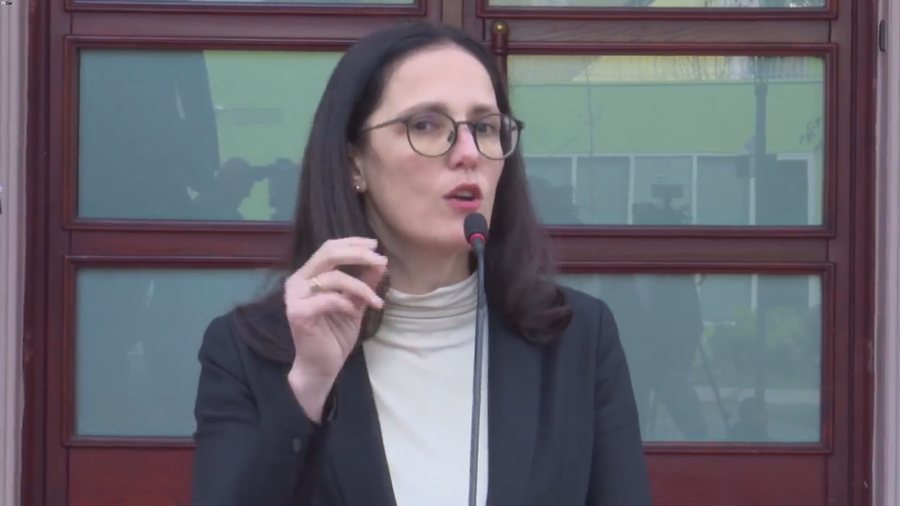
The Albanian government still has no plans to take concrete measures to curb the increase in fuel prices. At least, this is what the Minister of Economy and Innovation, Delina Ibrahimaj, implied in a statement to the media after the Council of Ministers meeting.
She announced again that the government will remain only in terms of monitoring the situation and warned that the Transparency Board may be reinstated in the event of further increases.
But this government "monitoring", which translates into a burden for citizens every day with new prices, also shows the difference with countries in the region, which have taken concrete measures to protect citizens.
The latest is the Greek government, which announced emergency measures to curb price increases and the phenomena of unjustified profits, in the context of international tensions and the crisis in the Middle East.
The main measure is to set a ceiling on the profit margin for fuel, food and basic consumer goods. In the fuel sector, the profit margin in wholesale trade will not exceed 5 cents per liter, while for retail outlets, the limit is set at 12 cents per liter. The measures will be in effect for three months.
Kosovo and Croatia have acted in the same way, while the Albanian government continues to monitor the situation.
Responding to the question of why the price of oil in Albania is higher than in some countries in the region, the minister explained that one of the main factors is the way the circulation tax is applied. According to her, unlike other countries in the region where this tax is paid on the vehicle, in Albania it is paid on the fuel.
Regarding possible interventions in other taxes, such as the excise tax, which is the largest at around 40 lek, or the carbon tax, the minister justified that there is currently no situation that requires such measures.
Until the moment comes for the minister and the government to convince them that the situation requires intervention, we remind them that the salaries of most Albanians are not enough to withstand the price increases for a long time. At the very least, the government can react at the level of countries in the region, which, despite having higher living standards, protect their citizens from high costs.