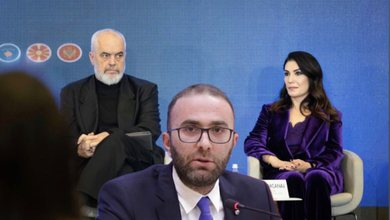


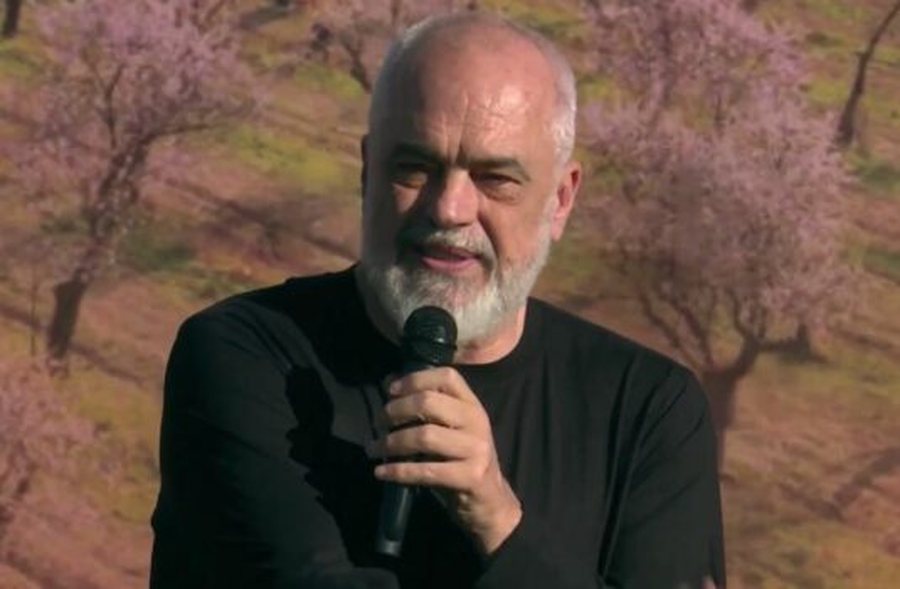
Prime Minister Edi Rama held a meeting with farmers today, where he focused on the idea of uniting agricultural producers in joint structures that, according to him, function throughout the European Union.
At the beginning of his speech, Rama thanked the farmers for their participation and emphasized that Albanian agriculture has entered a phase where unification is no longer a choice, but a necessity. According to him, this unification has nothing to do with the cooperatives of communism, but with a modern model used in EU countries.
"Not like the cooperatives of the past, but like the cooperatives of the European Union," said Rama, explaining that in these structures each farmer produces independently, while sales are made together to create a larger volume and a stronger negotiating position vis-à-vis buyers.
To avoid the historical fear of the word "cooperative", Rama recalled that in law these structures are called United Agricultural Societies (UAS). According to him, this model helps farmers share costs, harmonize production and better cope with the market.
As an example of success, the prime minister mentioned the area of Xarra and Konispol in the south of the country, where farmers, according to him, have managed to sell their products in a more organized manner, especially tangerines. To illustrate the idea, Rama also used a popular expression: “The sheep that is separated from the flock is eaten by the wolf.”
The government, he said, will provide financial and institutional support to farmers who choose to join these structures.
However, while the roundtable discussed European organizational models, many farmers continue to face more concrete problems, such as fuel subsidies that have not yet been fully systematized.
The debate has also flared up over the way in which agricultural funds and IPARD programs have been managed in the past, for which former minister Frida Krifca is currently under investigation by SPAK. A fact that makes the rhetoric about European models of unification sound somewhat more theoretical than practical to some farmers.