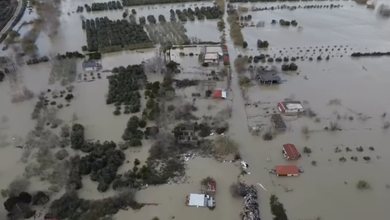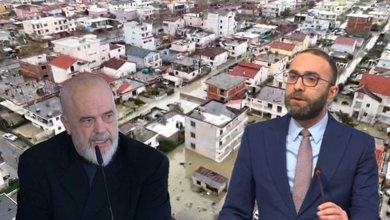



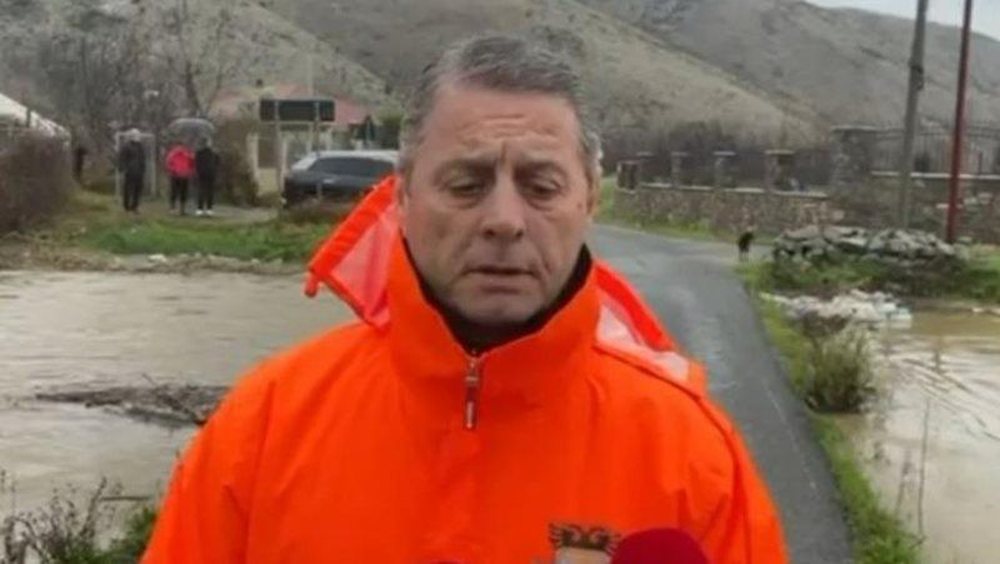
The Mayor of Lezha, Pjerin Ndreu, has reacted with a direct and self-critical stance regarding the flooding situation, accepting his responsibility, but emphasizing that the blame is distributed and the roots of the problem are deep.
Ndreu speaks of a "soup of statements" and a race of accusations every time the country faces flooding, while the essence of the problem, according to him, lies in the crime of urbanization without any criteria after 1992. According to the mayor of Lezha, construction without urban plans, on collectors, drainage and irrigation canals, has created an irreversible situation.
"Am I guilty? Yes, I am. Is it someone else? Yes, it is. Are we all? Yes, we are," says Ndreu, emphasizing that the state of that time and the years that followed allowed chaotic development, without infrastructure, without sewage and water canals, without roads, schools or emergency services.
He lists some of the main causes of the current situation:
– the abandonment of drainage channels for decades, without any real assessment of their blockages and functionality;
– lack of an urban order and orientation of territorial development;
– investments carried out without serious studies to discipline mountain flows and without technical solutions to avoid flooding towards residential areas;
– the removal and disregard of experts in the field, leaving room for decision-making without knowledge and professional responsibility.
Ndreu admits that the residents who built without thinking about the consequences are also to blame, but emphasizes that no one warned them and the state allowed them. According to him, the blame game of "this is his fault and not mine" is a smokescreen that citizens should be spared.
"I personally feel guilty," concludes Ndreu, calling for reflection and concrete solutions, since, as he puts it, "we have all placed a brick in this mess."