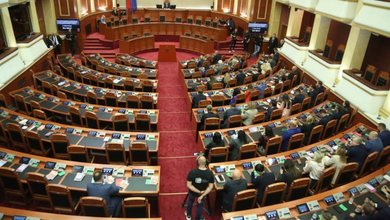



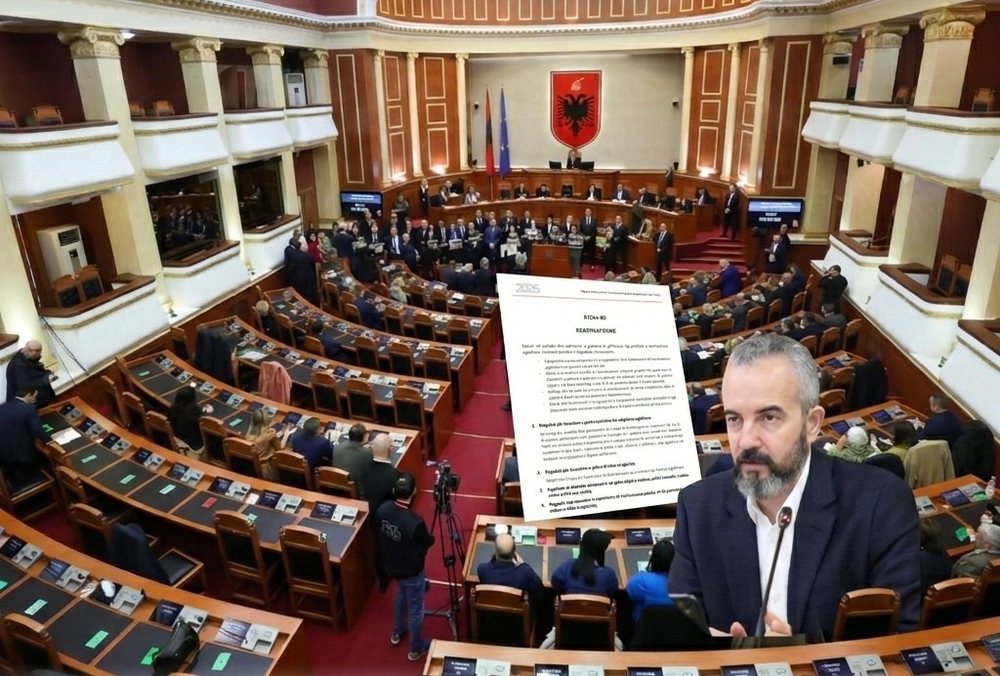
The head of the Central Election Commission, Ilirjan Celibashi, has addressed to the Albanian Parliament a list of 15 recommendations for the transformation of the upcoming electoral process.
In his document, obtained by VNA and submitted to Parliament, Celibashi emphasizes the depoliticization of the commissions, saying that commissioners and tellers solely from parties can no longer function, but neither can parties be completely without any of their representatives at these tables.
He calls for clearer rules for party financing, especially for campaigns in online media, as well as clarification of what are the prohibited activities that the government should not do before the elections, when the ODIHR blackened the report on Albania, saying that the Socialist Party had used the state for campaigning.
Celibashi suggests that at least half of the country switch to electronic voting, as a gradual step, and that electronic vote counting be recognized by law.
The CEC is proposing the idea of returning the counting to the polling place, without collecting ballot boxes in district centers, which delays the release of results, and is also seeking solutions to enable the right to vote for the sick, police officers, or journalists who cannot appear at the polling center.
Regarding the vote of emigrants, Celibashi raises questions about whether the vote will continue to be distributed across 12 districts, or whether there will be a special electoral zone for them. The CEC is seeking clarity on this aspect, as well as on the method of voting: will it continue to be by mail, or will we have another method, such as via the internet, at diplomatic missions, at voting centers set up abroad, or another method?
These recommendations are made within the framework of annual reporting, as well as active parliamentary work on electoral reform.
FULL RECOMMENDATIONS
Based on the analysis and evaluation of the findings gained from previous electoral practices, the Central Election Commission recommends:
• Changing the composition, organization and functioning of second and third level electoral commissions.
o The exclusively party composition of these commissions has already clearly shown that this method not only does not ensure professional and efficient administration of the electoral process at these levels, but has often violated the integrity of this process.
o Another formula is needed, which will sanction more powers and rights of the CEC in organizing these commissions.
o Another formula is needed that, however, does not completely exclude political parties from participating in the administration and/or direct observation of this process.
Rules on financing political parties and electoral entities
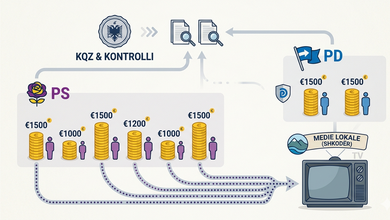
There is a need for clarity and completeness in the rules regarding: who finances whom, when and how. Improvements and additions are needed regarding the rules on financial reporting, strengthening the powers of the CEC to review financial reports, as well as ordering or commissioning by the CEC of structures such as the tax office, taxation, or various agencies to carry out these verifications.
Rules on financing third parties in elections
Their obligation to report on financing when engaging in an election campaign.
Rules on the electoral campaign
Rules on all types of media, including the Internet, online media and social networks.
Rules on reporting on the activities of public institutions
Reporting in a certain period before election day. Based on the findings and recommendations of the ODIHR, the boundary between the government/state and the party that governs the country should be clearly defined.
Voting method
What will be done with electronic voting? Will we continue to extend it to the entire country, or to some electoral units, or will we abandon this method of voting? In our assessment, it would be more rational for electronic voting not to be extended to the entire country at this stage, but to be implemented in the 4-6 electoral units with the largest number of voters.
Information technology in electoral processes
Regarding electronic voting and counting, we recommend that the legal regulatory framework define the right and competence of the CEC to widely apply information technology in electoral processes. The use of new technologies, including Artificial Intelligence, should be standardized, and legal regulations should be provided for the official recognition of the results produced by them, guaranteeing transparency, security and reliability in the electoral process.
Counting
Will we continue counting votes as we have, in terms of location and procedure, or will we return to counting at the polling station? In each of the options, the CEC will need to commit human resources, training, logistics, infrastructure and other organizational measures that guarantee the integrity of the process, transparency and efficiency. These are processes that will take time to address.
Rules for the review of electoral complaints
For an efficient process, but one that also guarantees its integrity, it will be necessary to clearly define the responsibilities and procedures to be followed by each administrative or judicial body that will be involved in the review of electoral complaints. Of primary importance remains the issue of having or not having an Electoral College.
Organization and functioning of the CEC
If the current formula is to remain, there should be a clearer definition of the boundaries of responsibility of each of the three constituent bodies of the CEC: the Commissioner, the Regulator and the KAS.
Rules for the registration of electoral subjects in elections
These rules need improvement and/or clarification, especially those relating to the conditions and criteria that a political party must meet to register as an electoral subject, the registration of coalitions, candidates supported by voters, etc.
Creating alternative opportunities to vote
Creating opportunities to vote for voters who, for health reasons, cannot leave their homes (but who enjoy full legal capacity to act, i.e. enjoy the right to vote), as well as for those who, on voting day, due to the function/duties they exercise (journalists, police officers, etc.), cannot appear at the polling station where their name is on the voter list.
Rules for voting from abroad
In terms of regulation, there are several issues that will need to be reconsidered:
• Will we change the current rule for the electoral zone for which the result of the votes of voters from abroad is counted?
• Will this vote be counted in the electoral zone (county) where the voter from abroad has his civil status, or will there be a special electoral zone for them?
• There should be a clearer definition of the conditions and criteria for voters from abroad to vote.
• Regarding the method of voting: will it continue to be by mail, or will we have another method, such as via the Internet, in diplomatic missions, in voting centers set up abroad, or another method?
Rules for the organization of Referendums
The current legal framework for the organization and functioning of referendums is unclear and incomplete. No referendum has been held within this framework, although there have been many initiatives. This should be a priority.
Review of the rules for announcing the results
Review of the rules for announcing the results of the elections and the time of constitution, both of the Assembly and of local government bodies.
Law on Political Parties
It is imperative to have clear and complete rules for the organization, functioning, financing, participation in elections, as well as penalties and sanctions against parties, when applicable.